



Regular reverse osmosis maintenance supports normal water flow, consistent treatment, and the service life of filters, membranes, seals, and other components. The right schedule depends on the specific system, incoming water quality, household consumption, cartridge type, and manufacturer instructions; one interval does not fit every installation.
Do Reverse Osmosis Systems Need Maintenance?
Yes. When considering do reverse osmosis systems need maintenance, keep in mind that routine service goes beyond replacing the RO membrane. It also involves changing prefilters and post-filters when needed, checking tubing and fittings, flushing new components, sanitizing approved parts, and monitoring flow, taste, odor, TDS, and system service indicators.
NSF guidance on changing water filters recommends following the manufacturer’s service cycle because replacement timing varies by product. An EPA overview of point-of-use reverse osmosis systems also explains that RO uses a semipermeable membrane and produces treated and concentrate streams, reinforcing why the membrane and surrounding stages have different functions.
Reverse Osmosis Maintenance Schedule: What Needs Attention?
|
Component |
What to Check |
General Approach |
|---|---|---|
|
Sediment prefilter |
Dirt and reduced flow |
Replace on the model’s schedule |
|
Carbon filter |
Taste, odor, membrane protection |
Replace within rated service life |
|
RO membrane |
Flow and TDS/rejection changes |
Monitor and replace when required |
|
Post-filter |
Taste and flow |
Replace according to instructions |
|
Remineralization filter |
Rated service life |
Replace when specified |
|
Storage tank |
Pressure and sanitation |
Check periodically on tank-based units |
Treat this table as a checklist, not a universal calendar. Reverse osmosis water filter maintenance should follow the manual, actual water conditions, household demand, and any system alerts.
How to Maintain a Reverse Osmosis System: 6 Essential Tips
For readers searching how to maintain reverse osmosis system components, the six practices below provide a practical starting point; the model manual remains the controlling reference.
1. Replace Filters on Time
Sediment and carbon prefilters help protect the membrane from particles and chlorine exposure. Reverse osmosis filter maintenance does not mean replacing every cartridge together; each component has its own rated life and function.
2. Monitor the RO Membrane
The membrane may last longer than the prefilters. Review manufacturer guidance, source-water quality, flow, and TDS or rejection data when available. A changing reading can justify investigation, but it should be interpreted with the system manual.
3. Check Water Flow and Pressure
Reduced flow may result from a loaded filter, low feed pressure, tank-pressure issues, or another fault. Do not assume every slow faucet means membrane failure. Good RO system maintenance identifies the cause before parts are replaced.
4. Inspect Tubing, Fittings, and O-Rings
Look for moisture, loose connections, damaged tubing, or worn seals. Shut off the feed water before approved service. Do not open pump or electronic assemblies in a tankless unit unless its instructions authorize it.
5. Flush After Filter Replacement
New filters or membranes may require flushing before the water is used. Follow the model-specific procedure and discard the initial water as directed. Correct flushing is part of routine ro filter maintenance.
6. Keep a Maintenance Record
Record the installation date, filter and membrane changes, TDS observations, leaks, and other service notes. A simple log makes ro maintenance easier and prevents forgotten replacements.
How to Clean and Sanitize an RO System
Routine replacement, cleaning, and sanitizing are different tasks. If you need to know how to clean a reverse osmosis system or how to sanitize a reverse osmosis system, use only the sanitizer, contact time, and procedure approved for that model.
- Shut off the feed water and depressurize the system.
- Remove cartridges only as instructed.
- Clean or sanitize approved housings and components.
- Inspect and correctly reseat seals.
- Reassemble, restore water, check for leaks, and flush thoroughly.
These general steps do not replace the manual. Anyone searching how to service reverse osmosis system equipment should stop and use a qualified technician if the work involves pumps, electronics, persistent leaks, or procedures not covered by the manufacturer.
How to Clean the Reverse Osmosis Storage Tank
This step applies only to tank-based systems. Guidance on how to clean reverse osmosis tank components usually involves shutting off water, relieving pressure, draining the tank, and sanitizing it with an approved method. Do not guess the chemical or concentration. Tank pressure and sanitation procedures must match the manual.
Tank-Based vs. Tankless RO Maintenance
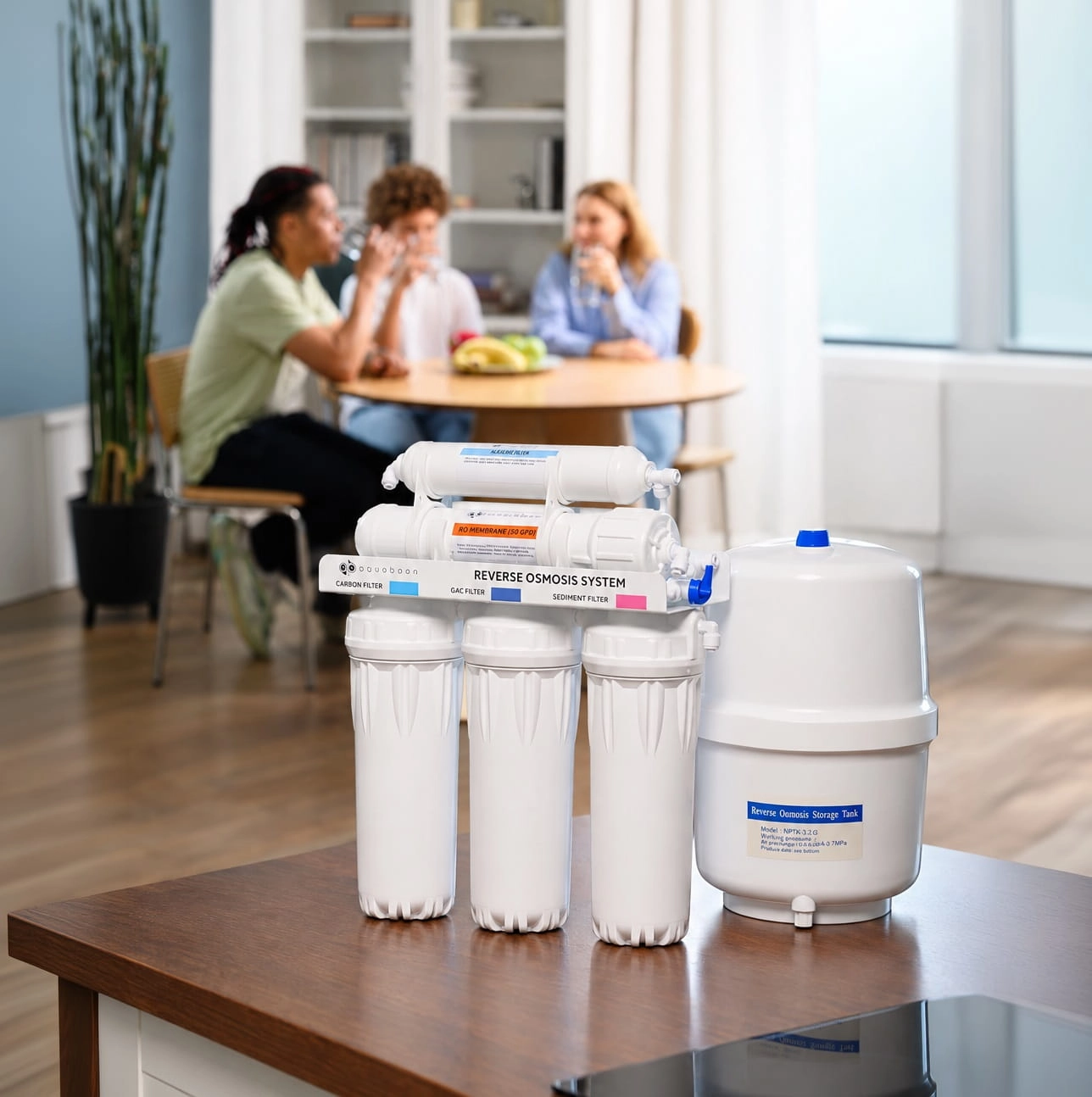
The Standard Reverse Osmosis System uses a traditional tank-based configuration, so routine maintenance may also include checking the storage tank and related connections. A similar maintenance approach applies to the 50 GPD Reverse Osmosis Filtration System, along with regular inspection and replacement of its filtration components.
By comparison, the Tankless Reverse Osmosis System eliminates storage-tank maintenance. However, its filters, membrane, tubing, connections, and service indicators still require regular attention.
The Reverse Osmosis System with Alkaline adds a remineralization stage after the main RO treatment. The system uses an Alkaline filter for AB-RO600GA to support this post-treatment process. Its Composite (CP) filter for AB-RO600GA serves a different filtration role, so each component should be replaced according to the applicable maintenance instructions.
Signs Your RO System Needs Service
- Noticeably slower or lower water flow
- Unexpected changes in taste or odor
- Unusual operating noise
- Leaks around fittings or housings
- A significant TDS change when the system provides monitoring
- A filter-life or service alert
- Failure to produce the normal amount of water
These signs do not identify one failed part by themselves. Proper ro water system maintenance uses symptoms, measurements, and manufacturer troubleshooting steps together.
Keep Your Reverse Osmosis System Performing at Its Best
The maintenance of reverse osmosis system equipment centers on timely cartridge replacement, membrane monitoring, inspection, flushing, and model-specific cleaning. Reverse osmosis water system maintenance is most reliable when it follows documented procedures rather than a generic schedule. Explore systems and compatible components at Filterway.
Reverse Osmosis Maintenance FAQ
How often should an RO system be maintained?
Service frequency depends on the system, water quality, usage, component capacity, and manufacturer instructions. Check filters regularly and follow the specified service cycle rather than using one interval for every RO unit.
How often should a reverse osmosis system be sanitized?
Use the sanitation interval and procedure in the system manual. Timing may depend on design, water conditions, long shutdowns, contamination concerns, or service events such as tank and filter replacement.
Can I clean an RO system myself?
Basic cleaning may be possible when the manual provides clear steps. Shut off water, depressurize safely, use approved products, and call a technician for leaks, pumps, electronics, or unfamiliar procedures.
Does a tankless RO system need less maintenance?
It avoids storage-tank maintenance, but filters, membranes, tubing, fittings, sensors, and pumps may still require inspection or replacement. Follow the exact service guidance for the tankless model.