




Does reverse osmosis remove fluoride? Yes, reverse osmosis can significantly reduce fluoride levels in drinking water. However, its effectiveness depends on several factors, including membrane quality, system design, feed-water quality, operating conditions, and regular maintenance. Will reverse osmosis remove fluoride under every set of conditions? It can reduce fluoride substantially, but not at one universal percentage. Results vary with the membrane, system design, feed water, and operating conditions, so the specific model’s verified performance data should guide expectations.
Does Reverse Osmosis Remove Fluoride From Water?
Does reverse osmosis remove fluoride from water?
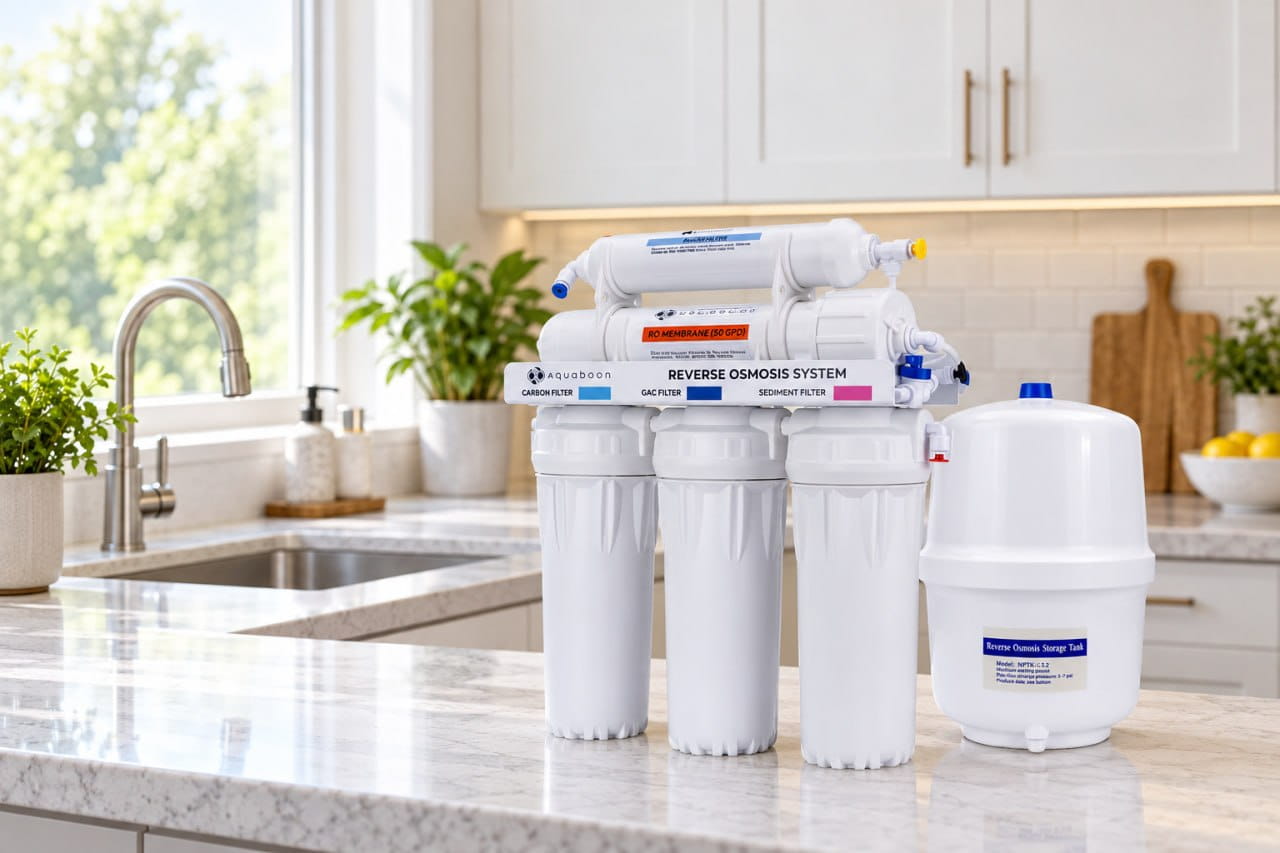
The RO membrane performs the essential separation step because fluoride is dissolved in the water. A standard sediment cartridge can capture sand, rust, or silt, but it is not designed to reduce dissolved fluoride by itself.
Does a reverse osmosis system remove fluoride effectively?
A properly functioning membrane can substantially reduce it by separating dissolved substances from the product water. The actual result depends on the membrane, system design, and operating conditions.
Do reverse osmosis filters remove fluoride at every filtration stage?
No. The sediment and carbon filters prepare the water and protect the system, while the RO membrane performs the primary fluoride-reduction role.
For a particular unit, check the manufacturer's performance documentation and any independently verified contaminant-reduction claims rather than assuming that every RO product has identical performance.
How Does Reverse Osmosis Remove Fluoride From Water?
Does RO remove fluoride through the prefilters or the membrane? The membrane does the main fluoride-reduction work, while the earlier stages prepare the water for that separation.
First, prefiltration captures sediment that could interfere with later stages. Water then usually passes through activated carbon, which reduces chlorine and certain taste- and odor-causing substances while helping protect the membrane.
Water pressure drives the pretreated water through a semipermeable RO membrane. A portion becomes treated product water, while a concentrate stream carries away much of the material rejected by the membrane. The U.S. EPA describes reverse osmosis as a membrane-separation process in which pressurized water passes through a semipermeable membrane while the concentrate stream retains many dissolved contaminants. (US EPA)
Finally, treated water either enters a storage tank or moves directly to the faucet in a tankless design. In reverse osmosis fluoride reduction, the RO membrane plays the key role, while the sediment prefilter mainly protects the system from larger particles. Membrane quality and condition therefore have the greatest influence on fluoride reduction performance.
How Much Fluoride Can Reverse Osmosis Remove?
Can reverse osmosis remove fluoride? Generally, yes, but no single reduction percentage applies to every RO system. Any performance claim for an individual product should be supported by that product’s testing and certification data.
This is the difference between the general capability of RO technology and the tested specifications of a specific model. NSF/ANSI 58 covers point-of-use reverse osmosis drinking-water treatment systems. TDS reduction is a required performance claim under the standard, while fluoride reduction is among the optional contaminant-reduction claims that can be specifically tested and verified. (NSF)
Reverse osmosis fluoride removal should be evaluated using the documentation for the specific system you intend to use. Performance can vary depending on membrane condition, water quality, operating conditions, and regular maintenance. Rather than relying on a blanket removal percentage, check the manufacturer’s verified performance data to understand how effectively a particular RO system reduces fluoride.
What Affects Fluoride Removal by Reverse Osmosis?
Even a capable RO membrane operates as part of a complete system. Factors that may affect filtration performance include:
- membrane quality and condition.
- incoming water pressure.
- feed-water temperature.
- initial fluoride concentration.
- total dissolved solids.
- membrane and cartridge age.
- maintenance schedule; and.
- overall system configuration.
Old, fouled, or poorly maintained components can reduce system performance. Timely filter changes and membrane monitoring are therefore important when using an RO system to filter fluoride from water.
Does Reverse Osmosis Remove Fluoride and Chlorine?
Does reverse osmosis remove fluoride and chlorine? A multi-stage RO system can reduce both, but at different stages of filtration. Activated carbon is typically used to reduce chlorine, while the RO membrane targets dissolved contaminants such as fluoride. This means the two substances are not removed in a single filtration step.
Activated carbon reduces chlorine before water reaches the membrane and can help protect that membrane. Fluoride reduction, by contrast, is primarily associated with the RO membrane. The final result depends on the complete filtration system rather than one cartridge doing every job.
|
Substance |
Main filtration stage |
|---|---|
|
Fluoride |
Reverse osmosis membrane |
|
Chlorine |
Activated carbon |
|
Sediment |
Sediment prefilter |
|
Taste and odor compounds |
Carbon/post-filter |
Which Water Filters Can Remove Fluoride?
Reverse osmosis is one option for reducing fluoride, but it is not the only technology used for this purpose. Other approaches include activated alumina, distillation, and specialized fluoride-removal media.
Standard activated-carbon pitcher filters and refrigerator filters should not automatically be described as fluoride filters. Their capabilities depend on their specific media, design, and verified reduction claims.
For homeowners comparing reverse osmosis and fluoride treatment with other methods, RO offers the advantage of treating multiple types of dissolved substances through a membrane-based process. Still, the performance data for the individual product remain important.
Choosing a Reverse Osmosis System for Fluoride Reduction
When comparing RO systems, consider tank versus tankless design, household water demand, available under-sink space, filtration stages, membrane specifications, maintenance requirements, and whether you want a remineralization stage.
For a conventional configuration with stored filtered water, consider the Standard Reverse Osmosis System. Another tank-based option is the 50 GPD Reverse Osmosis Filtration System.
For households prioritizing high output and a compact under-sink installation without a storage tank, the Tankless Reverse Osmosis System is a direct-flow option rated for up to 600 GPD under suitable conditions.
For users who also want post-treatment mineral conditioning, the Reverse Osmosis System with Alkaline combines tankless RO treatment with a subsequent remineralization stage. Its alkaline stage comes after membrane treatment rather than replacing it.
Fluoride-reduction performance should still be checked for the individual model rather than assuming all four configurations achieve the same percentage.
Maintaining an RO System for Consistent Performance
RO cartridges and membranes perform different functions, so maintaining each stage according to the manufacturer's instructions supports consistent operation.
For the AB-RO600GA RO system, the Alkaline filter for AB-RO600GA serves the system's post-treatment mineral-conditioning function. It should not be described as independently removing fluoride.
The Composite (CP) filter for AB-RO600GA is another system-specific replacement component. Following appropriate replacement schedules helps protect the performance of the complete RO system.
You can explore RO systems, cartridges, and other water-treatment components for your home through Filterway.
Frequently Asked Questions
Does RO water have fluoride?
Does RO water have fluoride after treatment? It can contain residual fluoride because RO does not necessarily produce absolute zero-fluoride water. The final concentration depends on membrane performance, feed water, system condition, and operating conditions.
Do RO filters remove fluoride completely?
RO membranes can significantly reduce fluoride, but complete removal should not be assumed. Check the specific system's certified or tested contaminant-reduction data to determine its expected fluoride performance.
Does an RO filter remove fluoride if the membrane is old?
An aging, fouled, or damaged membrane may not perform as intended. Follow the manufacturer's service guidance and monitor system performance rather than assuming an old membrane provides the same fluoride reduction as a properly functioning one.
Is there fluoride in reverse osmosis water?
Is there fluoride in reverse osmosis water? Some may remain after filtration. RO substantially reduces many dissolved substances, but the amount remaining depends on the incoming concentration, membrane, operating conditions, and verified performance of the system.
Does remineralization add fluoride back to RO water?
Not ordinarily. A remineralization stage is designed to add selected minerals after RO treatment. It should not be assumed to add fluoride unless fluoride-containing material is specifically part of that cartridge's formulation.