


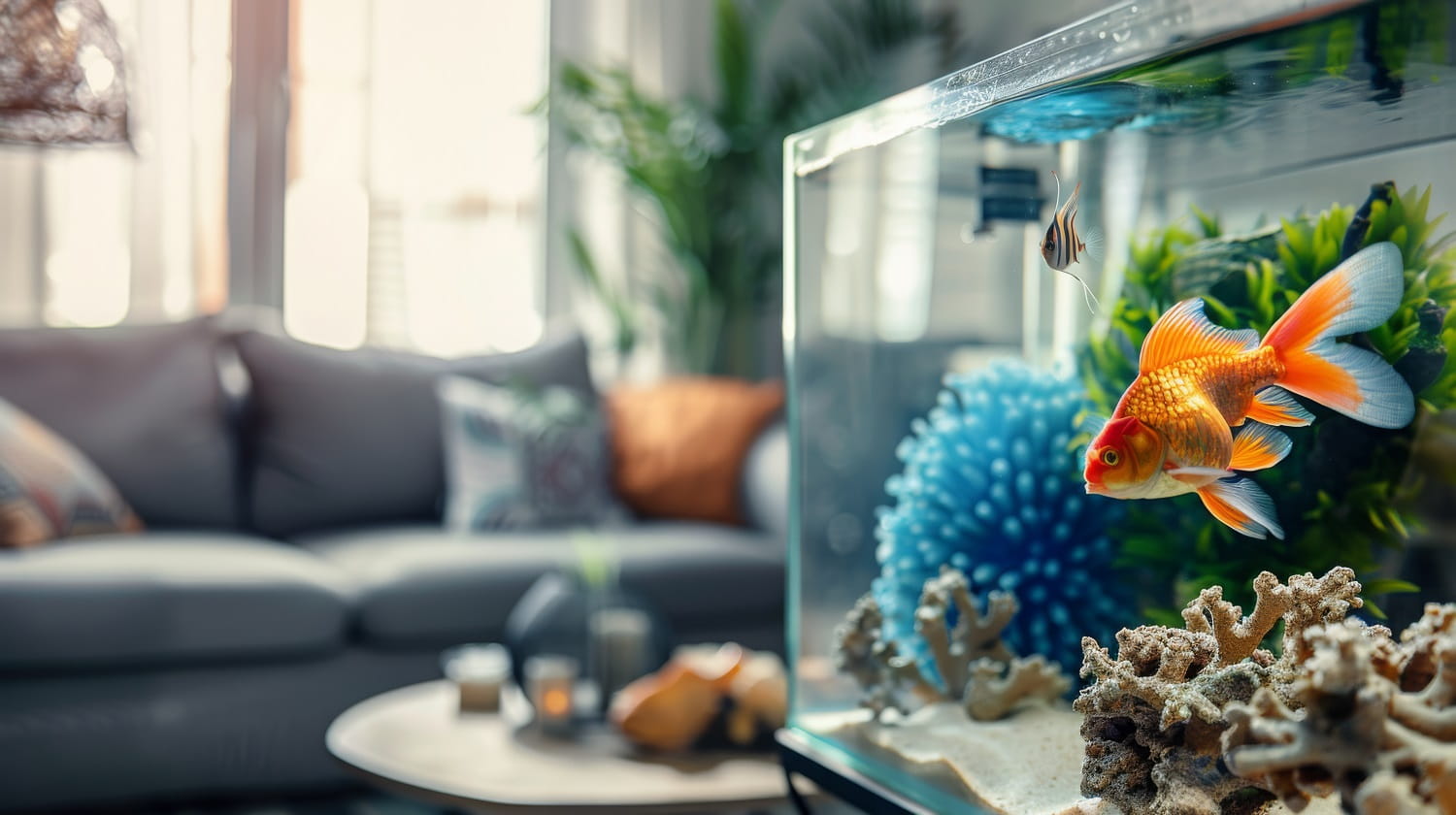
Properly conditioned tap water works for many freshwater aquariums, but it is not automatically the right choice for every tank. The best source depends on the fish species, the chemistry of the source water, and whether chlorine, chloramine, minerals, or other substances must be addressed before the water enters the aquarium.
If you are deciding what kind of water for fish tank use is appropriate, begin with measurable parameters rather than a label such as «spring,» «purified,» or «drinking.» Water that is safe for people is not necessarily suitable aquarium water without treatment.
What Is the Best Water for a Fish Tank?
There is no universal best water for fish tank setups. For a typical freshwater community aquarium, conditioned tap water is often practical when its pH, general hardness (GH), and carbonate hardness (KH) suit the fish. A conditioner designed for aquarium use should neutralize the disinfectant used by the local utility.
Reverse osmosis water can provide a controlled starting point when tap water is extremely hard, variable, or unsuitable for a sensitive species. However, it usually must be remineralized or blended. The best water for freshwater aquarium care is stable and species-appropriate—not simply the source with the fewest dissolved substances.
What Water Parameters Matter Most to Fish?
Before choosing what water to use for fish tank maintenance, check the parameters that affect fish health and biological filtration. Targets differ among species, so avoid applying one pH, GH, or KH range to every aquarium.
|
Parameter |
Why It Matters |
|---|---|
|
pH |
Shows how acidic or alkaline the water is; the appropriate range depends on species. |
|
GH |
Reflects calcium and magnesium hardness and affects osmoregulation and mineral availability. |
|
KH |
Measures buffering capacity and helps limit rapid pH swings. |
|
Chlorine and chloramine |
Municipal disinfectants that must be neutralized before water enters the aquarium. |
|
Ammonia and nitrite |
Toxic nitrogen compounds that should remain at zero in an established, cycled tank. |
|
Nitrate |
A nitrogen-cycle end product that requires regular monitoring and water changes. |
|
Temperature |
Replacement water should not cause a sudden temperature shift. |
The aquaculture extension publication Introduction to Water Chemistry for Freshwater Aquaculture explains how pH, hardness, alkalinity, ammonia, and temperature interact in fish systems. Use species-specific care guidance for your aquarium rather than treating broad aquaculture ranges as universal household-tank targets.
Can You Use Tap Water in a Fish Tank?
Tap water is often the easiest water for fish tank changes, but it must be tested and treated first. Municipal systems may use chlorine or chloramine, both of which can harm fish and beneficial filter bacteria. Use an aquarium conditioner that specifically addresses the disinfectant listed by your water utility, and follow the product directions.
Letting water stand may allow free chlorine to dissipate, but it is not dependable for chloramine. Match temperature and avoid abrupt shifts in pH or hardness. Whole house chlorine water filters or a whole house water filter system may support broader treatment, but aquarium water still requires testing and preparation.
Can You Use Well Water for a Fish Tank?
Well water may contain no municipal chlorine or chloramine, yet its composition can vary widely. Hardness, iron, manganese, nitrate, pH, dissolved gases, and microbial quality may all affect whether the source is usable. EPA guidance for private wells recommends regular testing because private-well owners are responsible for monitoring their own water.
Do not assume clear well water is suitable. Test before use and after flooding, repairs, or unexplained changes. Whole house water filters for well water may address identified problems, but treatment should follow test results and fish requirements.
Can Hard Water Be Used in a Freshwater Aquarium?
Hard water is not automatically harmful. GH mainly reflects dissolved calcium and magnesium, while KH indicates buffering capacity that helps resist rapid pH changes. The USGS overview of water hardness explains the mineral basis of hardness, but whether a particular level suits an aquarium depends on its inhabitants.
Livebearers and some African cichlids often tolerate mineral-rich conditions, while certain soft-water species require lower GH and KH. Do not choose a hard water whole house filter solely because water is described as «hard.» Compare measurements with species requirements.
Can You Use Reverse Osmosis Water in a Fish Tank?
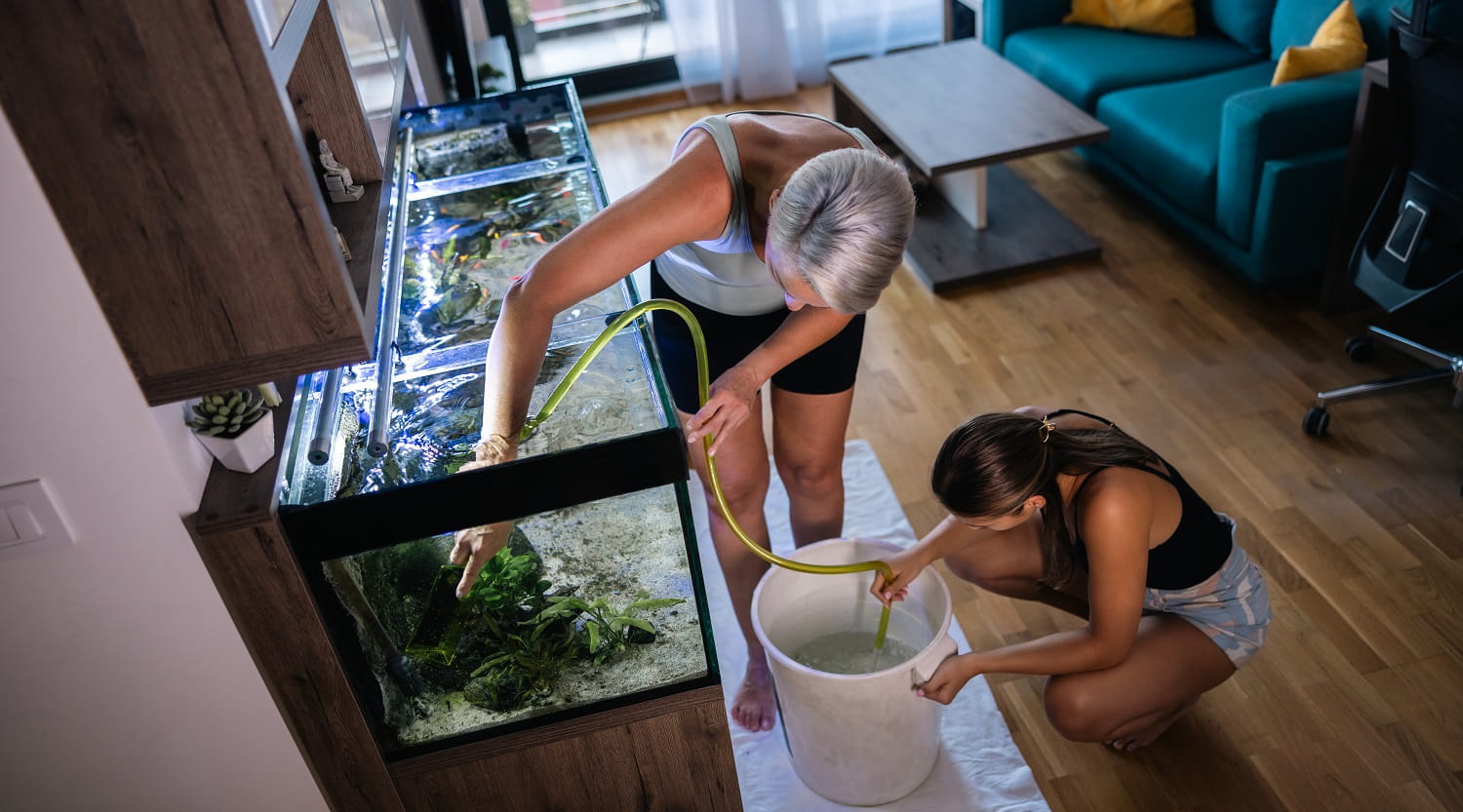
Yes, RO water can be used as a base for an aquarium when it is prepared correctly. Reverse osmosis reduces many dissolved substances, giving the aquarist more control over the final mineral profile. It can be useful for very hard or inconsistent tap water, sensitive freshwater species, targeted GH and KH, and some marine or reef applications.
Pure RO water lacks minerals and buffering capacity needed for stability. Remineralize it with an aquarium-specific product or blend it according to a measured plan. Recheck GH, KH, pH, and total dissolved solids before use.
For producing RO water at home, Filterway offers both tank-based and direct-flow filtration systems. A traditional option is the Standard Reverse Osmosis System, which stores treated water in a tank for later use.
Another tank-based option is the 50 GPD Reverse Osmosis Filtration System. Aquarists who prefer higher output without a storage tank can consider the Tankless Reverse Osmosis System.
The Reverse Osmosis System with Alkaline includes an additional remineralization stage intended for drinking water. Because aquarium species have specific mineral requirements, this output should not automatically be treated as aquarium-ready water.
The system’s Alkaline filter for AB-RO600GA contributes to post-treatment remineralization, while the Composite (CP) filter for AB-RO600GA performs a different filtration function. Regardless of the RO configuration, test the final water and adjust its mineral profile to the needs of the aquarium before use.
Distilled, Purified, Spring, or Bottled Water: Which Is Safe?
«Purified water» describes a category, not one predictable chemistry. It may be produced by reverse osmosis, distillation, deionization, or another process. Distilled water is extremely low in minerals and normally requires remineralization before it becomes the best water for aquarium use. Using it untreated can leave the water poorly buffered.
Spring and bottled water may contain excessive or inconsistent minerals. Check the label, test the water, and identify additives. Bottled water can work, but it is expensive and inconvenient for routine changes.
Quick Comparison: Which Water Source Should You Choose?
|
Water Source |
Can It Be Used? |
Main Consideration |
|---|---|---|
|
Conditioned tap water |
Often |
Treat disinfectants; verify GH, KH, and pH. |
|
Well water |
Possibly |
Test minerals, nitrate, microbes, and other local concerns. |
|
RO water |
Yes, when prepared |
Usually requires remineralization or controlled blending. |
|
Distilled water |
Usually after adjustment |
Very low mineral content and buffering. |
|
Purified water |
Depends |
Confirm the process and final mineral profile. |
|
Spring water |
Depends |
Mineral content can vary by source and brand. |
|
Bottled water |
Depends |
Check composition, additives, consistency, and cost. |
How to Prepare Water Before Adding It to Your Fish Tank
- Identify the source. Confirm whether it is municipal tap, private well, RO, distilled, spring, or another bottled water.
- Test the relevant values. At minimum, compare temperature, pH, GH, and KH; monitor ammonia, nitrite, and nitrate in the aquarium.
- Treat chlorine or chloramine. Use an aquarium conditioner that addresses the disinfectant in the source water.
- Adjust minerals only when necessary. Remineralize RO or distilled water to a target appropriate for the species.
- Match temperature. Prepare replacement water so it does not create a sudden thermal change.
- Avoid abrupt chemistry changes. Modify pH, GH, KH, or TDS gradually and consistently.
- Add the prepared water carefully. Follow normal water-change practices and observe the fish afterward.
A new aquarium must also complete the nitrogen cycle. Clean source water alone does not establish the beneficial bacteria needed to process ammonia and nitrite.
Choose Water Based on Your Fish, Not the Label
When asking what type of water for fish tank care is best, focus on the species and the measured chemistry. Conditioned tap water may be sufficient for one aquarium, while another may require tested well water, blended RO water, or carefully remineralized water. The question what water do fish need has no responsible one-line answer without knowing the livestock and current parameters.
Test first, make changes gradually, and keep a record of source-water and tank readings. Filterway can provide home-water treatment options, but aquarium preparation remains a separate step guided by species needs and actual test results.
FAQ About Aquarium Water
Can I use drinking water for my fish tank?
Possibly, but “drinking water” does not define its mineral content or disinfectants. Test pH, GH, and KH, treat chlorine or chloramine, and confirm that the final values suit your fish.
Is purified or distilled water better for a fish tank?
Not automatically. Purified or distilled water may contain too few minerals and too little buffering capacity. It usually needs measured remineralization or blending before use in a freshwater aquarium.
Is mineral water good for fish tanks?
It depends on the brand and species. Mineral water can be excessively hard or inconsistent, and carbonation or additives may be unsuitable. Test it before considering regular aquarium use.
What is the best water treatment for a fish tank?
The best water treatment for fish tank use addresses the actual source-water problem: dechlorination for municipal water, targeted filtration after testing, or remineralization for RO and distilled water.