



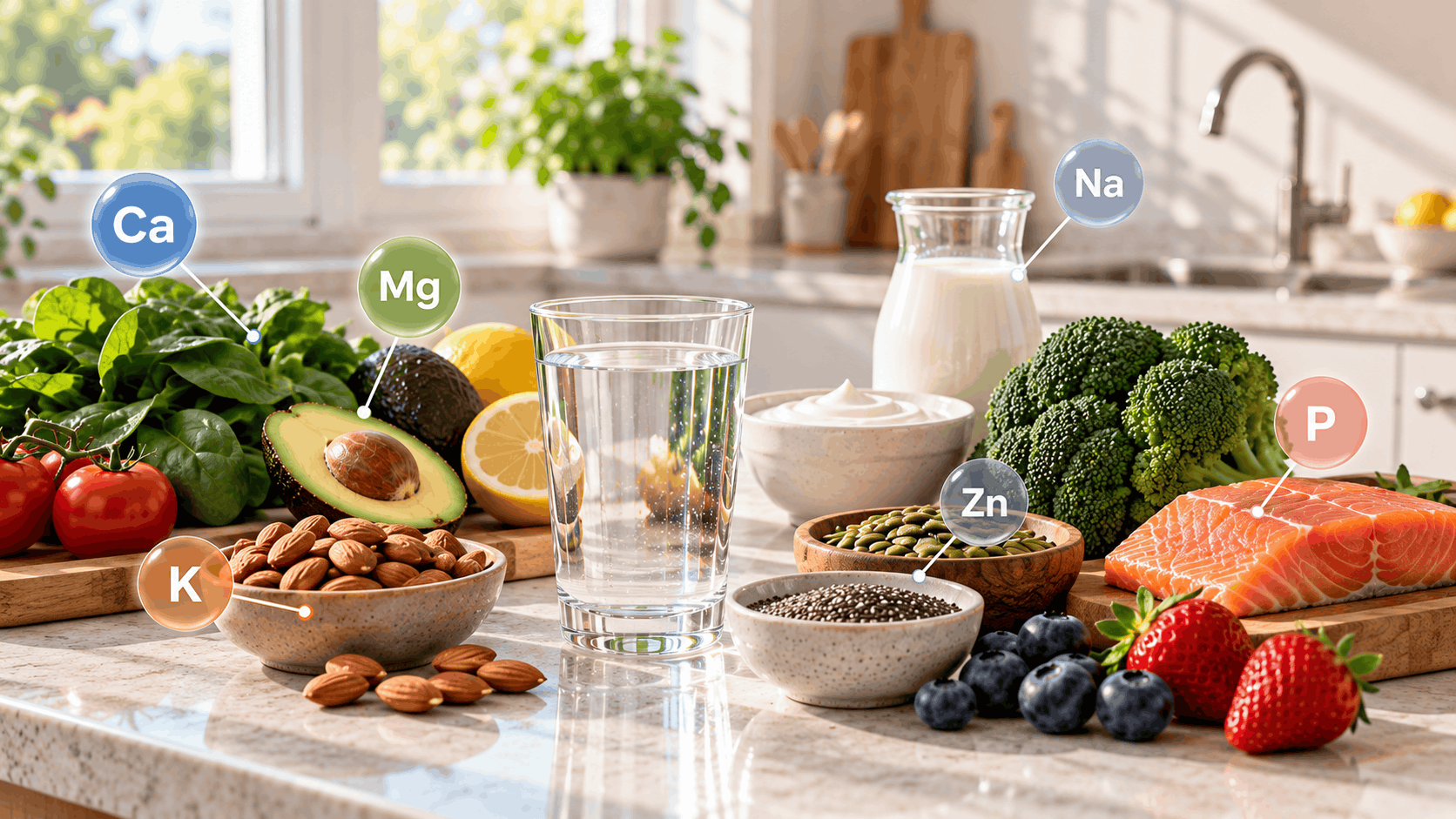
Reverse osmosis is effective at reducing dissolved contaminants, but it also removes naturally occurring minerals. Does reverse osmosis remove minerals such as calcium and magnesium? Yes, RO filtration significantly reduces these minerals along with many unwanted impurities, changing the water's mineral content and potentially its taste.
But lower mineral content does not tell the whole story. In this guide, we explain which minerals RO reduces, what may remain after filtration, and when an optional remineralization stage might suit your preferences.
How Does Reverse Osmosis Remove Minerals?
Reverse osmosis uses pressure to push water through a semipermeable membrane that separates many dissolved minerals, salts, and contaminants from drinking water. The rejected substances are carried away in a separate wastewater stream. This separation explains why reverse osmosis removes minerals rather than simply trapping visible particles.
TDS means total dissolved solids: the combined amount of dissolved material in water. Because RO reduces many dissolved ions, the TDS reading usually falls after treatment. However, a TDS meter estimates an overall value; it does not identify individual minerals or confirm microbiological safety.
Does reverse osmosis remove minerals from water? Yes, it significantly reduces their levels, though performance varies with the system and operating conditions. However, a low mineral reading alone does not confirm that the water is free of all contaminants.
What does RO filter remove? Beyond minerals, a suitable RO system can reduce selected dissolved contaminants. Check the complete system’s verified claims for each substance; a general ability to remove minerals from water does not establish performance against every contaminant.
Which Minerals Does Reverse Osmosis Remove?
What minerals does reverse osmosis remove? Common examples include calcium, magnesium, sodium, and potassium, though the amount removed depends on their initial levels and the system’s performance.
|
Mineral |
Role in the Body or Water |
Effect of RO |
|---|---|---|
|
Calcium |
Supports bone and dental health; contributes to water hardness |
Reduces calcium concentration and water hardness |
|
Magnesium |
Supports muscle and nerve function; contributes to water hardness |
Reduces magnesium concentration |
|
Sodium |
Helps regulate fluid balance; may affect water taste |
Reduces dissolved sodium |
|
Potassium |
Supports normal muscle and nerve function |
Reduces dissolved potassium |
Does reverse osmosis remove calcium and magnesium? Yes. Both contribute to water hardness and are significantly reduced during RO filtration. If you're wondering specifically, «does reverse osmosis remove calcium,» the answer is yes, although an under-sink RO system only treats water at its designated drinking-water faucet. Does reverse osmosis remove salt from water? RO can reduce dissolved sodium and chloride. However, a household unit must operate within its specified feed-water limits; it should not be assumed suitable for seawater or highly saline sources.
Does Reverse Osmosis Water Still Contain Minerals?
Does reverse osmosis water have minerals after filtration? It may retain small quantities. A membrane does not necessarily reject every dissolved ion, and performance changes with feed-water chemistry, pressure, temperature, membrane condition, and maintenance.
When comparing reverse osmosis minerals before and after treatment, distinguish ordinary membrane output from water that passes through a remineralization cartridge. The latter receives an additional treatment that can alter mineral composition and taste.
A slightly higher TDS reading after remineralization does not automatically indicate poor filtration. Equally, TDS alone cannot establish which substances remain. Use appropriate laboratory testing when you need information about specific minerals or contaminants.

Is Drinking Water Without Minerals Safe?
Drinking reverse osmosis water is generally safe when the water has been properly treated and meets drinking-water safety standards. Although RO reduces beneficial minerals such as calcium and magnesium, most people obtain these nutrients primarily through food. Drinking water can provide additional minerals, but its contribution depends on the source water and daily consumption. Therefore, drinking low-mineral water does not automatically lead to mineral deficiencies.
Does reverse osmosis remove good minerals? It can reduce minerals the body uses, because membrane separation does not classify dissolved ions as beneficial or unwanted. That tradeoff should be considered alongside the contaminants you want to address.
RO water can be suitable for drinking when the source water and treatment meet safety requirements. Mineral content alone does not determine safety. Optional remineralization can suit taste preferences or a desired composition, without making water a treatment for a health condition.
How to Remineralize Reverse Osmosis Water
Remineralization takes place after the RO membrane. Water passes through suitable mineral-containing media, which can dissolve selected minerals into it. The resulting composition depends on the media, contact time, water chemistry, and cartridge condition.
Remineralization can improve the taste of RO water by adding selected minerals back after filtration. Depending on the filter media, it may also increase the water's pH. However, a higher pH does not necessarily mean that the water provides additional health benefits. For the compatible system, Filterway offers the Alkaline filter for AB-RO600GA. Replace it according to the manufacturer’s instructions to maintain its intended performance.
Do I need to remineralize RO water? If you prefer water with some mineral content, remineralization is an option worth considering. It can influence the taste of RO-treated water, although the result depends on the cartridge and water conditions.
So, do you need to add minerals to reverse osmosis water? Not necessarily. Remineralization is a matter of personal preference and desired water composition, rather than an automatic requirement for every household.
How to Choose an RO System for Your Home
Start with your water quality and daily drinking and cooking needs. Compare rated gallons per day, available installation space, storage-tank requirements, replacement-cartridge availability, and maintenance costs. Actual output depends on operating conditions; a nominal capacity is not a guaranteed faucet flow.
|
Model |
Key benefits |
|---|---|
|
A traditional 50 GPD system with a traditional storage tank and 50 GPD capacity for everyday drinking and cooking. |
|
|
A 600 GPD tankless system offers a higher 600 GPD capacity with on-demand filtration and a space-saving tankless design. |
|
|
A 600 GPD tankless system provides the same rated capacity with an additional alkaline remineralization stage designed to adjust mineral content and improve taste |
Choose based on your preferred filtration setup, water demand, and whether remineralization is important to you.
Finding the Right Mineral Balance in RO Water
Reverse osmosis removes a significant portion of dissolved minerals, including calcium and magnesium, but that doesn't mean RO water is unsuitable for everyday drinking. The right system depends on your household's water quality, daily usage, and taste preferences.
For a traditional tank-based setup, consider the RO50G. If you prefer high-capacity, tankless filtration, the RO600G offers an alternative, while the RO600GA adds a remineralization stage for those who want to adjust the mineral content and taste of their drinking water.
Explore the reverse osmosis systems available at Filterway to find the configuration that best suits your home.
Frequently Asked Questions About RO Water Minerals
Does Reverse Osmosis Remove All Minerals?
No. RO reduces many dissolved minerals, but complete removal is not guaranteed. Residual concentrations depend on source water, membrane performance, operating conditions, and whether the system includes a remineralization stage.
Does RO Water Have Minerals?
RO water may contain residual minerals after membrane treatment. A system with a remineralization stage can add selected minerals afterward; the amounts depend on its media and operating conditions.
Does RO Water Remove Minerals?
RO water is produced through a filtration process that removes many dissolved minerals. The RO membrane reduces calcium, magnesium, and other minerals before the treated water reaches your faucet.
Do You Need to Add Minerals to Reverse Osmosis Water?
Not necessarily. Consider your overall diet, taste preferences, and desired water composition. Remineralization is an optional treatment stage; it does not replace balanced nutrition or assessment of specific dietary concerns