



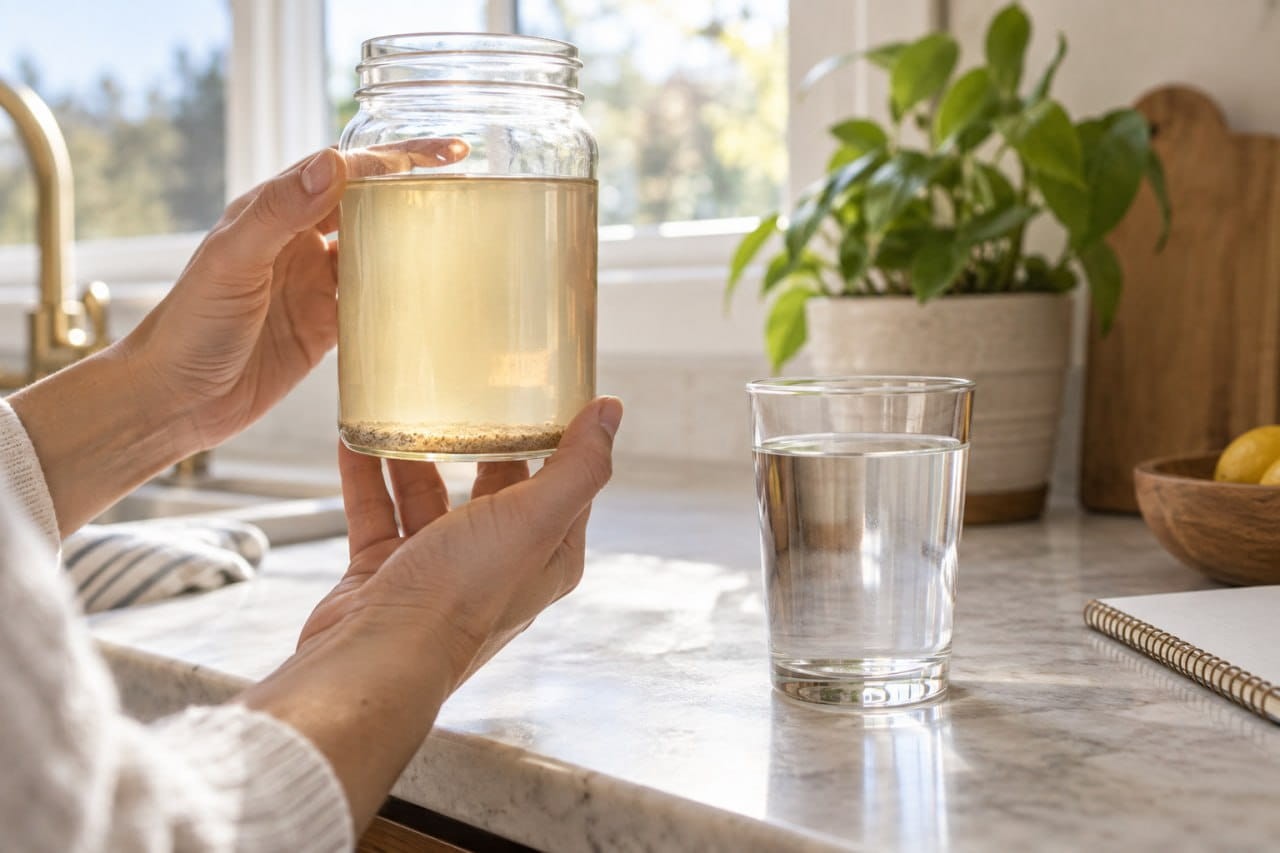
If you are wondering, «Why is my well water brown?» the most likely explanations include iron or manganese, suspended sediment, rust, tannins, iron bacteria, or a change in well conditions. Brown well water is a visible symptom, not a diagnosis, and color alone cannot identify the cause. A sudden change after heavy rain, flooding, plumbing work, or unusually heavy use deserves prompt investigation and water testing before the water is used for drinking or cooking.
The Most Common Causes of Brown Well Water
Iron and Manganese
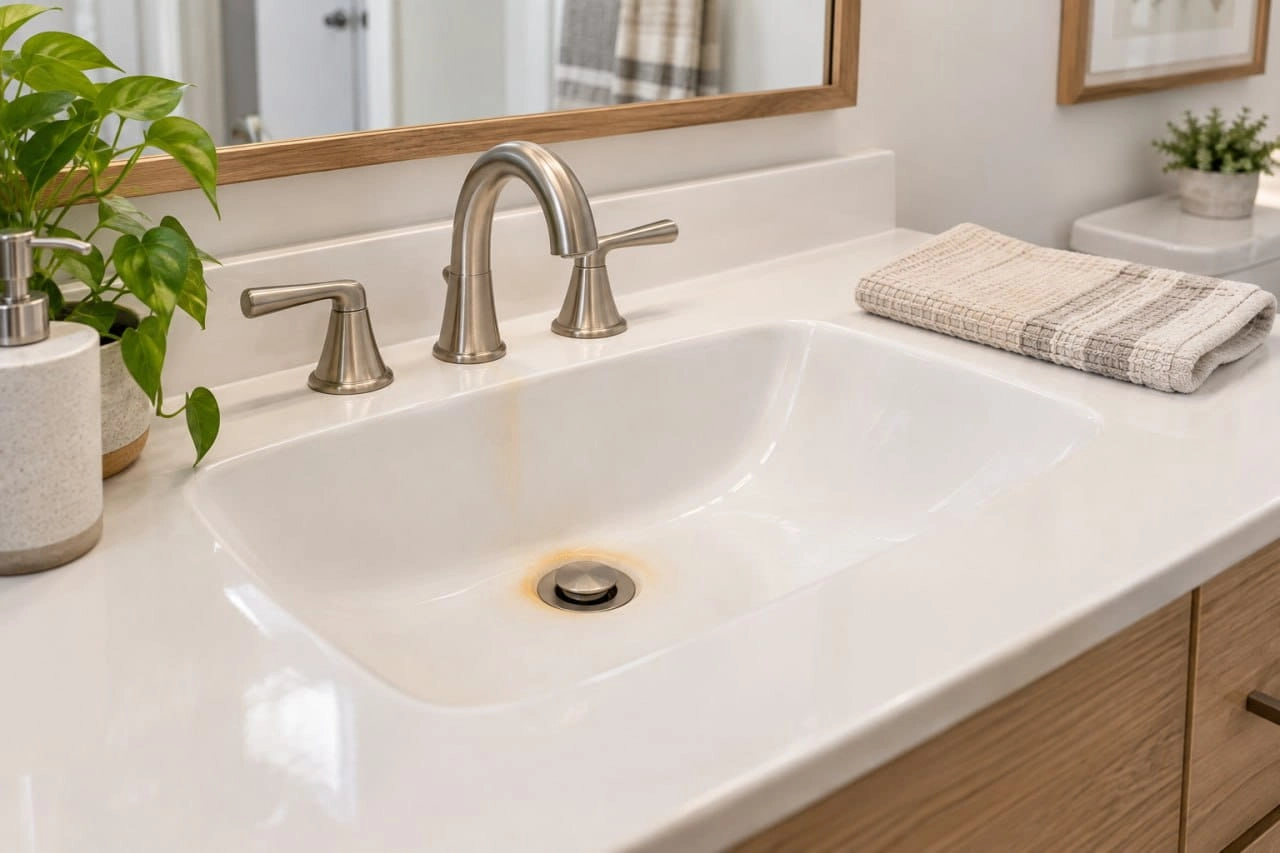
Iron occurs naturally in groundwater. When dissolved iron meets oxygen, it can create yellow, orange, or reddish-brown water and leave stains on sinks, tubs, laundry, and plumbing fixtures. Manganese is often found alongside iron and may produce a darker brown or blackish appearance. Treatment depends on concentration, pH, and whether the iron is dissolved or particulate. A whole house water filter system should be selected only after the source water is understood.
Sediment, Sand, and Silt
When homeowners ask, «Why is my water coming out brown?» suspended sediment is one possibility. An aquifer disturbance, a pump that stirs the bottom of a well, heavy rain, construction, or a damaged well component may leave well water coming out brown, cloudy, or muddy. Look for grit in a glass, sediment collecting at the bottom, clogged faucet aerators, or measurable turbidity. Whole house water filters for well water can help with appropriate sediment loads, but they cannot repair a damaged casing or seal.
Rust and Plumbing Corrosion
Sometimes the source is not the well. Aging galvanized or steel pipes, a corroding well casing, a water heater, or metal fittings can release rust-colored particles. If there is brown water in house plumbing at only one faucet, compare cold water from several fixtures. A localized pattern points more toward plumbing than groundwater.
Iron Bacteria
Iron bacteria can create orange or brown slime, rusty deposits, unusual odor, or buildup in a toilet tank and plumbing. UV treatment is not a standalone solution without diagnosis and prior treatment. A qualified professional should identify the organism and the appropriate cleaning or treatment sequence.
Tannins and Organic Matter
Tannins come from decaying vegetation and can give water a tea-colored or yellow-brown appearance. Unlike heavy sediment, tannin color may remain suspended and may not settle to the bottom. Testing is needed before selecting treatment.
Why Did My Well Water Suddenly Turn Brown?
After Heavy Rain
After a storm, heavy rain may have disturbed sediment, changed groundwater conditions, or contributed to surface-water intrusion through a defective well cap, casing, or seal. Well water suddenly brown after flooding is a reason to use a verified alternative water source for drinking and cooking until the well has been inspected and tested. Treat sudden brown well water as a change that needs investigation, not as proof of one specific contaminant.
After Heavy Water Use
If you notice well water turning brown after intensive water use, the demand may have changed pump operation or drawn sediment into the intake. If the water improves after the system rests, that is a useful clue about what makes well water brown, but it is not a diagnosis. Check pressure, pump cycling, and the well’s recent service history.
Overnight or After Sitting
If your well water turned brown overnight or after sitting, possible causes include corrosion, accumulated sediment, iron oxidation, or stagnant plumbing sections. A homeowner may report, «My well water is brown only on the first draw.» Compare that first draw with water after several minutes of cold-water flow, while keeping a sample for testing.
After Well or Plumbing Work
A new well, pump replacement, or plumbing repair can temporarily disturb sediment. If the water in house is brown immediately after this work, flush only according to the contractor’s instructions and test if the change persists, returns, or affects multiple fixtures.
How to Identify What Is Making Your Well Water Brown
Appearance provides clues, not a definitive diagnosis. Use the pattern to decide what to investigate:
|
Observation |
Possible clue |
Next step |
|
Orange/red stains |
Iron or rust |
Test iron and inspect plumbing |
|
Dark brown/black tint |
Manganese or sediment |
Test manganese and turbidity |
|
Particles settle |
Sand or silt |
Inspect well/pump; consider sediment filtration |
|
Tea-colored but clear |
Tannins |
Test organic color/tannins |
|
Slime or odor |
Iron bacteria or other issue |
Arrange professional diagnosis |
A simple home check is to pour cold water into a clear glass or jar and see whether particles settle. This test does not replace laboratory water testing, especially after flooding or a sudden quality change.
Should You Drink Brown Well Water?
When well water is brown, iron may be responsible and the concern may be primarily aesthetic. However, brown water does not rule out bacteria, nitrates, or other contaminants. If the change is sudden or follows heavy rain or flooding, use an alternative verified water source for drinking and cooking until test results are available. Do not label the water automatically toxic or automatically safe based only on color.
What to Test for When Well Water Turns Brown
A certified drinking-water laboratory can help determine why is well water brown in a specific home and select a panel based on symptoms and local conditions. Testing is the reliable way to separate what causes brown well water from what the color merely suggests. Depending on the situation, testing may include:
- iron
- manganese
- turbidity
- pH
- total coliform and E. coli
- nitrates
- tannins or color
- hardness
- lead and copper when corrosion is suspected
Not every private well needs the same panel. A local professional or laboratory can help interpret results and determine whether follow-up sampling is needed.
How to Fix Brown Well Water
Treat the cause rather than only the color. If the problem is described as «brown water from well,» the correct solution depends on the contaminant, concentration, water chemistry, and whether the issue affects one fixture or the entire home.
If the Problem Is Sediment
Mechanical sediment filtration can capture sand, silt, rust particles, and some scale before they reach fixtures. Filter selection should match particle size and flow demand. A cartridge that loads quickly may indicate a larger well or plumbing problem requiring investigation.
If Iron or Manganese Is the Cause
Treatment should be chosen using concentration, iron form, manganese level, pH, and overall water chemistry. Options may include oxidation and filtration, media filtration, or other treatment selected after testing. Avoid choosing equipment solely from the color of a glass of water.
If the Problem Affects the Entire House
When testing confirms a source-water problem at multiple faucets and appliances, point-of-entry treatment may be logical. For a brown water well problem affecting the entire home, Filterway offers different treatment options that can be selected according to the confirmed water-quality issue.
A whole house water filter system treats water at the point where it enters the home, making it suitable when the problem affects multiple fixtures rather than a single tap. For homes supplied by private wells, the whole house water filters for well water category can help narrow the options based on well-specific treatment needs.
Other whole-house systems are designed for different water-quality problems. For example, whole house chlorine water filters are intended for chlorine-related taste and odor issues.
A hard water whole house filter targets hardness-related concerns. Neither option should be treated as a substitute for sediment, iron, or manganese treatment unless testing confirms that those conditions are also present.
If Microbial Contamination Is a Concern
UV treatment can inactivate microorganisms, but it does not remove sediment or iron. Turbid water may need prefiltration, and the need for disinfection should be determined after testing. A UV unit is not a replacement for repairing a defective well cap, casing, or seal.
For Drinking Water After Whole-House Treatment
Reverse osmosis is a point-of-use treatment for drinking and cooking water. It should not be presented as the primary solution when sediment makes every faucet brown.
After suitable whole-house pretreatment, a Tankless Reverse Osmosis System can provide an additional treatment stage for water used at the kitchen faucet.
If post-treatment remineralization is preferred, a Reverse Osmosis System with Alkaline can serve as another point-of-use option after the main whole-house treatment stage.
When a Filter Will Not Fix the Problem
Filtration is not a substitute for repair when the cause is a damaged well casing, defective cap or seal, failing pump, significant sand intrusion, badly corroded pipes, a failing water heater, or surface-water infiltration. Use a well contractor or plumber depending on where the problem is found.
How to Prevent Brown Well Water From Coming Back
Prevention starts with records and routine inspection:
- Test the private well regularly and again after flooding or a noticeable quality change.
- Inspect the well cap, casing, seal, and drainage around the well.
- Monitor pressure, pump cycling, and unusual changes in flow.
- Replace cartridges according to actual load and manufacturer guidance.
- Inspect plumbing and the water heater for corrosion.
- Keep water-test results and cartridge-replacement dates together.
How Filterway Can Help With Water Filtration
Filterway offers filtration solutions for different water-quality problems, but the right system depends on the actual condition of the well. Laboratory results, water chemistry, household flow requirements, and the extent of discoloration should all be considered before treatment is selected. If the issue affects several faucets or appliances, point-of-entry filtration can treat the water before it moves through the home’s plumbing.
The appropriate setup depends on what testing reveals. Sediment filtration may be used for sand, silt, rust, or other suspended particles, while other systems are designed for chlorine-related taste and odor, hardness, or contaminants commonly found in well water. Replacement cartridges should be changed according to their actual loading and the manufacturer’s service recommendations. Choosing equipment based on the confirmed cause of the problem is more reliable than relying on water color alone.
Clear Water Starts With Identifying the Cause
There are several reasons why well water turns brown. The right solution does not start with buying the first filter available; it starts with identifying the source through observation, inspection, and appropriate testing. Once the cause is known, sediment, iron and manganese, whole-house, UV, or point-of-use treatment can be matched to the real problem. Filterway helps homeowners compare filtration categories and choose a practical system for the condition confirmed by testing.
Frequently Asked Questions
Why is my water brown from my well?
Iron, manganese, sediment, rust, tannins, iron bacteria, or changing well conditions may be responsible. Testing is needed because color alone cannot identify what causes well water to turn brown.
Why does well water turn brown after heavy rain?
Rain can disturb sediment or allow surface water to enter through a damaged cap, casing, or seal. Use alternative drinking water and test the well after flooding.
Why is brown water coming from every faucet in the house?
A whole-house pattern suggests source water, the main service line, or a shared treatment component. Test the water and inspect the well, pump, and main plumbing.
Can low water pressure make well water brown?
Low pressure does not directly create brown color, but pump or flow problems may disturb sediment or reveal a well issue. Check pressure and arrange an inspection.
How do you fix brown well water?
First identify the cause. Well water turns brown because of sediment, iron, manganese, tannins, bacteria, corrosion, or infiltration. Repair the source and select treatment from test results.