



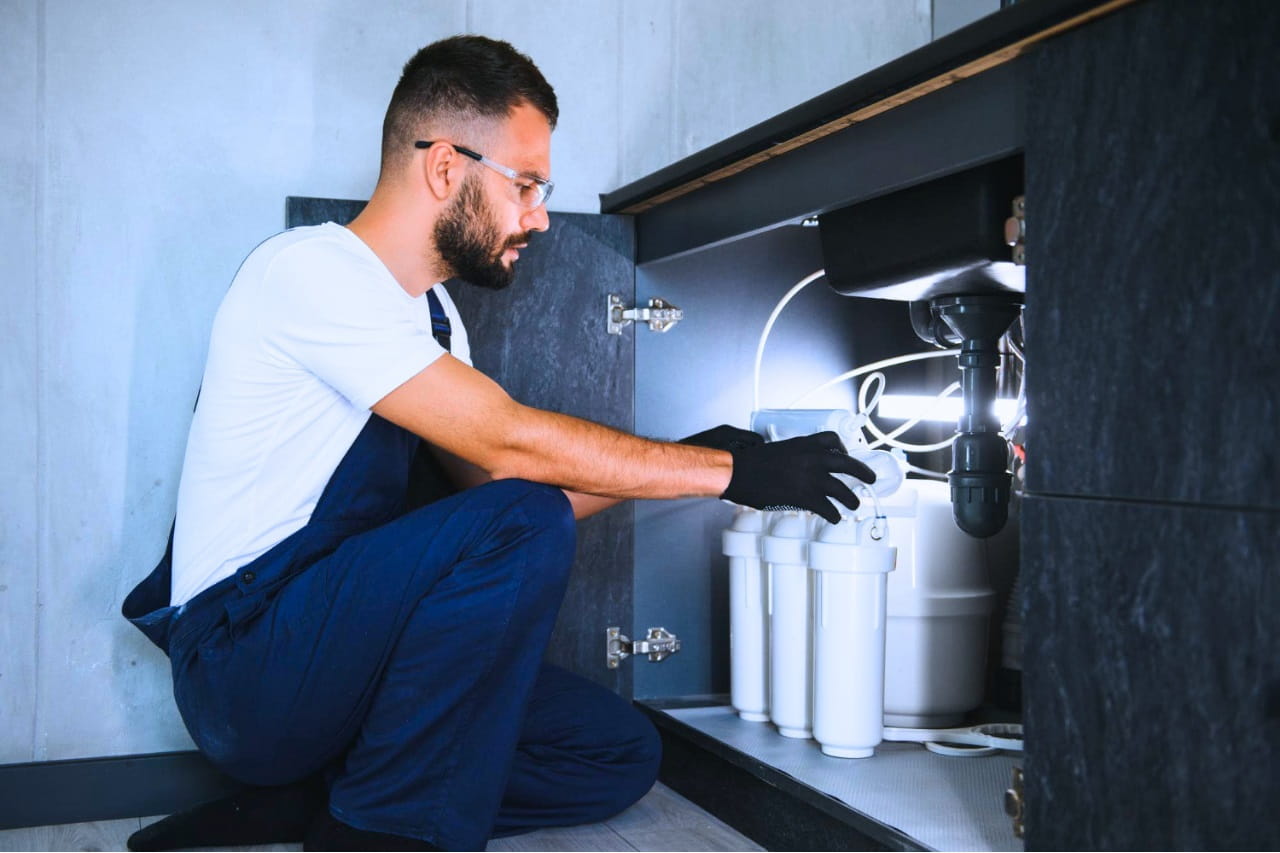
Reverse osmosis reduces many dissolved substances that ordinary particle filters cannot capture. Depending on the membrane, system design, feed-water conditions, and verified performance claims, reverse osmosis may lower total dissolved solids, sodium, fluoride, nitrates, arsenic, lead, and numerous other metals and chemical compounds. It can also reduce some emerging contaminants, including certain PFAS.
That answer needs one important qualifier: no reverse osmosis system should be assumed to remove every contaminant at the same rate. Water pressure, temperature, membrane condition, cartridge age, and the chemistry of the incoming water all affect the result. A model’s performance data sheet and independent certification are more useful than a broad claim printed on the box.
For households looking for a proven under-sink format with a reserve of treated water, a Standard Reverse Osmosis System offers the familiar combination of multiple filtration stages, a reverse osmosis membrane, and a storage tank.
What Does Reverse Osmosis Do?
A reverse osmosis membrane acts less like a simple screen and more like a selective barrier. Household water pressure—or a booster pump in some systems—moves water across the membrane. Water that passes through becomes the treated stream, while rejected contaminants leave with the concentrate, or drain, stream.
The membrane is only one part of the process. Sediment prefilters intercept sand, rust, and other particles that could foul the membrane. Activated-carbon stages reduce chlorine, tastes, odors, and selected organic compounds. The reverse osmosis membrane then targets dissolved material, and a final carbon filter polishes the water before it reaches the faucet. Tankless units follow the same basic logic but deliver water on demand instead of storing it.
In practical terms, what is purified by reverse osmosis is the portion of feed water that crosses the membrane. Questions such as «What does reverse osmosis filter out?» and «What does RO filter remove?» should therefore be answered by separating the membrane’s role from the work performed by the prefilters and post-filter.
What Contaminants Does Reverse Osmosis Remove?
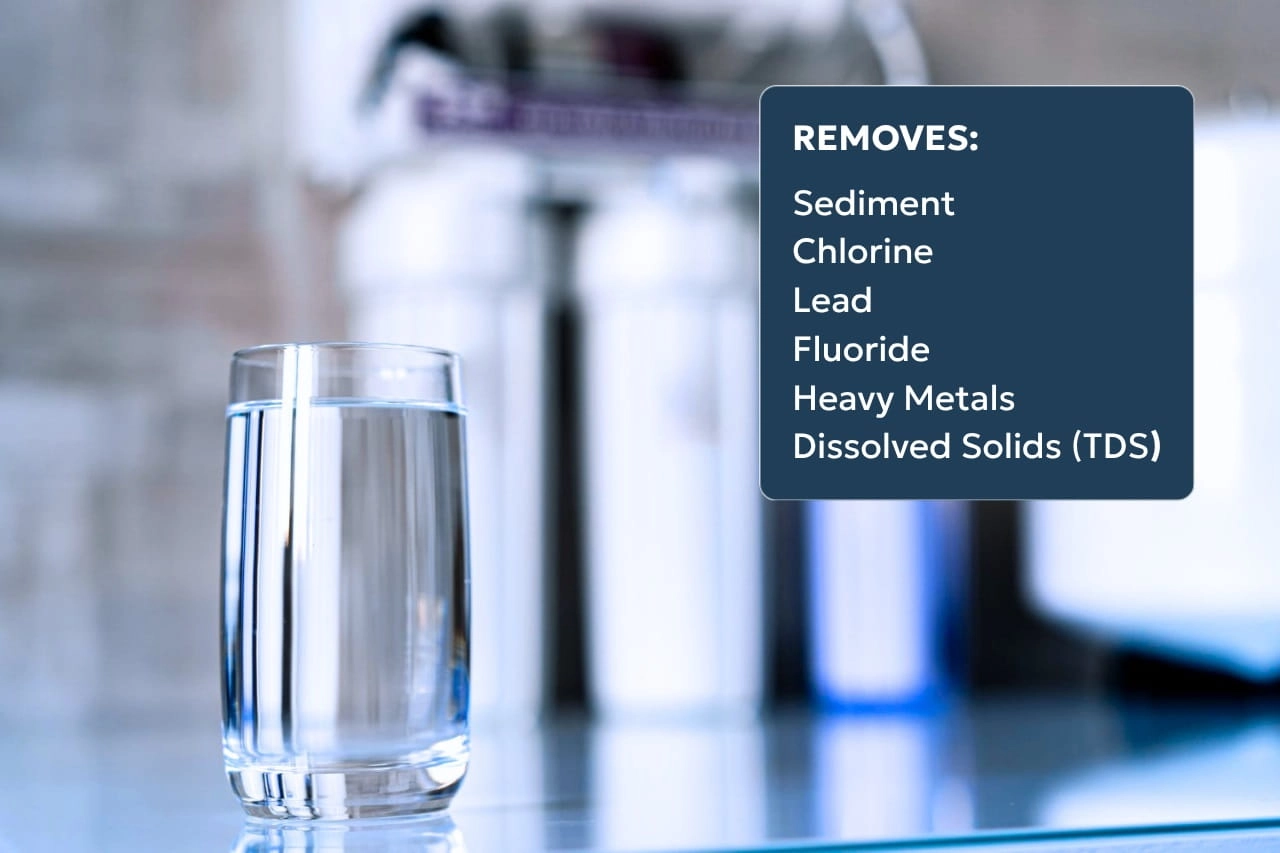
When evaluating what reverse osmosis removes from water, it helps to look at contaminant categories rather than expecting a single percentage for every system. Whether you are asking about the membrane itself or the complete RO unit, typical performance capabilities are summarized below.
|
Category |
Examples |
Primary stage |
|
Dissolved minerals and salts |
Sodium, calcium, magnesium, chloride; total dissolved solids |
RO membrane |
|
Metals and metalloids |
Lead, copper, chromium, cadmium, arsenic |
RO membrane; claim depends on model |
|
Inorganic compounds |
Fluoride, nitrate, nitrite, sulfate |
RO membrane |
|
Selected organic chemicals |
Some pesticides, industrial chemicals, and PFAS |
RO membrane plus carbon, depending on configuration |
|
Taste and odor compounds |
Chlorine and compounds that create unpleasant taste or smell |
Activated carbon stages |
|
Particles |
Sand, silt, rust, and suspended debris |
Sediment prefilter |
These are technology-level capabilities, not a promise that every device has been tested for every substance. NSF/ANSI 58 covers point-of-use reverse osmosis systems and includes total dissolved solids reduction, with optional claims for specific contaminants. When a particular concern—such as lead, arsenic, nitrate, or PFAS—is driving the purchase, check the exact model listing and contaminant-reduction sheet.
What Reverse Osmosis May Not Remove Completely
Reverse osmosis is broad, but it is not universal. Some small dissolved gases and volatile compounds can be difficult for a membrane alone to control. Carbon treatment may improve the reduction of certain volatile organic compounds, but effectiveness still depends on the cartridge and its certified claims.
Microorganisms require similar caution. A properly designed reverse osmosis membrane can act as a strong physical barrier, yet a standard residential system should not automatically be treated as a microbiological purifier. Leaks, damaged seals, an aging membrane, or contamination after the membrane can change the result. Homes using untreated well water may need testing, disinfection, UV treatment, or another dedicated barrier based on the water analysis.
Does Reverse Osmosis Remove Beneficial Minerals?
Yes. Reverse osmosis removes many dissolved ions without sorting them into “wanted” and “unwanted” groups. Calcium and magnesium may decline along with sodium, fluoride, and other dissolved constituents. This often produces water with a lower TDS reading and a lighter, more neutral taste.
For users who prefer a more mineral-forward finish, a Tankless Reverse Osmosis System with Alkaline adds a post-membrane conditioning stage. That stage adjusts the taste and mineral profile after purification; it is not the main contaminant-removal step.
Which Reverse Osmosis System Should You Choose?
Aquaboon offers three reverse osmosis models, each designed for a different household preference. Instead of choosing between general system categories, customers can select the system that best fits their daily water use, available cabinet space, and preferred water taste.
RO Water Purification System — the traditional 50 GPD option with multiple filtration stages and a storage tank. Choose this model for dependable everyday drinking water, a familiar serviceable design, and an accessible entry point into reverse osmosis filtration.
Smart RO Water Purification System — the high-flow 600 GPD Tankless Reverse Osmosis System for households that want faster direct-flow filtration, more usable under-sink space, and no separate storage tank. It is the strongest fit for higher daily demand and a modern, compact installation.
RO Water Purification System with Alkaline — the 600 GPD tankless model with an additional alkaline enhancement stage. Choose it when the household wants the capacity and compact footprint of the Smart model together with a more mineral-forward finished-water taste.
In short: select the RO Water Purification System for a proven tank-based setup, the Smart RO Water Purification System for high-flow tankless performance, or the RO Water Purification System with Alkaline for high-flow filtration with alkaline enhancement.
The Bottom Line: What Does a Reverse Osmosis System Remove?
Reverse osmosis removes — or more precisely, significantly reduces—many dissolved salts, metals, and chemical compounds. In a multistage system, sediment and carbon cartridges handle particles, chlorine, odors, and selected organics while the membrane performs most of the dissolved-contaminant separation. The final result belongs to the complete system, not the membrane alone.
Explore reverse osmosis systems, membranes, and replacement filters at Filterway to find a configuration suited to your water quality, available space, and household demand.
Frequently Asked Questions About Reverse Osmosis
Does reverse osmosis remove healthy minerals?
RO reduces dissolved minerals, including calcium and magnesium. These minerals are also obtained from food, while an optional post-membrane remineralization cartridge can modify the finished water’s taste.
What do reverse osmosis filters not remove?
Performance varies for dissolved gases, some volatile compounds, and contaminants outside a model’s tested claims. Always compare the water analysis with the system’s certified contaminant-reduction data.
Does reverse osmosis remove bacteria and viruses?
An intact RO membrane can reject many microorganisms, but a standard unit is not automatically a certified microbiological purifier. Untreated or unsafe source water may require a dedicated disinfection stage.
Does reverse osmosis remove chlorine?
The activated-carbon prefilter, rather than the RO membrane, normally reduces chlorine. Timely carbon-cartridge replacement matters because chlorine exposure can damage common thin-film composite membranes.