



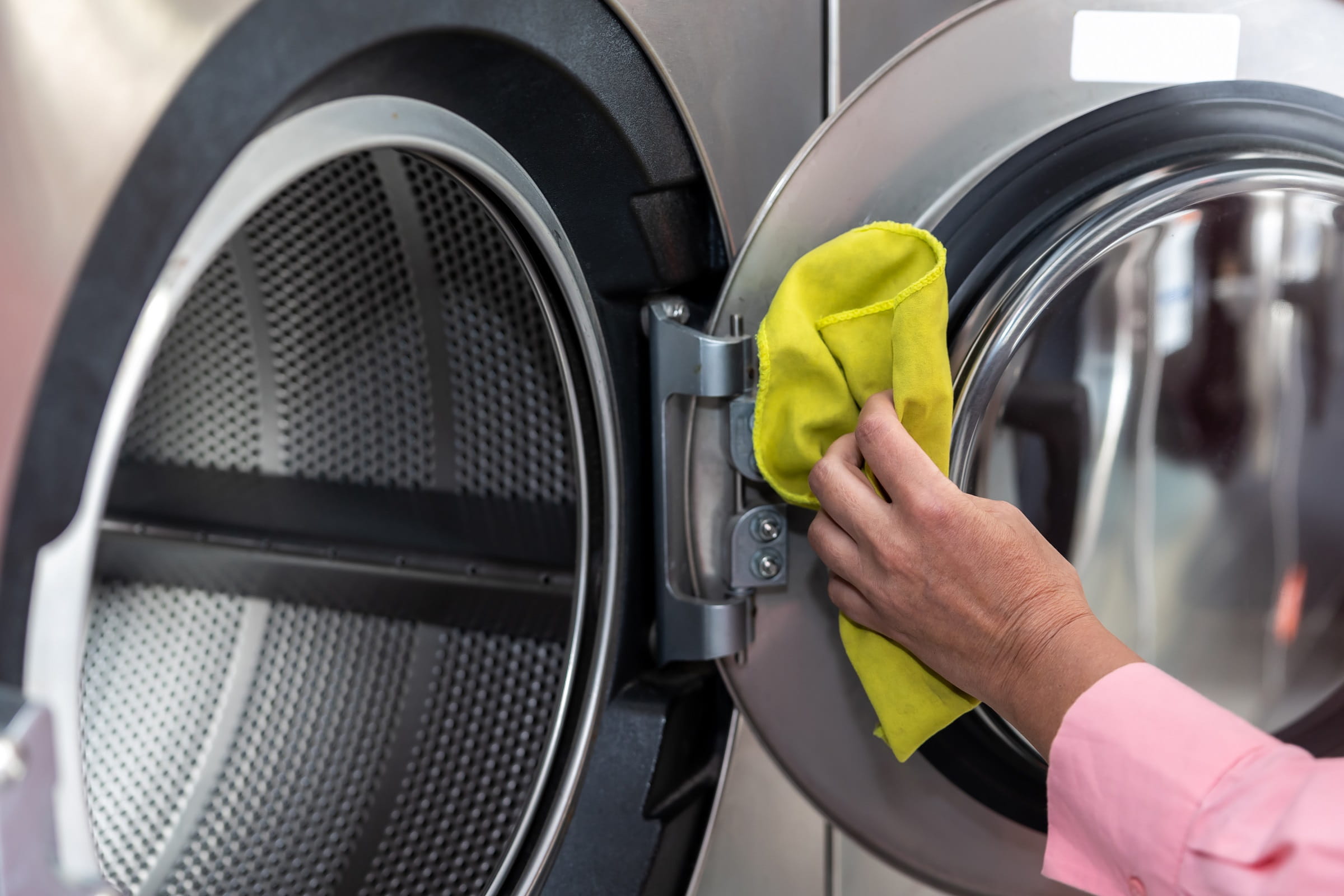
Finding orange or reddish marks on clean laundry is frustrating. Brown stains from washing machine use may come from the appliance, household plumbing, or iron-bearing water. A washing machine leaving rust stains on clothes is therefore not always defective. The pattern, timing, and location of the deposits help identify the source.
Iron can remain dissolved in clear water and become visible after exposure to oxygen. It may then form orange particles and iron water stains on fabric, sinks, tubs, and appliance surfaces. Before replacing parts or buying treatment equipment, inspect the washer and test the water so the solution addresses the actual cause.
Why Is My Washing Machine Leaving Rust Stains on Clothes?
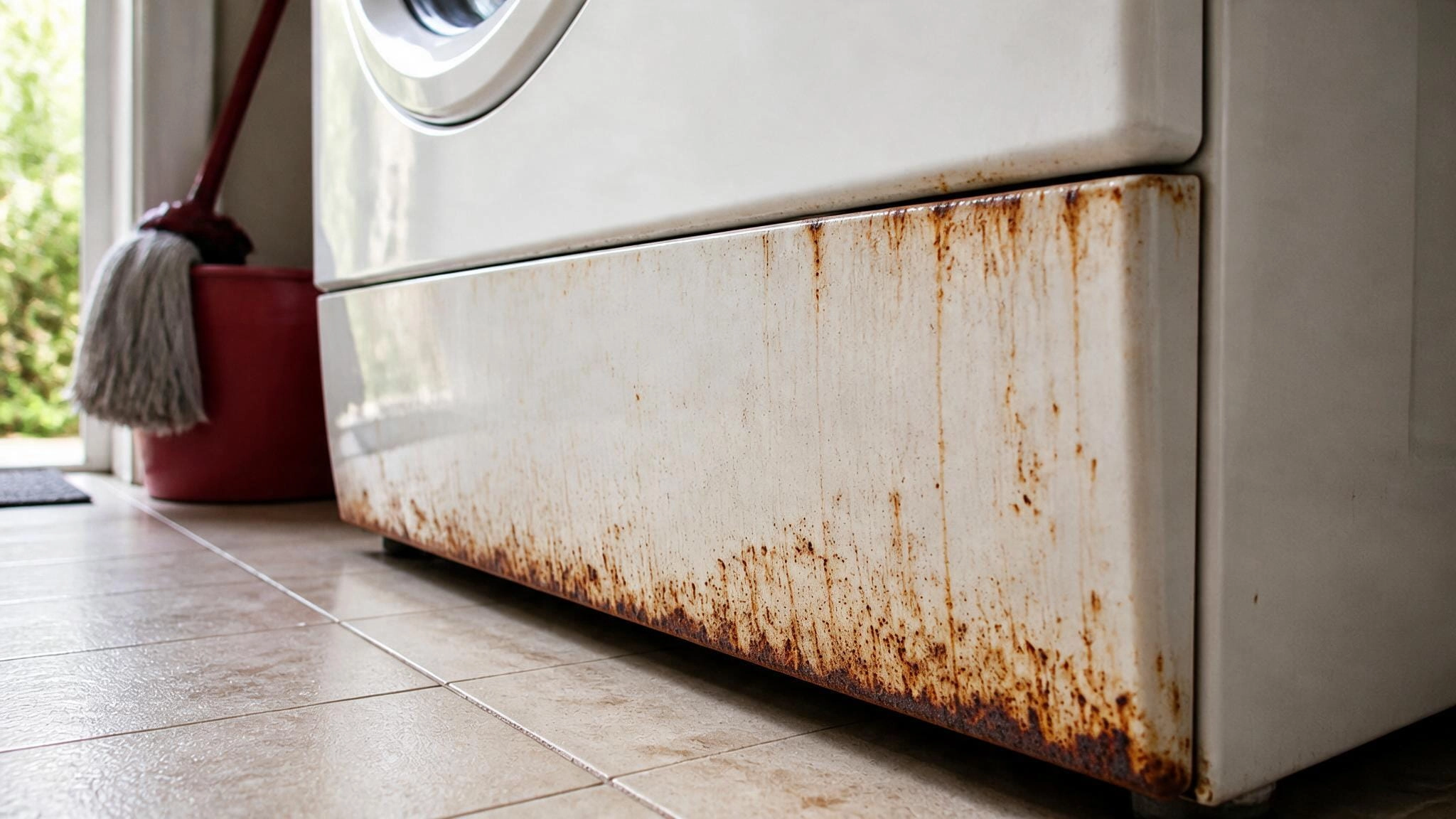
If you are asking why is my washing machine rusting, first separate appliance corrosion from water-quality problems. Washing machine rust may develop where a protective coating is damaged, around metal connections, or where a small metal object is trapped. A rusty washer may also leave marks only on items that contact one damaged area.
A washer leaving rust stains on clothes can also be receiving rust particles from corroded pipes, an aging water heater, or a private well. Compare hot and cold cycles and check other fixtures. Similar orange deposits throughout the home point toward the water supply or plumbing rather than the washer alone.
- Washer clues: visible corrosion, a damaged drum surface, rusty connections, or staining limited to laundry.
- Water clues: stains at several fixtures, sediment, metallic taste, or discoloration that appears after water stands.
Can Iron in Water Cause Rust Stains on Clothes?
Yes. Dissolved iron may enter a home through well water or corroding plumbing. Clear water can develop orange-brown particles after aeration, while already oxidized iron may arrive as suspended sediment. Both forms can contribute to laundry stains, but they require different treatment approaches.
The U.S. Environmental Protection Agency lists iron as a secondary contaminant associated with rusty color, sediment, metallic taste, and reddish or orange staining. See the EPA guidance on secondary drinking water standards. These are primarily aesthetic and technical effects; stain color alone does not establish whether water is safe.
If testing confirms iron or manganese, compare a whole house water iron filter with the measured contaminant form, concentration, pH, flow needs, and other water conditions.
How to Tell Whether the Washer or Water Is Responsible
Check for rust in washing machine drum surfaces with the appliance empty and safely switched off. Use a flashlight to inspect accessible seams, the door area, dispensers, inlet connections, and the drum. Rust inside washing machine drum areas may reflect damaged metal, but a coin, screw, or hairpin can also create a localized mark.
Look for rust on washing machine connections and compare stains across loads. Rust spots on clothes from washing machine cycles that occur at one contact point suggest an appliance issue. If the marks vary and orange deposits also appear in toilets, sinks, or tubs, collect hot and cold samples and arrange appropriate water testing.
How to Remove Rust From the Washer and Clothes
Anyone searching how to get rust out of washing machine components should begin with the manufacturer's cleaning and service instructions. Remove accessible foreign metal objects, clean approved surfaces, and have damaged coatings or internal parts evaluated by a qualified technician. Do not sand, coat, or dismantle internal components unless the manufacturer permits it.
Advice on how to fix rust on washing machine surfaces depends on the location and severity of corrosion. Cosmetic exterior spots and internal drum damage are not equivalent. Persistent internal corrosion, leaks, sharp edges, or staining after cleaning requires professional assessment rather than repeated home remedies.
For how to remove rust water stains from clothes, do not machine-dry the item first because heat may make the mark harder to treat. Check the care label, use a fabric-safe product specifically labeled for rust or iron stains, rinse thoroughly, and rewash. Never mix stain removers with chlorine bleach or other cleaners.
Cleaning explains how to get rid of rust in washing machine residue temporarily, but it will not stop new staining if the incoming water or plumbing remains the source.
How to Prevent Rust Stains Caused by Water
Start with a water test that identifies iron, manganese, pH, hardness, and other relevant conditions. The right solution depends on whether rust stains come from suspended particles, dissolved iron, plumbing issues, or a broader water quality problem.
|
Cause of rust stains |
What to check |
Possible solution |
|
Iron particles in water |
Sediment level and visible discoloration |
Sediment filtration to capture suspended particles |
|
Dissolved iron or manganese |
Water test results |
Specialized iron and manganese filtration media |
|
Rust stains from multiple fixtures |
Whole-home water quality |
A home water filtration system installed at the point of entry |
|
Water from a private well |
Iron, manganese, hardness, and pH levels |
Whole house water filtration systems for well water selected according to test results |
|
Several metals detected in water |
Broader water analysis |
A heavy metal whole house water filter for specific contaminants |
A sediment cartridge can capture suspended rust particles, but it is not a universal solution for dissolved iron. Existing filtration systems may also require compatible iron and manganese cartridges and timely replacement according to manufacturer instructions.
The Long-Term Solution to Rust Stains on Clothes
Repeated cleaning is not a complete solution when iron, sediment, or plumbing corrosion continues to reach the washer. Confirm the source, repair appliance or plumbing defects, and select treatment based on test results. This approach protects laundry without assuming that every orange mark has the same cause.
Review available residential treatment categories through Filterway, then verify system size, flow rate, media purpose, and maintenance requirements before purchase.
Frequently Asked Questions About Rust Stains
Why are my clothes turning orange in the washing machine?
Orange marks may come from dissolved or suspended iron, corroded household plumbing, a deteriorating water heater, foreign metal objects, or damaged washer components. Inspect the appliance and compare deposits elsewhere.
Can hard water cause rust stains on clothes?
Hardness minerals and iron are different water-quality issues. Hard water can leave scale or detergent residue, while orange rust-like stains more often involve iron, corrosion particles, or metal contact.
How do I know if stains come from the washer or water?
Staining limited to laundry and visible appliance corrosion suggests the washer. Similar orange deposits at sinks, tubs, toilets, or hot-water fixtures suggest plumbing or incoming water should be tested.
How to remove rust water stains from clothes?
Keep the garment out of the dryer, check its care label, and apply a fabric-safe rust remover exactly as directed. Rinse and rewash before confirming the stain is gone.
How can I prevent washing machine rust stains?
Inspect the drum and connections, remove trapped metal objects, maintain the appliance, compare hot and cold water, and test recurring household staining before choosing repairs or filtration.
Can a water filter remove iron from well water?
Yes, but treatment depends on iron form, concentration, pH, manganese, flow demand, and other water chemistry. A basic sediment filter captures particles but may not remove dissolved iron.
Is rust inside washing machine drum always caused by the machine?
No. Visible drum corrosion indicates an appliance problem, but orange deposits can also arrive with iron-bearing water or corroded plumbing. Inspect the washer and test recurring household staining.