



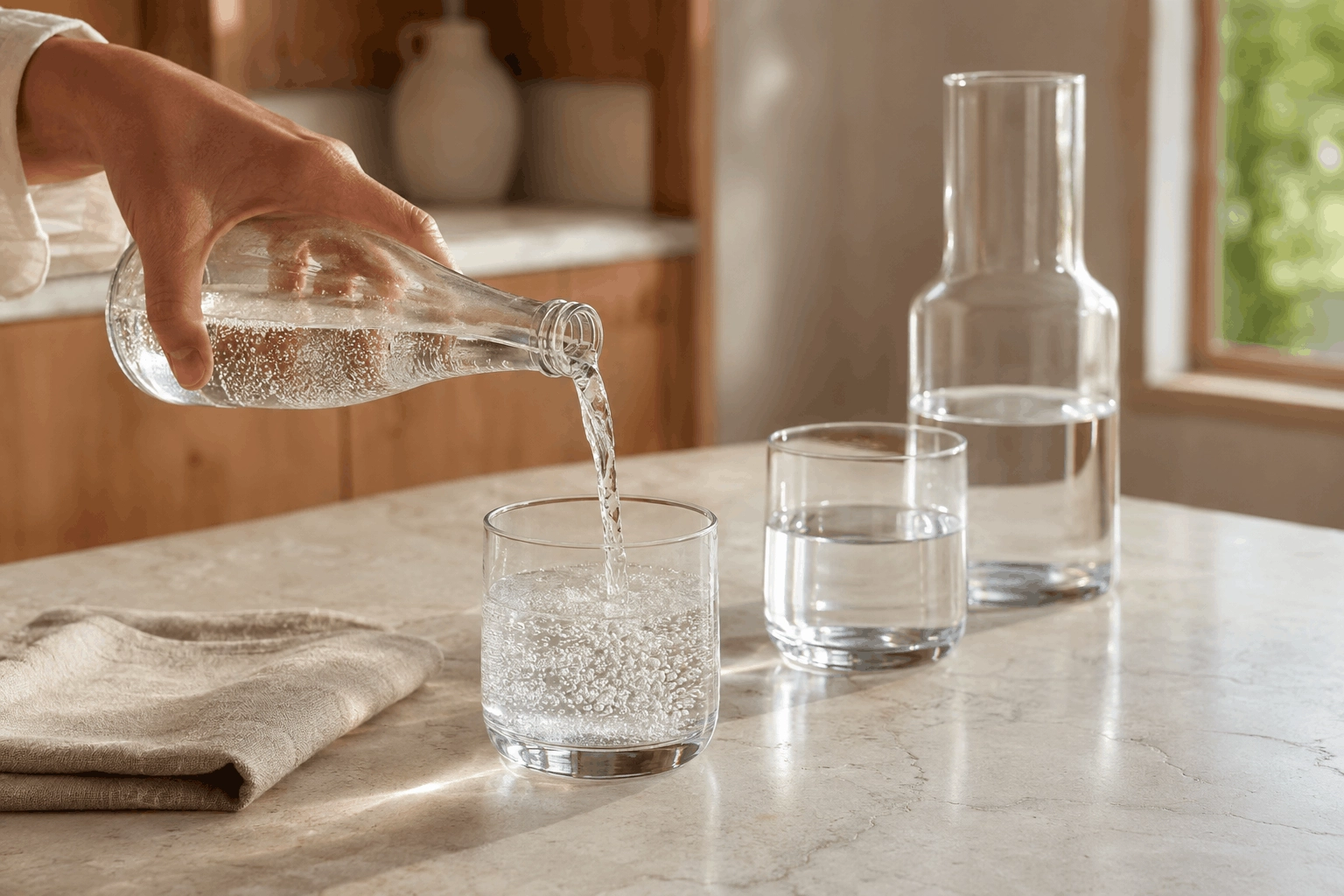
Does water cause bloating? Plain still water is not usually the direct cause of lasting gas or abdominal swelling. A temporary feeling of fullness can happen after drinking a large amount quickly, drinking with a heavy meal, or swallowing air. Carbonated water is more likely to create gas because it contains dissolved carbon dioxide.
Water quality also deserves attention when discomfort happens only after water from one faucet or well—especially if the water has an unusual taste, odor, color, or sediment, or several household members develop similar symptoms. In that situation, testing the source is more useful than assuming that water itself is the problem.
Why Water Can Make the Stomach Feel Full
People asking why do i feel bloated after drinking water are often describing temporary stomach fullness rather than new intestinal gas. The sensation is more noticeable after several glasses at once, rapid drinking, using a straw, or drinking with a large meal.
If the stomach bloated after drinking water feeling fades as the stomach empties, it differs from persistent bloating. Still water does not produce gas during digestion, while sparkling water introduces carbon dioxide and may create a gassier sensation.
Does too much water cause bloating? A large volume consumed quickly can temporarily stretch the stomach. The question can drinking too much water cause bloating is therefore mainly about speed and volume. Spread intake across the day, sip rather than gulp, avoid forcing a large drink with a heavy meal, and compare still water with carbonated water. Does drinking water cause gas? Not by itself when it is still, but swallowed air and carbonation can contribute. Someone frequently bloated after drinking water should first compare these drinking patterns before blaming the water source.
When Water Quality May Be Part of the Problem
Most temporary fullness after drinking is related to volume, speed, carbonation, or swallowed air. Water quality becomes more relevant when discomfort repeatedly follows one particular faucet or well, the water has changed, or several people using the same source develop gastrointestinal symptoms.
Can tap water make you bloated? Properly treated public water should not routinely cause bloating, and can unfiltered water cause bloating cannot be answered from the word “unfiltered” alone. Public tap water may already meet applicable standards without an additional home system. The useful question is whether the source has a specific aesthetic or safety concern that testing can identify.
Water Quality Factors to Check
|
Water-quality factor |
What it may indicate |
What to do next |
|
Microorganisms |
Bacteria, viruses, or parasites in contaminated water can cause gastrointestinal illness. Bloating alone is not proof of contamination. |
Check advisories and arrange appropriate microbiological testing. |
|
Private well conditions |
Flooding, damaged components, septic systems, agriculture, and runoff can affect a well. |
Test the well annually and after repairs, flooding, or a noticeable change. |
|
Sediment or rust |
Visible particles may come from the source, plumbing, a water heater, or corroding components. |
Identify the source and select the correct sediment filtration level. |
|
Chlorine taste or odor |
Disinfectant residual can affect taste and smell even when the water meets safety requirements. |
Review the utility report and consider compatible carbon filtration. |
|
Hardness minerals |
Calcium and magnesium mainly cause scale, mineral spots, and soap-performance problems. |
Measure hardness before choosing a softener; do not treat it as a digestive diagnosis. |
|
Dissolved contaminants |
Some substances cannot be identified by appearance, smell, or a basic TDS reading. |
Use certified laboratory results to select point-of-use treatment. |
Can Hard Water Cause Indigestion or Belly Bloat?
Can hard water cause indigestion or belly bloat? Ordinary hard water contains higher concentrations of calcium and magnesium, but evidence does not support presenting household hardness as a routine direct cause of bloating. Hardness is primarily a household water concern: scale accumulates on fixtures and heating elements, soap performs less effectively, and the water’s taste or mouthfeel may change.
A softener can address measured hardness, but it should not be promoted as a treatment for digestive discomfort. If symptoms occur only with one water source, test that source rather than assuming calcium and magnesium are responsible.
Why Private Well Water Requires Extra Attention
Can well water cause gas and bloating? Bloating alone cannot answer that question, but private wells are not monitored like public systems. Depending on local conditions, well water may be affected by coliform bacteria, E. coli, parasites, nitrates, metals, flooding, damaged components, and nearby septic or agricultural activity.
The CDC recommends annual testing for total coliform bacteria, nitrates, total dissolved solids, and pH, with additional tests based on local risks. If several people become ill after using a well, move to a verified safe source and contact the local health authority while the water is evaluated.
After testing, compare whole house filters for well water according to the confirmed sediment, iron, manganese, taste, odor, or other treatment needs.
How to Tell Whether the Problem Is Your Water
- Compare still tap water with water from another verified source.
- Check whether the reaction changes when you avoid carbonation, straws, very cold water, and rapid drinking.
- Inspect the water for changes in color, odor, taste, and visible sediment.
- Review the utility’s water-quality report and current boil-water advisories.
- Test private well water through an appropriate laboratory.
- Check filter age, cartridge condition, and whether maintenance is overdue.
- Do not treat a normal appearance or a TDS reading as proof that water is free of microorganisms or dissolved contaminants.
Filterway Solutions for Different Water Quality Concerns
Once the water concern is known, Filterway products can be matched to the treatment location and contaminant type. Filtration may improve clarity, taste, odor, and selected water parameters; it does not treat ordinary digestive bloating.
|
Water concern |
Filterway solution |
Role in the treatment setup |
|
Sediment, sand, silt, or rust |
Sediment cartridge or staged whole-house filtration |
Captures visible and suspended particles; micron rating should reflect particle load and flow needs. |
|
Chlorine-related taste and odor |
Activated carbon cartridge |
Improves selected taste and odor concerns; requires timely replacement. |
|
Drinking-water dissolved substances |
Reverse osmosis system |
Provides point-of-use membrane treatment for drinking and cooking water. |
|
Multiple household water concerns |
Whole-house filtration system |
Treats water at the entry point using stages selected for the tested conditions. |
|
Private-well concerns |
Well-water whole-house system with appropriate media |
May combine sediment, iron, manganese, carbon, or other treatment after laboratory testing. |
|
Microbiological risk |
Disinfection such as UV when appropriate |
Requires correct sizing, prefiltration, maintenance, and confirmation that the technology fits the identified risk. |
Whole house water filtration systems provide a point-of-entry foundation for treating water throughout the home. The number of stages and cartridge media should reflect the source and test results.
Activated carbon water filters can help with selected chlorine-related taste and odor concerns but do not remove every dissolved contaminant or microorganism.
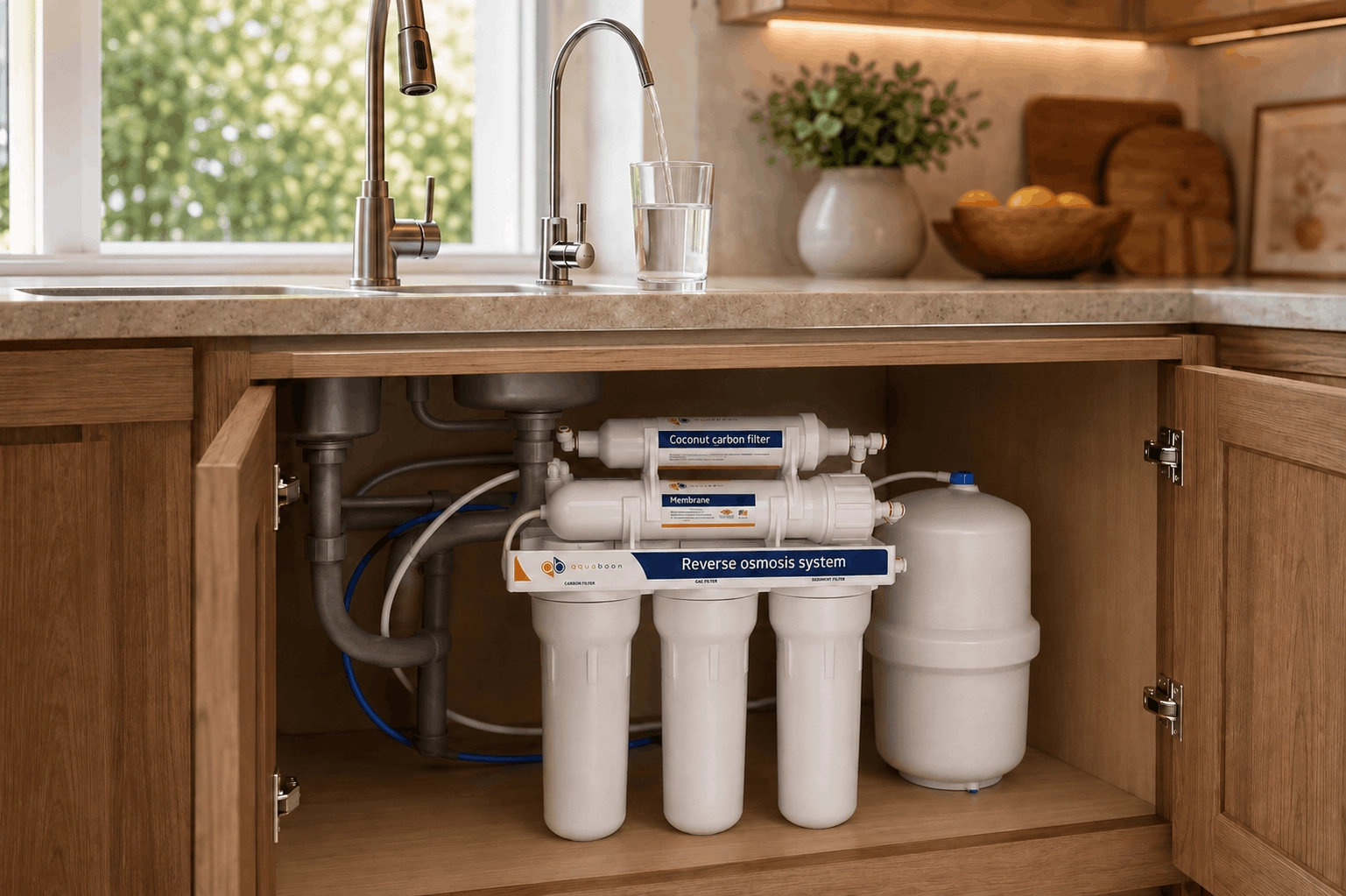
For drinking and cooking water, the Standard Reverse Osmosis System uses multiple treatment stages at the point of use. It is intended for water-quality treatment—not as a remedy for bloating.
Replace compatible water filter cartridges on schedule, because exhausted or clogged cartridges can reduce performance and water flow.
Filterway offers whole-house systems, point-of-use reverse osmosis, and replacement cartridges for different water sources and treatment goals.
Does Water Cause Bloating?
Safe still water is not usually a direct cause of gas. Drinking too much too quickly can temporarily stretch the stomach, while carbonation and swallowed air are more likely to create a gassy sensation. Hard water should not automatically be blamed for indigestion. When discomfort repeatedly follows one specific tap or well—especially with unusual water characteristics or illness in several people—check the source and test it before choosing filtration.
Frequently Asked Questions
Is it normal to feel bloated after drinking water?
Temporary fullness can occur after drinking quickly or consuming a large amount at once. Persistent, painful, or frequently recurring bloating is less likely to be explained by water volume alone.
Can cold water cause bloating?
Cold water does not normally create intestinal gas, but very cold drinks may feel uncomfortable to some people. Compare smaller servings at a moderate temperature to see whether the sensation changes.
Can filtered water prevent bloating?
Filtered water does not prevent ordinary digestive bloating. Appropriate filtration can improve taste, odor, clarity, or specific tested water-quality concerns, making still water more appealing to drink.
Can bacteria in water cause stomach discomfort?
Yes. Disease-causing microorganisms in contaminated water can cause gastrointestinal illness, including cramps, nausea, vomiting, or diarrhea. Bloating by itself is not enough to identify contamination.
Should I stop drinking water if I feel bloated?
Do not stop normal hydration solely because of temporary fullness. Try smaller servings, slower drinking, and still water. Seek medical advice for persistent pain, vomiting, weight loss, or worsening symptoms.