



Chalky marks on faucets, cloudy glassware, stiff towels, soap that will not lather, and scale inside a kettle are everyday signs of mineral-rich water. Many homeowners first ask, «is city water hard or soft?» after these problems keep returning despite regular cleaning.
The answer depends on the utility, source, treatment plant, and sometimes the neighborhood. Current official data confirm very hard water in Las Vegas, Phoenix, Indianapolis, and Tampa, but there is no permanent national city ranking. This guide uses 2025 utility measurements published in 2025–2026 wherever numerical results are available; it does not recycle old figures from competitor lists.
What Is Water Hardness?
Hardness measures mainly dissolved calcium and magnesium, usually reported as milligrams per liter of calcium carbonate (mg/L as CaCO₃) or grains per gallon (gpg). Hard water is not automatically unsafe. Its main impact is operational: mineral scale, soap scum, spotting, extra detergent use, and reduced heat-transfer efficiency in water heaters.
|
Hardness as CaCO₃ |
USGS classification |
|---|---|
|
0–60 mg/L |
Soft |
|
61–120 mg/L |
Moderately hard |
|
121–180 mg/L |
Hard |
|
More than 180 mg/L |
Very hard |
Why Do Some US Cities Have Harder Water?
Water picks up calcium and magnesium while moving through limestone, dolomite, and other mineral-bearing formations. Groundwater often has longer rock contact, while rivers and reservoirs can carry minerals from large watersheds. In arid regions, evaporation can concentrate dissolved solids. Municipal treatment focuses on making water safe and compliant; it does not necessarily remove hardness.
Homeowners can combine softening with other whole house water filtration systems when sediment, chlorine, taste, odor, iron, or other tested concerns are also present. Each stage should solve a documented problem rather than simply adding more cartridges.
US Water Hardness Map: Useful Context, Not Current City Data
The well-known USGS water hardness map shows broad regional patterns, including extensive hard-water zones across the Southwest, Texas, and parts of the Midwest. Softer regions appear in parts of New England, the Pacific Northwest, and the Southeast. However, the map is based on historical surface-water observations and cannot answer what is the water hardness level in my area today.
Treat any hard water map usa graphic as geological context. A current utility report or household test is the better source for water hardness near me because cities blend supplies, operate several plants, and change source proportions during the year.
Places with hard water are not limited to one climate or state. Broad areas with hard water and smaller hard water areas can exist within the same utility territory. Can city water be hard even when it meets every safety standard? Yes—hardness and regulatory safety describe different characteristics.
Cities With Hard Water: Current Official Measurements
The table below is not a definitive contest for the hardest water in the US. It lists major hard water locations with recent numerical results found in official utility publications. Values are labeled by measurement year and may still vary within each service area.
|
City |
Latest official hardness used |
Classification / note |
|---|---|---|
|
Las Vegas, Nevada |
280 mg/L; 16 gpg (2025 data, 2026 summary) |
Very hard |
|
Phoenix, Arizona |
172–302 mg/L; 10–17.6 gpg (2025) |
Hard to very hard |
|
Indianapolis, Indiana |
317 mg/L average; 148–460 range (2025) |
Very hard average; wide system range |
|
Tampa, Florida |
211 mg/L; 12.3 gpg average (2025) |
Very hard |
Las Vegas Water Hardness
The Las Vegas Valley Water District’s 2026 summary reports 2025 hardness of 280 mg/L, or 16 gpg—very hard by the USGS scale. Most local supply comes from the Colorado River through Lake Mead, making does Las Vegas have hard water an easy question to answer: yes, although customers should still use the setting supplied by their utility or test.
Phoenix Water Hardness
Phoenix’s 2025 report measured total hardness from 172 to 302 mg/L, or 10 to 17.6 gpg. That range crosses from hard to very hard and illustrates why hard water by city should not be reduced to one timeless number. Source and distribution conditions matter.
Indianapolis Water Hardness
Citizens Energy Group reported a 2025 Indianapolis average of 317 mg/L, or 19 gpg, with a system-wide range of 148–460 mg/L. This is a particularly useful current example: Indianapolis water hardness varies enough that the utility advises customers to obtain address-specific guidance for softener settings.
Tampa Water Hardness
Does Tampa have hard water? The city’s 2025 report says finished water averaged 211 mg/L, or 12.3 gpg, which is very hard under the USGS classification. That figure was published in 2026 and replaces older values often repeated online.
What About San Antonio, Austin, Dallas, and Minneapolis?
Searches such as does San Antonio have hard water, does Austin have hard water, or does Dallas have hard water are common, but current public reports do not always provide a simple system-wide number. San Antonio and Austin also use multiple sources, so one older figure should not be treated as universal. For water hardness San Antonio or Austin water hardness, request a current result from the serving utility or test the tap.
Dallas released its 2025 water-quality report in 2026, but that report does not publish a hardness value. This article therefore does not reuse the city’s older 120–155 mg/L figure as if it were current. Minneapolis is also a poor fit for a simplistic «hardest city» list because its municipal treatment process actively softens water; the city says it removes about 65,000 pounds of hardness daily.
How Hard City Water Shows Up at Home
Hard tap water commonly leaves white scale around faucet outlets, showerheads, glass doors, humidifiers, and coffee makers. Dishes may dry with spots, shampoo may feel harder to rinse, and laundry can feel less soft. Scale also forms on heating elements and inside water heaters, where it can reduce efficiency and increase maintenance.
These signs suggest hardness but do not measure it. Similar films can come from silica or other dissolved solids, while poor lather can be influenced by product choice. Testing separates a real mineral problem from guesswork.
How to Find the Water Hardness Level at Your Address
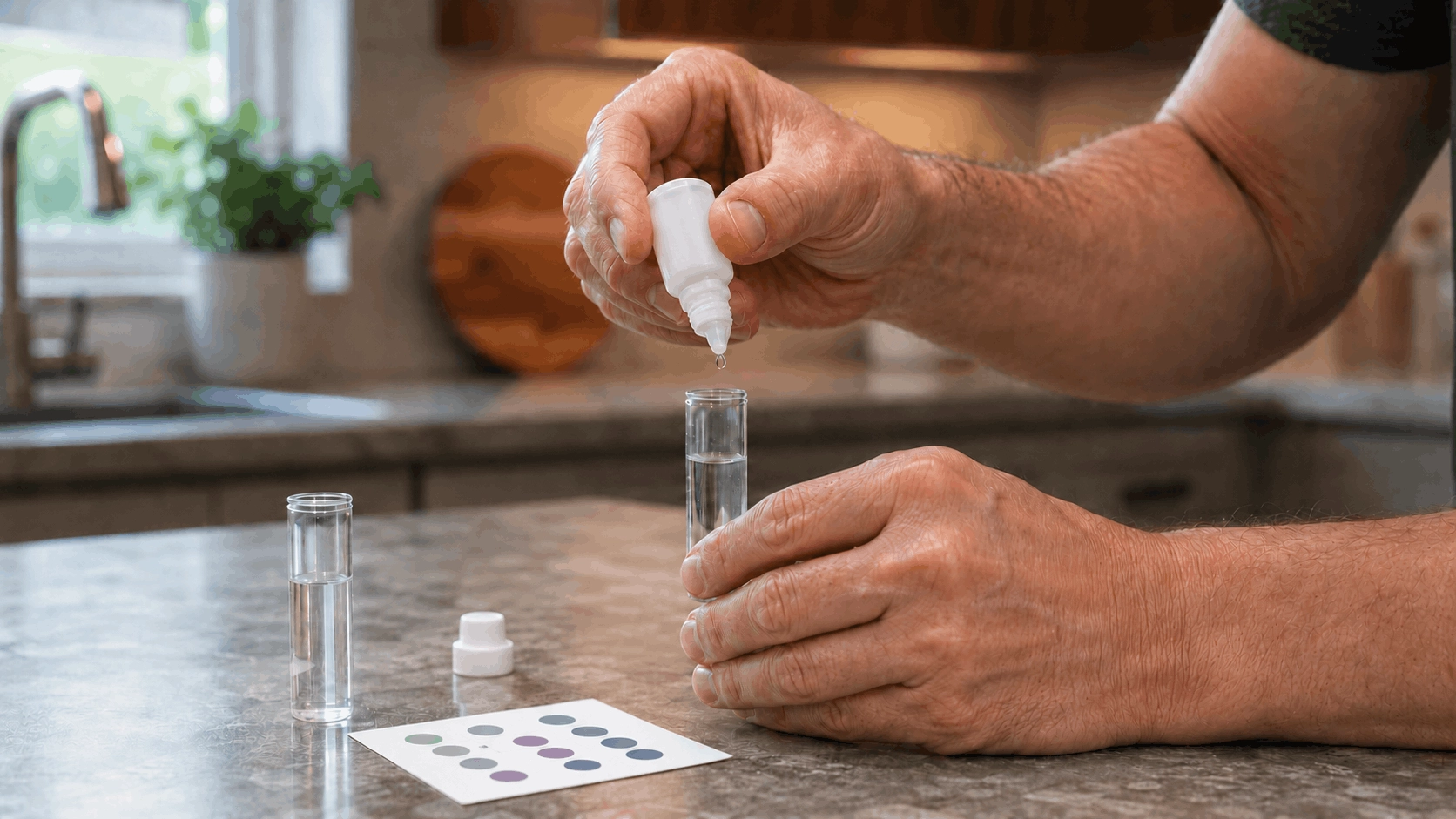
Start with the latest Consumer Confidence Report from the utility serving the address—not simply the city name. Search the document for hardness, total hardness, CaCO₃, ppm, mg/L, or grains per gallon. If the report gives no result, contact the utility and ask which plant or pressure zone serves the property. Confirm the number with a home titration kit or laboratory test before programming equipment. Private-well owners need their own sample.
How to Treat Hard City Water with Filterway Solutions
For genuine hardness removal throughout the home, ion-exchange water softeners replace calcium and magnesium ions and help reduce scale, spotting, soap use, and mineral buildup in plumbing and appliances.
The Aquaboon SoftGuard 48,000-grain whole house water softener is designed for homes with approximately four to five bathrooms. Its metered digital control initiates regeneration according to use, while programmable settings should be based on the home’s tested hardness—not a generic city average.
Filterway also groups hard water treatment solutions for customers comparing softening and anti-scale approaches. Anti-scale treatment may help manage mineral deposits, but it does not remove hardness minerals in the same way as ion exchange. Sediment and carbon filters address particles, chlorine, taste, or odor; standard cartridges do not soften water.
For drinking and cooking at one faucet, a Standard Reverse Osmosis System can reduce many dissolved minerals. RO is not a practical substitute for whole-house softening when the goal is to protect showers, laundry, water heaters, and every fixture.
Where Is the Hardest Water in the US?
Recent official data continue to show hard and very hard supplies in parts of the Southwest, Florida, and the Midwest. Las Vegas, Phoenix, Indianapolis, and Tampa are well-documented current examples, but the correct household decision should come from the serving utility and a tap test. Compare city data cautiously, then size treatment for the actual hardness, water use, bathroom count, and desired outcome.
Explore current softeners, whole-house systems, and replacement components at Filterway after confirming the hardness at your address.
Frequently Asked Questions About Hard Water in US Cities
Which city has the hardest water in the US?
There is no permanent official winner. Among current published examples, Indianapolis reported a 2025 system maximum of 460 mg/L, while citywide sources and service zones can vary considerably.
What states have the hardest water?
Very hard water is common in Nevada, Arizona, Texas, New Mexico, Utah, and parts of the Midwest. Statewide maps show trends, not the current hardness at every address.
Can city tap water be very hard?
Yes. Municipal treatment ensures regulatory safety but may not remove calcium and magnesium. Las Vegas, Indianapolis, Tampa, and parts of Phoenix reported very hard water in current official data.
Is hard water safe to drink?
Hardness itself is generally an aesthetic and household-performance issue, not proof that water is unsafe. Review the utility’s full quality report for regulated contaminants and local advisories.
How do I check water hardness near me?
Read the latest report from your exact utility, ask for address-specific hardness, and verify with a titration kit or laboratory test. Do not rely only on a national map.
Does boiling water remove hardness?
Boiling may precipitate some temporary carbonate hardness, but it does not reliably soften household water and can leave scale behind. A correctly sized softener treats water before use.
Do regular water filters soften city water?
Standard sediment and carbon cartridges do not remove calcium and magnesium. Ion-exchange softeners remove hardness; reverse osmosis can reduce dissolved minerals only at the connected drinking-water faucet.