


Once babies begin complementary foods at around 6 months, water becomes a small but useful part of their daily routine. It accompanies meals, supports hydration alongside breast milk or formula, and helps babies practice drinking from a cup without introducing sugar or sweet flavors.
When can babies have purified water? From around 6 months, small amounts of safe drinking water can be introduced alongside complementary foods. For parents asking when can a baby have water, this stage is the practical starting point: the baby is learning to drink from a cup, experiencing new tastes, and gradually adding water to the daily routine.
At this point, water quality becomes especially important. Water offered to a baby should come from a safe, reliable source and should not have unexpected tastes or odors that discourage drinking. Purification can reduce many source-water impurities, while timely filter replacement helps maintain consistent performance. For a baby drinking water for the first time, clean, neutral-tasting water also supports the habit of choosing plain water rather than sweetened drinks later.

Aquaboon Reverse Osmosis Systems for Family Drinking Water
Aquaboon offers three reverse osmosis systems so families can select the right balance of capacity, cabinet space, and finished-water taste. Each model uses multistage filtration to provide convenient access to purified water for drinking, preparing meals, and everyday kitchen use.
Standart RO Water Purification System — a traditional 50 GPD system with a storage tank that keeps purified water ready at the dedicated faucet. Its familiar multistage design is a practical option for households with standard daily drinking-water needs that prefer a proven tank-based configuration and straightforward filter servicing.
Smart Tankless RO Water Purification System — a high-flow 600 GPD tankless system that filters water on demand. The direct-flow format removes the need for a separate storage tank, frees more usable space under the sink, and delivers faster water production for families that regularly use purified water for drinking, cooking, and filling bottles.
RO Water Purification System with Alkaline — a 600 GPD tankless model that combines high-flow purification with an additional alkaline enhancement stage. It offers the same compact footprint and on-demand convenience as the Smart model while providing a more mineral-forward finished-water taste for households that prefer alkaline-enhanced water.
The traditional model is best suited to households that want a dependable stored supply, the Smart model prioritizes flow and cabinet space, and the alkaline model adds taste enhancement to the high-capacity tankless format.
When Can Babies Start Drinking Water?
When can babies drink water? The usual dividing point is around 6 months, not because purified water suddenly changes, but because feeding and developmental needs change. The child begins complementary foods and can practice taking small sips from an open cup, sippy cup, or straw cup. Breast milk or formula remains the main drink throughout the first year.
|
Age |
General approach |
Important distinction |
|
Birth to about 6 months |
No separate drinking water unless a clinician directs otherwise |
Water used to prepare formula is not the same as giving water as a beverage |
|
Around 6–12 months |
Offer small sips with complementary foods |
Breast milk or formula remains the primary source of fluids and nutrition |
|
After 12 months |
Water becomes a regular beverage alongside an age-appropriate diet |
Individual needs vary with diet, climate, activity, and health |
Why Good Water Quality Matters After 6 Months
The first months of drinking water are also a period when babies become familiar with its taste. Water with a noticeable chlorine smell, metallic note, sediment, or another unpleasant characteristic may be less appealing. Offering clean, neutral-tasting water makes it easier to build a routine around plain water without adding juice, sugar, or flavored drink mixes.
Water quality is not identical in every home. Municipal water can vary by location and season, while private well water depends on local geology, nearby land use, and system maintenance. Reverse osmosis can reduce many dissolved salts, metals, and other impurities, but the exact result depends on the membrane, prefilters, water pressure, and verified performance claims. If a specific contaminant is a concern, start with the local water-quality report or a laboratory test.
Purified water should still be handled like a food-contact product. Use a clean cup, avoid touching the inside of the faucet or container, and do not store poured water for long periods at room temperature. Filtration improves the incoming water, but clean serving practices help protect its quality between the RO faucet and the baby’s cup.
Keeping Aquaboon RO Water Consistent
An Aquaboon reverse osmosis system works best when each stage is maintained on schedule. Sediment and carbon prefilters protect the membrane, the membrane performs most dissolved-contaminant reduction, and the post-filter helps preserve the finished taste. Replace cartridges according to the system manual and actual water conditions rather than waiting for a strong taste or pressure problem to appear.
Check the system if filtered-water flow drops, taste or odor changes, or the faucet has not been used for an extended period. After installation or cartridge replacement, complete the required flushing procedure before using the water. These simple steps help the household receive stable performance from whichever Aquaboon model it selects.
Can Babies Have Purified or Filtered Water?
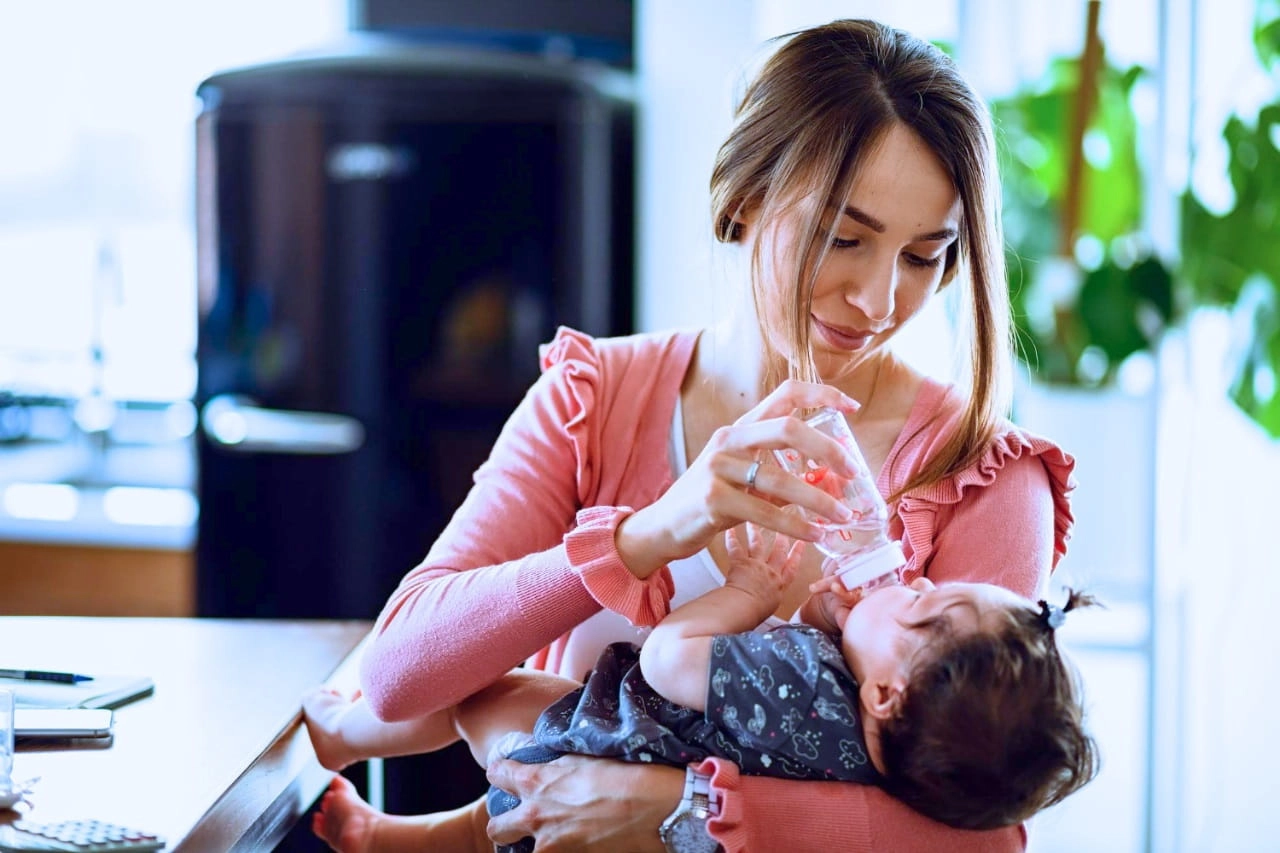
Can babies have filtered water after 6 months? Usually, if the source is safe and the filtration system is maintained correctly. Can babies drink bottled water? Bottled water may also be used, but «bottled,» «purified,» and «filtered» are not guarantees that a product is sterile or appropriate for every purpose. Read the label and follow local pediatric and public-health advice.
For powdered formula, CDC guidance states that tap water is usually safe and may be filtered or unfiltered. Use water from a safe source and follow the formula label exactly. Families with concerns about well water, a boil-water advisory, lead, nitrate, or another local contaminant should contact the health department or pediatrician rather than relying on taste, odor, or a basic TDS reading.
Household filtration also depends on timely maintenance. Replace replacement filter cartridges on schedule, sanitize components as directed, and investigate unexpected changes in taste, odor, pressure, or filtered-water quality.
How Much Water Can a 6-Month-Old Baby Have?
Many parents wonder when a 6-month-old can start drinking water. The short answer is yes—babies can have water at 6 months, but only in small sips alongside solid foods. The AAP recommends a daily limit of 4–8 ounces for ages 6–12 months. Always use a cup for sips rather than using water to replace feedings or to dilute formula.
When Can Babies Drink Water?
To summarize, starting around 6 months, small amounts of safe water can accompany complementary foods. Purified, filtered, or bottled water may be suitable, but source safety, system maintenance, correct formula preparation, and the child’s age remain the deciding factors.
Explore drinking-water systems and maintenance supplies at Filterway while using pediatric guidance—not filtration marketing—as the basis for infant feeding decisions.
Frequently Asked Questions About Babies and Drinking Water
Can babies drink purified water before 6 months?
Newborns should not be given plain water; they usually don't need it until around 6 months of age. The main reason babies shouldn't drink water too early is that it can displace essential milk feedings and, in larger amounts, cause a dangerous sodium imbalance.
When can babies have filtered water?
Small amounts can generally be offered from around 6 months with complementary foods. The filtration system should be maintained, and the source water must remain suitable for drinking.
Does purified water need to be boiled for baby formula?
Not automatically. Follow the formula label and local health guidance. Special preparation may be advised for premature, very young, or medically vulnerable infants because powdered formula is not sterile.
Can water replace breast milk or formula after 6 months?
No. During the first year, breast milk or infant formula remains the primary drink. Water is introduced in small amounts to accompany meals and support cup-drinking skills.