




Seeing hair near the drain can be surprising, but the shower often makes completely normal shedding look much more dramatic than it really is. Hair that naturally sheds throughout the day doesn't always fall away immediately. Instead, loose strands often stay trapped until shampooing, conditioning, or detangling releases them all at once. Hair length, texture, washing frequency, and styling habits can all influence how much hair appears in the drain.
Water quality is another important part of the picture. While it doesn't control the natural hair-growth cycle, hard water minerals, chlorine, and sediment can leave hair feeling drier, rougher, and more difficult to manage. That can increase tangling, reduce how well products rinse away, and create more friction during washing, making the amount of hair you notice seem greater than it actually is.
Many people searching for answers about losing hair in the shower focus only on what they see after one wash. A better approach is to look for patterns over several days or weeks while also considering factors such as water hardness, product buildup, and how easily your hair detangles. These everyday factors often influence what ends up in the drain.
Is It Normal to Lose Hair in the Shower?
Yes. The American Academy of Dermatology notes that shedding around 50 to 100 hairs per day is considered normal. Because those hairs are not always released immediately, several days' worth of natural shedding may come out during a single wash. This is especially common for people with long, thick, curly, or coily hair, where loose strands are more likely to remain caught until wash day.
There is no «correct» amount of hair to see after every shower. Someone who washes daily may notice only a few strands, while someone who washes every three or four days may see a much larger bundle. Hair length also changes perception—long strands naturally take up more space, making the same number of hairs appear far more noticeable. Looking at your usual shedding pattern over time provides a much more accurate picture than judging a single shower.
Why Does Hair Look More Noticeable on Wash Day?
Several ordinary things happen at the same time when hair is washed:
- Water and gentle movement release strands that were already ready to shed.
- Conditioner reduces friction, allowing loose hairs to slide away from neighboring strands.
- Wet hair gathers into visible ropes or bundles near the drain.
- Several days of accumulated shedding may be released in one wash.
- Detangling removes trapped strands, although rough handling can also cause breakage.
This is why more hair may appear after a longer interval between washes or after braids, extensions, or another style is removed. The shower often reveals accumulated shedding rather than causing it.
What Your Hair May Reveal About Your Shower Water
Hair can feel noticeably different depending on the water used during washing. Hard water contains dissolved calcium and magnesium that can leave deposits on hair and bathroom surfaces. Over time, hair may feel coated, rough, dull, tangled, or difficult to rinse. Shampoo may lather differently, and conditioner may seem less effective even when the routine has not changed.
Municipal chlorine serves an important water-treatment purpose, but repeated exposure may contribute to a dry or rough feel, particularly in colored, bleached, heat-treated, or naturally porous hair. Suspended particles such as rust, sand, or silt create a different concern and may affect water clarity or leave visible residue.
These water characteristics are not considered direct causes of follicular hair loss. They can, however, influence buildup, manageability, and friction. When hair is already fragile, extra tangling and rough detangling can make breakage more noticeable during washing.
That distinction matters when someone asks, «Why is my hair falling out in the shower?» Water cannot explain every change in shedding, but it may help explain why hair suddenly feels less smooth, knots more easily, or breaks during detangling. Looking at both the hair routine and the condition of the water gives a more useful answer than blaming the shower alone.
Everyday Signs That Water Quality May Be Affecting Your Routine
Hair alone cannot identify a water problem, but a combination of changes in the shower and around the home can provide useful clues.
|
What you notice |
What it may suggest |
|
White scale on faucets or the showerhead |
Hardness minerals such as calcium and magnesium |
|
Hair feels coated, rough, or hard to rinse |
Possible mineral buildup or a product-and-water interaction |
|
Soap scum returns quickly |
A common household sign associated with hard water |
|
Noticeable chlorine odor |
A disinfectant residual that may be addressed with suitable carbon filtration |
|
Rust-colored or gritty particles |
Suspended sediment that should be identified before choosing filtration |
|
Products behave differently after moving |
A change in hardness, disinfectant, or other local water characteristics |
A current utility water-quality report and a simple hardness test are more reliable than judging the water from hair alone. Well-water households may need broader laboratory testing because water characteristics can vary by location and season.
Why Shampoo and Conditioner Behave Differently in Hard Water
Hair products are formulated to work with water, so changes in mineral content can affect the washing experience. Calcium and magnesium may react with soaps and some cleansing ingredients, contributing to residue on hair, skin, tiles, and shower doors. This does not mean shampoo stops working, but users may notice weaker lather, longer rinsing, or the temptation to apply more product.
Using extra shampoo is not always the best response. More product can create its own buildup if it is not rinsed thoroughly. When the same coated feeling appears alongside scale on fixtures and recurring soap scum, testing for hardness is more useful than repeatedly changing shampoos.
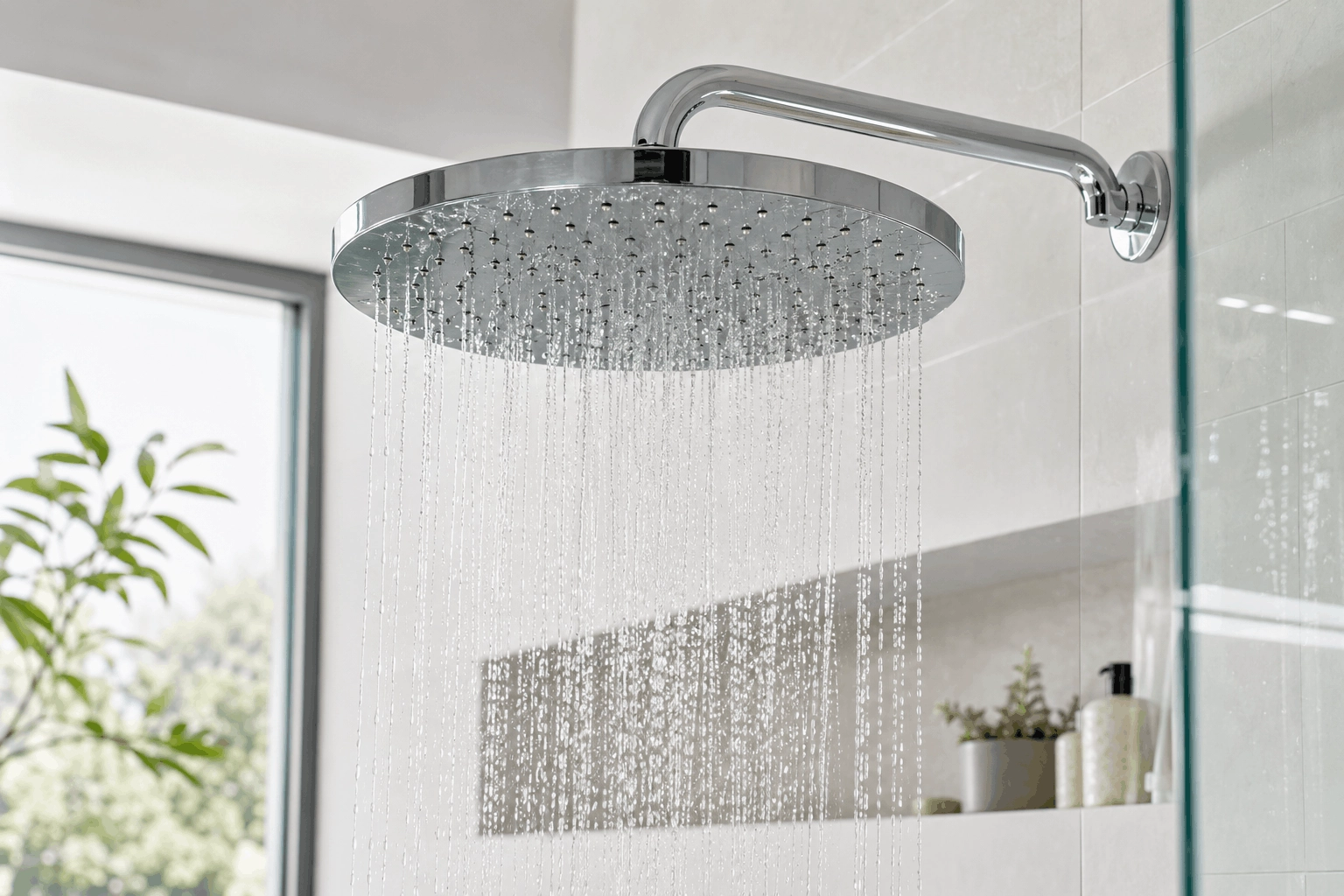
Can Hard Water Affect Hair?
Hard water contains higher levels of calcium and magnesium. These minerals are safe to encounter in ordinary household water, but they can form scale on fixtures and contribute to deposits on the hair surface. The result may be a less smooth feel, reduced shine, more tangling, or the sense that shampoo and conditioner are not rinsing as cleanly as expected.
Hard water should not be presented as a proven cause of alopecia. The practical connection is hair condition: buildup and increased friction may make already dry, processed, or fragile strands harder to manage. If hardness is confirmed, water softeners can address the mineral source rather than repeatedly changing hair products.
For a broader explanation of minerals, disinfectants, and hair condition, read how water quality affects hair.
Chlorine, Sediment, and Hair Condition
Chlorine and chloramine help utilities control microbes, while sediment refers to suspended material such as sand, rust, or silt. They are different water-quality issues and require different treatment approaches.
- Activated carbon can reduce chlorine and many taste- and odor-causing compounds when the media, flow rate, and contact time are appropriate.
- Chloramine generally requires media and system design selected specifically for chloramine reduction.
- Sediment cartridges capture suspended particles but do not remove dissolved calcium and magnesium.
- Ordinary carbon and sediment filtration do not soften water unless the system includes a genuine hardness-treatment stage.
A shower filter treats one outlet, while whole house water filtration can address suitable concerns before water reaches showers, faucets, and appliances. The better choice depends on the test results, household flow requirements, and whether the issue occurs at one fixture or throughout the home.
Whole-House Treatment or a Shower Filter?
The two options serve different purposes. A shower filter is installed at one fixture and is limited by its media volume, water temperature, and contact time. It may be useful for a specific supported concern, but it does not automatically soften hard water. Product claims should be checked carefully because sediment, chlorine, chloramine, and hardness are not interchangeable terms.
A point-of-entry system treats water before it is distributed through the home. This approach is more suitable when scale, sediment, or chlorine-related concerns appear at several fixtures. Whole-house equipment must still be sized for the household’s water chemistry and peak flow, and cartridges or media must be maintained on schedule.
A Better Shower Starts With the Right Water Solution
If mineral scale, chlorine odor, or sediment appears alongside changes in hair feel, the next step is not to guess—it is to identify the water characteristic and match it to the correct treatment method. Filterway offers solutions for different household water-quality goals.
For Hard Water: Water Softening
A 48,000-grain water softener uses ion exchange to reduce calcium and magnesium at the point of entry. It can help reduce scale and soap scum throughout the home while making rinsing and product performance feel more predictable. Correct sizing depends on measured hardness, household water use, flow rate, and the number of bathrooms.
For Chlorine and Sediment: Whole-House Filtration
A properly configured 3-stage whole house water filtration system can combine sediment and carbon stages. Depending on the cartridges selected, it can target suspended particles, chlorine, taste, odor, and other media-specific concerns before water reaches the shower. Filter selection should be based on the water source and confirmed conditions, not on a one-size-fits-all claim.
Compatible activated carbon water filters can support chlorine, taste, and odor reduction when selected for the housing, water conditions, flow rate, and required contact time.
How to Choose Without Overbuying
Start with the water source and the problem you can verify. Municipal customers can review the annual water-quality report and test hardness at the tap. Private-well users may need laboratory analysis for hardness, iron, manganese, sediment, pH, and microbial concerns. The results help determine whether the home needs softening, sediment filtration, carbon treatment, or a combination.
More stages do not automatically mean better treatment. Each stage should have a defined purpose, and the system must provide adequate flow without excessive pressure loss. Selecting equipment from actual water data also prevents recommending reverse osmosis for a shower concern or a sediment cartridge for dissolved hardness minerals.
For Drinking Water: Reverse Osmosis
A Standard Reverse Osmosis System treats drinking and cooking water at a dedicated faucet and can reduce many dissolved substances. Because a standard under-sink RO system does not condition shower water, it should be presented as a drinking-water solution rather than a direct answer to wash-day concerns.
How to Make Wash Day Gentler
Water treatment works best alongside a low-friction hair-care routine:
- Use comfortably warm water rather than very hot water.
- Detangle gently before washing when appropriate for your hair texture and style.
- Massage shampoo into the scalp with fingertips instead of scratching with fingernails.
- Let the lather rinse through the lengths rather than rubbing the hair together.
- Apply conditioner as directed and detangle from the ends upward in manageable sections.
- Blot wet hair with a soft towel or smooth cloth instead of twisting or wringing it.
- Replace filtration cartridges on schedule so the system continues to perform as intended.
When a Change Deserves a Separate Check
Water treatment can improve the water characteristic it is designed to address, but it is not a medical treatment for hair loss. If shedding changes suddenly, continues to increase, creates visible thinning or defined patches, or occurs with significant scalp discomfort, discuss it with a qualified healthcare professional. For water concerns, use a utility report or test to identify what is actually present in the household water.
The Takeaway
Hair in the shower is often ordinary shedding made more visible by washing. Water quality does not determine the natural growth cycle, but hardness minerals, chlorine, and sediment can influence buildup, dryness, rinsing, tangling, and the overall feel of hair after a shower.
Start with the signs around the home, confirm the water conditions, and choose a system designed for the measured issue. Filterway water softeners, whole-house filtration systems, activated-carbon filters, and replacement cartridges provide targeted options for improving household water quality from the source.
Frequently Asked Questions
Why am I losing so much hair in the shower?
Loose strands can accumulate between washes and release together during shampooing. Compare several wash days with your usual pattern; one visible bundle does not show why the hairs were released.
Is it normal to see a hair clump after washing?
A small bundle may be normal, especially with long, thick, curly, or infrequently washed hair. A continuing increase or visible change in density deserves separate professional assessment.
Does washing hair every day cause hair loss?
Gentle daily washing does not usually cause follicular hair loss. It simply makes daily shedding visible, although very hot water, rough detangling, and aggressive handling can increase breakage.
Why does more hair fall out on wash day?
Naturally shed hairs can remain trapped among neighboring strands. Shampooing, conditioning, and detangling release them together, particularly after several days between washes or after removing a protective style.
Can hard water make hair fall out?
Hard water is not a proven direct cause of alopecia. Mineral buildup may make hair rougher and harder to detangle, increasing friction and possible breakage in already fragile strands.
Should I count the hair in the shower drain?
Usually not. Wash frequency, hair length, texture, and styling affect the visible amount. Comparing your usual pattern and overall density is more useful than counting individual strands.