



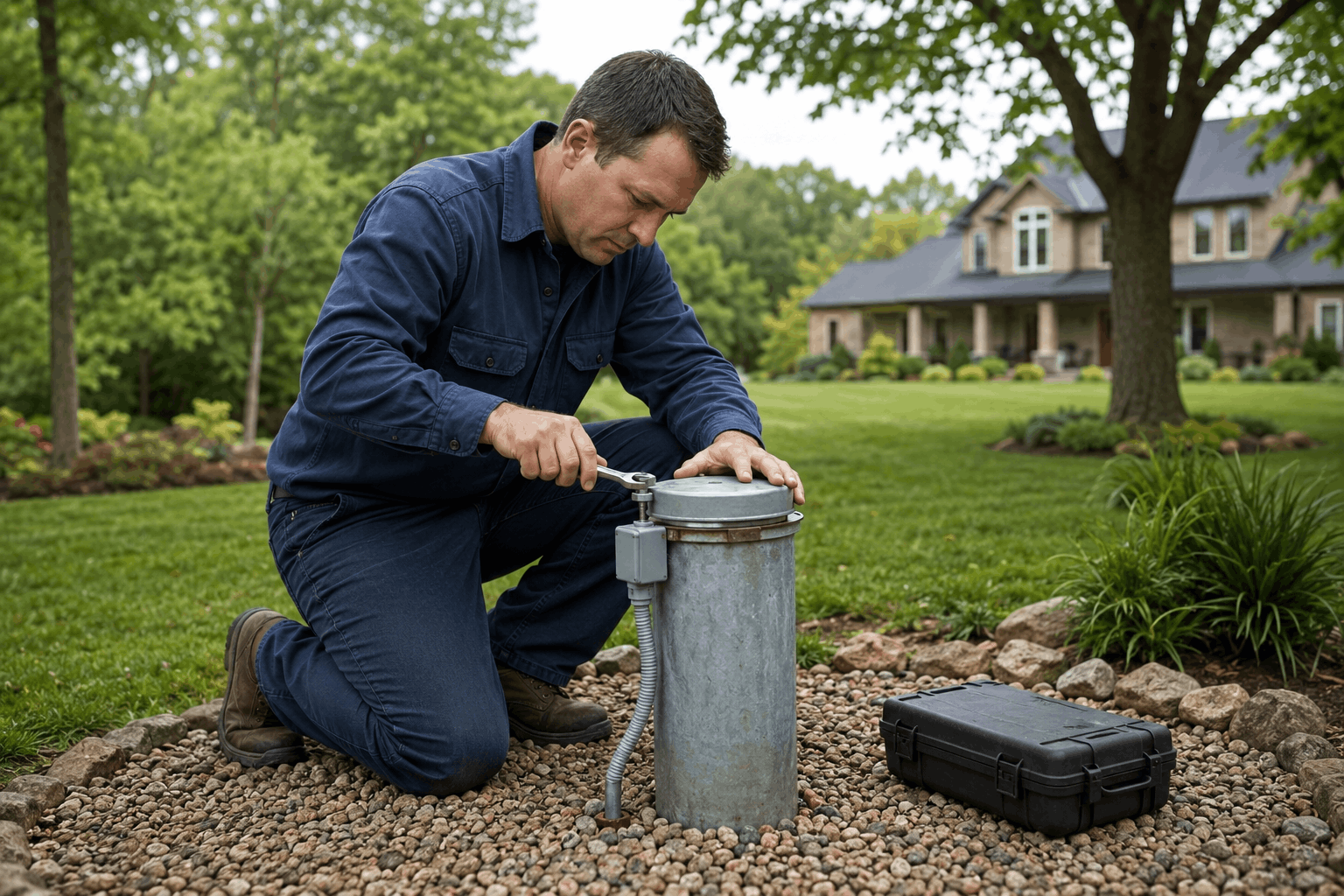
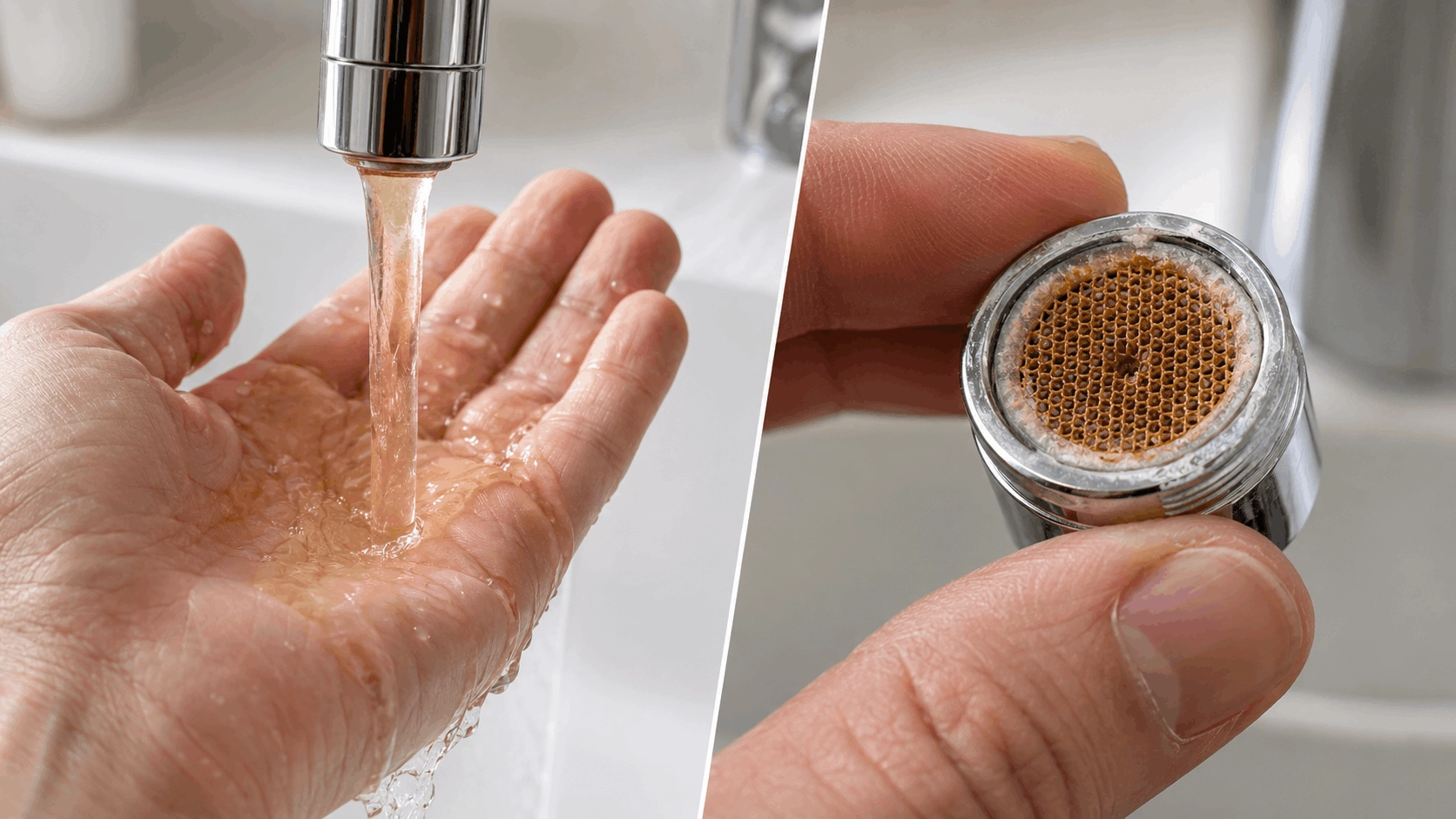
Iron in well water rarely stays hidden for long. At home, it may appear as rusty streaks below faucets, discoloration on shower surfaces, brown particles in the bathtub, a metallic taste in coffee, or white laundry that comes out yellowed. Homeowners may also notice clogged faucet aerators, reduced shower pressure, or reddish deposits inside a washing machine, dishwasher, or water heater.
These problems can return soon after cleaning because the iron is arriving with every gallon of water. Learning how to remove iron from well water therefore means treating the source before it reaches fixtures and appliances—not continually scrubbing stains or replacing clogged screens.
The right treatment depends on iron concentration, its dissolved or particulate form, pH, service flow, and whether manganese, hydrogen sulfide, tannins, or iron bacteria are also present. A sediment cartridge may solve visible rust particles, while dissolved iron often needs oxidation before filtration. High concentrations or several water problems may call for a staged whole-house system.
How Does Iron Get Into Well Water?
Iron is common in rock and soil. As groundwater moves through these materials, it can dissolve iron and carry it into a well. Corrosion of a steel well casing, pump components, pressure tank, or household plumbing can add more. Low-pH water may accelerate corrosion, so an iron result should be interpreted together with pH and a basic inspection of the well and plumbing.
If a homeowner says, “I have iron in my water,” the source is only part of the diagnosis. Water can contain dissolved ferrous iron, oxidized ferric particles, iron bound to organic matter, or bacterial slime. Each behaves differently inside filters.
Signs of Iron in Well Water
Clear water that turns yellow or orange after standing often suggests dissolved ferrous iron oxidizing in air. Water that already looks rusty may contain ferric iron. Brown sediment, metallic taste, stained laundry, and deposits around sinks or fixtures are other common clues. Black or dark-brown staining can point to manganese alongside iron.
Sticky orange-brown slime and a swampy, oily, or musty odor may indicate iron bacteria. These organisms can clog pumps, pipes, and filters. A gradual pressure drop can also develop as iron sediment in well water accumulates. The EPA lists 0.3 mg/L as its secondary standard for iron because higher levels can cause rusty color, sediment, metallic taste, and staining; this is an aesthetic guideline, not a primary health-based limit.

How Iron Affects Water Throughout the Home
Because a private well normally feeds the entire house, untreated iron affects more than drinking water. In the bathroom, oxidized iron can leave orange or reddish-brown marks on porcelain, grout, shower walls, and around drains. In the kitchen, it can discolor sinks, collect in faucet screens, and give drinking water, ice, tea, and cooked foods a metallic character.
Laundry is another common warning sign. Iron can deposit on fabric during washing, leaving whites yellow or brown and making stain removal frustrating. Chlorine bleach may intensify some iron staining rather than correct it, so repeatedly rewashing clothes does not solve the source-water problem.
Inside the plumbing, iron particles and bacterial slime can narrow passages in pipes, valves, showerheads, and appliance inlet screens. Deposits can make a water heater, dishwasher, washing machine, humidifier, or refrigerator water line work harder and require more frequent cleaning. A whole-house treatment point protects every downstream tap, while a drinking-water filter alone treats only the faucet it serves.
Test Your Water Before Choosing an Iron Filter
Home strips are useful for screening, but a laboratory report gives the numbers needed to size treatment. Sample untreated water before installing equipment. Ask for total iron and, when available, dissolved iron; also test pH, hardness, manganese, turbidity, tannins or color, and hydrogen sulfide when odor is present. If slime is visible, request evaluation for iron bacteria and include nitrate and coliform testing appropriate for private wells.
|
Water parameter |
Why it matters |
|---|---|
|
Iron concentration and form |
Determines whether particle filtration is enough or oxidation is required |
|
pH |
Affects oxidation rate and the performance range of treatment media |
|
Manganese and sulfur odor |
May require combined or additional treatment stages |
|
Iron bacteria |
Calls for well cleaning or disinfection, not a cartridge alone |
|
Service flow rate |
Determines housing size and whether pressure will remain acceptable |
What Types of Iron Are Found in Well Water?
Ferrous Iron, or Clear-Water Iron
Ferrous iron is dissolved and may pass through a basic sediment filter. Freshly drawn water can look clear, then turn yellow and form particles as oxygen converts the iron to an insoluble state. Removing iron from well water in this form normally requires oxidation, ion exchange under suitable conditions, or specialized media.
Ferric Iron, or Red-Water Iron
Ferric iron is already oxidized. It appears as suspended rust-colored material and can often be captured mechanically. Anyone researching how to remove ferric iron from well water should select micron rating and cartridge size according to particle load and flow, then add finer or specialized treatment if testing shows dissolved iron remains.
Organic Iron and Tannins
Tannins and other natural organic compounds can bind iron, produce tea-colored water, and interfere with ordinary oxidation. A sediment filter or standard softener may not correct this combination. Laboratory testing and specialized treatment are safer than repeatedly trying cartridges.
Iron Bacteria
Iron bacteria are microorganisms, not another dissolved form of iron. They use iron and oxygen to create rust deposits and sticky slime. The Minnesota Department of Health notes that treatment can be difficult and may involve physical cleaning followed by disinfection. A licensed well contractor should evaluate recurring contamination.
How to Remove Iron From Well Water
For many wells, effective iron removal from well water has two jobs: convert dissolved iron into solid particles, then retain those particles. The sequence matters because placing a fine cartridge before oxidation may leave dissolved iron untreated or cause rapid clogging.
Filterway’s Iron and Manganese Filters category includes 10 × 4.5-inch and 20 × 4.5-inch Big Blue cartridge options. These are practical components for compatible housings when test results, required flow, and cartridge specifications match the home’s conditions.
Sediment Prefiltration
Mechanical filtration is the direct answer when the main problem is visible ferric rust or grit. A coarser prefilter can intercept heavier solids before a finer cartridge, reducing premature plugging. It does not reliably treat clear dissolved ferrous iron by itself.
Filterway offers sediment water filter cartridges in multiple sizes, constructions, and micron ratings, including Aquaboon 10-inch and 20-inch options. A 20 × 4.5-inch Big Blue format provides more surface area for whole-house flow than a slim cartridge, but the correct rating still depends on the sediment load.
Oxidation Followed by Filtration
Aeration, catalytic media, chlorine, hydrogen peroxide, or another properly controlled oxidant can convert dissolved iron into filterable particles. The appropriate method depends on iron level, pH, manganese, bacteria, odor, and contact time. Chemical feed systems require careful setup and maintenance; do not improvise dosages.
Iron and Manganese Media
Specialized media can support oxidation and capture of iron and manganese in one treatment train. The Aquaboon 20 × 4.5-inch Big Blue iron and manganese water filter cartridge is designed for whole-house use to address metallic taste, staining, and deposits associated with these minerals. It is best used as a test-matched component, not as a universal promise for every iron concentration.
For a complete setup rather than a single replacement cartridge, compare Filterway’s whole house filters for well water. The current selection includes an Aquaboon three-stage 20-inch system configured with sediment, iron-and-manganese, and final sediment stages on a stainless-steel stand. This arrangement protects the specialty cartridge from larger debris and catches remaining particles downstream.
Choosing the Right Filterway Iron Solution
|
Water condition |
Practical treatment direction |
|---|---|
|
Visible rust and sediment |
Aquaboon sediment prefilter followed by an appropriately rated finer cartridge |
|
Iron and manganese together |
Aquaboon Big Blue iron-and-manganese cartridge in a compatible whole-house housing |
|
Mixed sediment plus iron |
Aquaboon three-stage 20-inch whole-house iron-and-manganese system |
|
Moderate dissolved iron |
Oxidation or suitable catalytic treatment before particle filtration |
|
High iron concentration |
Professionally sized oxidation and backwashing whole-house equipment |
|
Iron bacteria or tannin-bound iron |
Well treatment or specialized chemistry selected from laboratory findings |
Do not select treatment only by price, stage count, or the phrase well water high iron. Confirm the cartridge’s capacity and operating limits, match the housing to peak service flow, and allow for pressure loss as media loads. A three-stage system is valuable when each stage has a defined purpose; extra housings cannot compensate for incorrect chemistry.
Can a Water Softener or RO System Remove Iron?
A softener may handle low levels of dissolved ferrous iron when hardness, pH, and manufacturer limits are suitable. Too much iron can foul the resin and increase maintenance. Oxidized particles and bacterial slime should be addressed upstream. Reverse osmosis may reduce dissolved iron at a drinking-water faucet, but heavy iron can foul the membrane. Whole-house pretreatment protects both plumbing and point-of-use RO equipment.
How to Maintain an Iron Filter
Inspect cartridges regularly during the first months because a new well-water installation has no established replacement pattern. Replace a cartridge when its rated service interval is reached, pressure falls noticeably, or staining returns—whichever comes first. Clean housings during changes, lubricate the O-ring only with approved food-grade silicone, and confirm there are no bypass leaks.
Use the correct Aquaboon iron and manganese water filter cartridge for the installed housing size. Keep a record of test results, installation date, pressure readings, and changes in color or odor. Retest after treatment to verify performance rather than judging only by taste.
How to Get Iron Out of Well Water: The Practical Plan
If you are deciding how to get rid of iron in well water, begin with a certified laboratory test and identify the form of iron. Use sediment filtration for existing particles, add oxidation or specialized media for dissolved iron, and address bacteria at the well. Size every stage for the home’s peak flow and retest the treated water.
This is also the best way to approach related searches such as how do you remove iron from well water, how to reduce iron in well water, or how to fix iron in well water: diagnose first, then build a treatment train with a clear role for every component.
Explore cartridges, housings, and staged well-water systems at Filterway to assemble a solution suited to the laboratory results and household demand.
Frequently Asked Questions About Iron in Well Water
What is the best way to remove iron from well water?
Test the untreated water first. Ferric particles may need sediment filtration, while dissolved ferrous iron often requires oxidation or specialized media. Iron bacteria and tannins require different treatment.
Can a sediment filter remove iron from well water?
It can capture oxidized ferric particles and rust sediment. It generally cannot remove clear dissolved ferrous iron until that iron has been oxidized into a filterable solid.
Can reverse osmosis remove iron from well water?
RO may reduce dissolved iron at one faucet, but excessive iron can foul the membrane. Treat significant iron at the whole-house level before using reverse osmosis for drinking water.
Is iron in well water dangerous?
Iron usually causes aesthetic and operational problems rather than being regulated as a primary health contaminant. Still, private wells should be tested for nitrate, coliform bacteria, and other local risks.
How often should well water be tested?
Test at least annually for key safety indicators and after flooding, repairs, or noticeable changes. Follow local health guidance, and retest treated water when system performance is uncertain.