

Carbon Water Filters

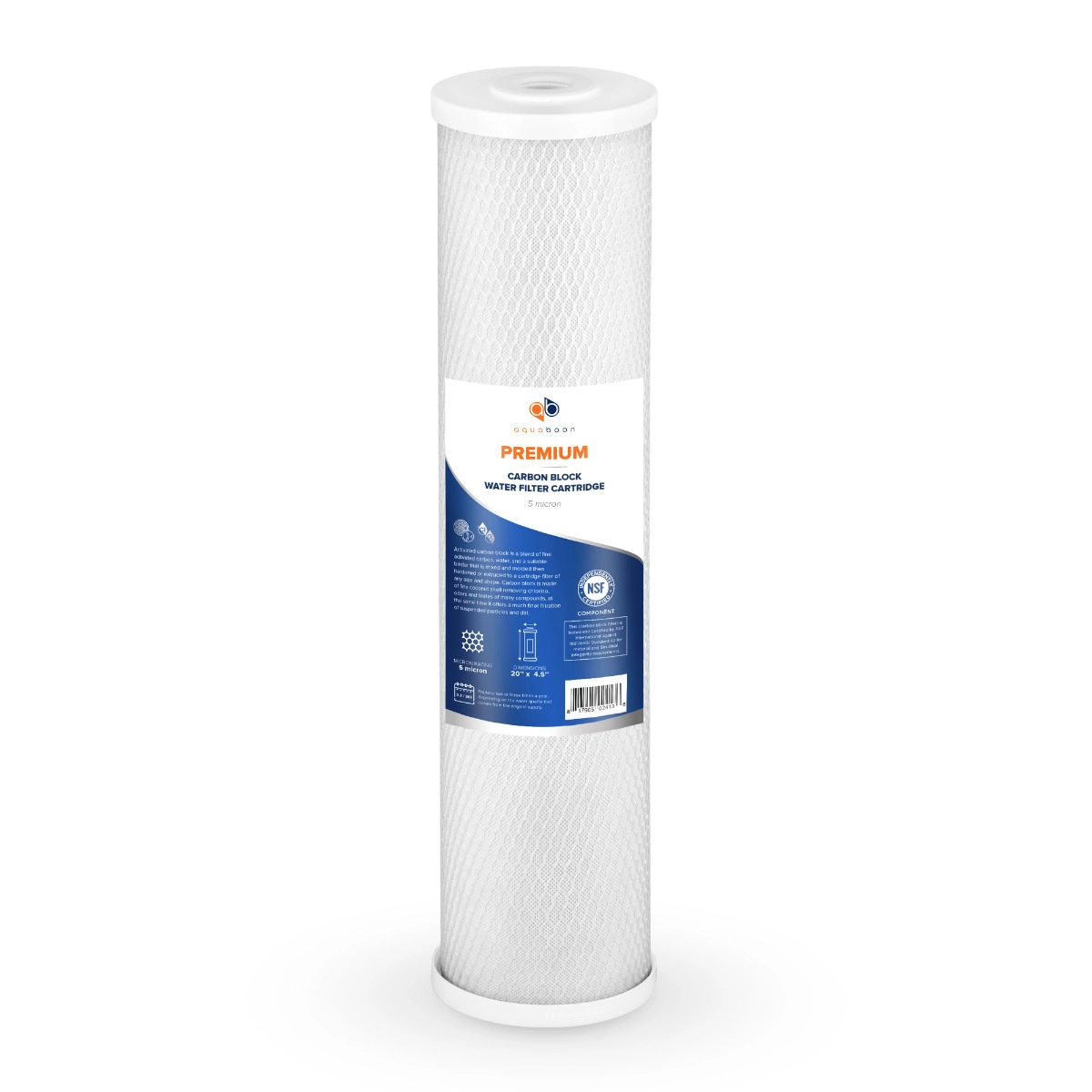
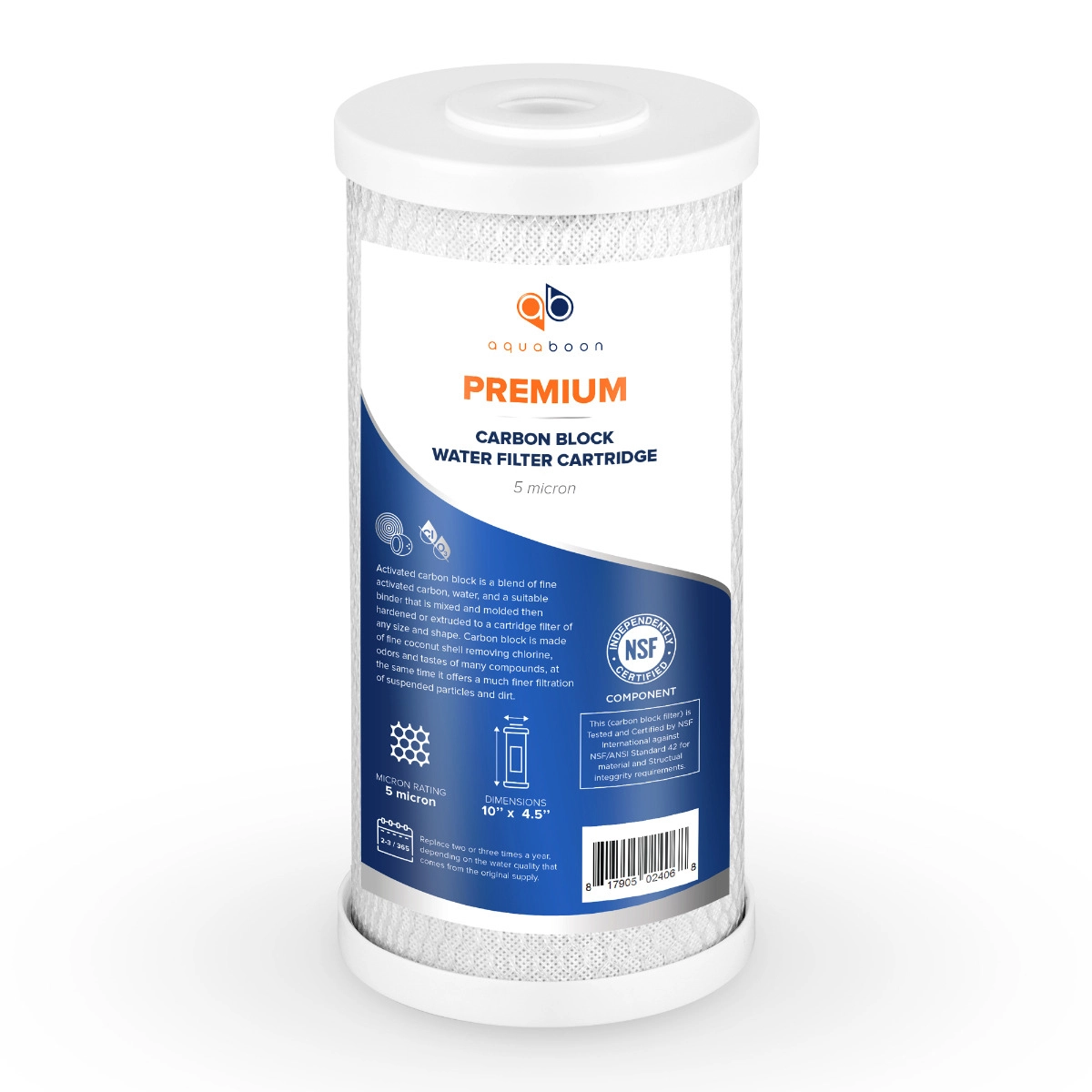
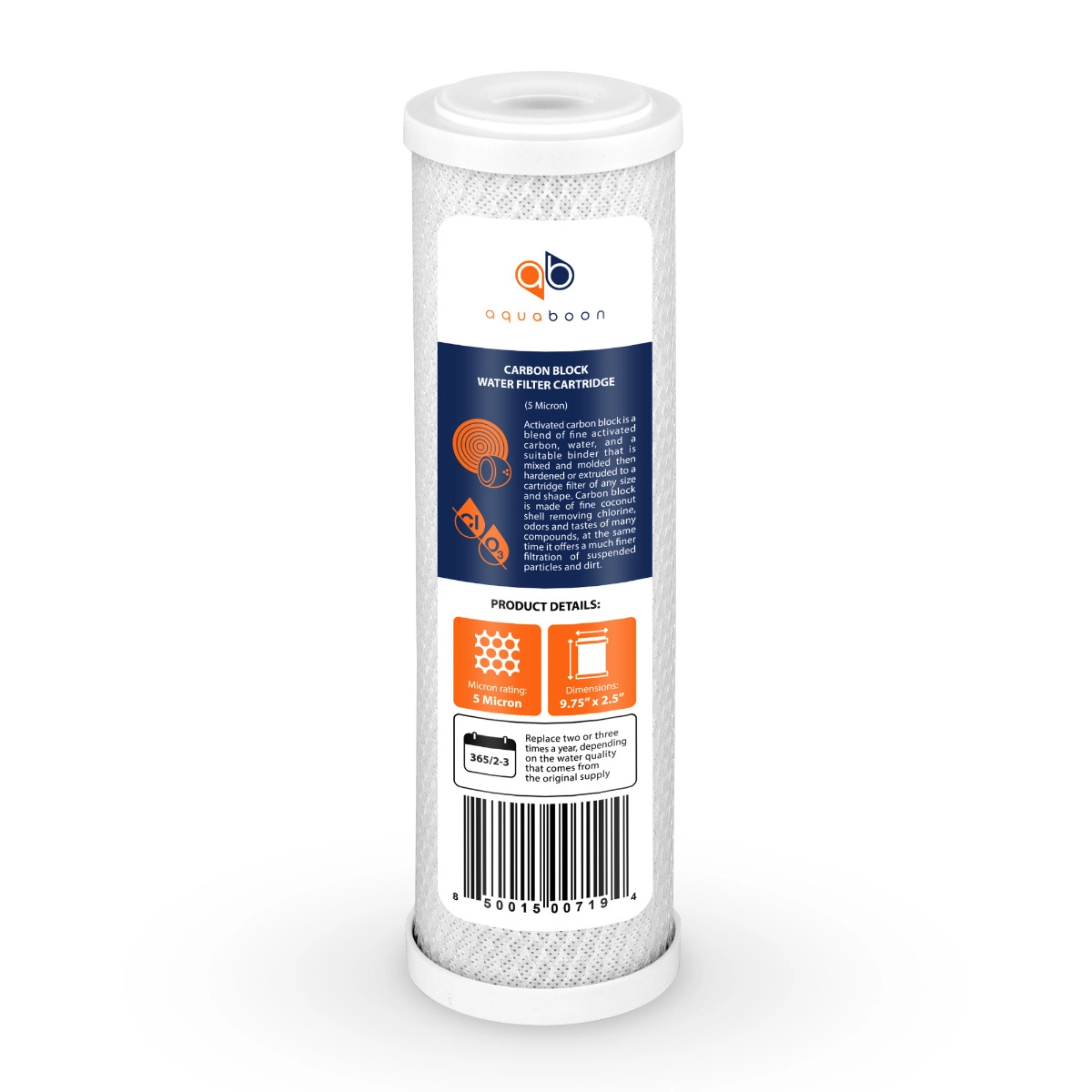
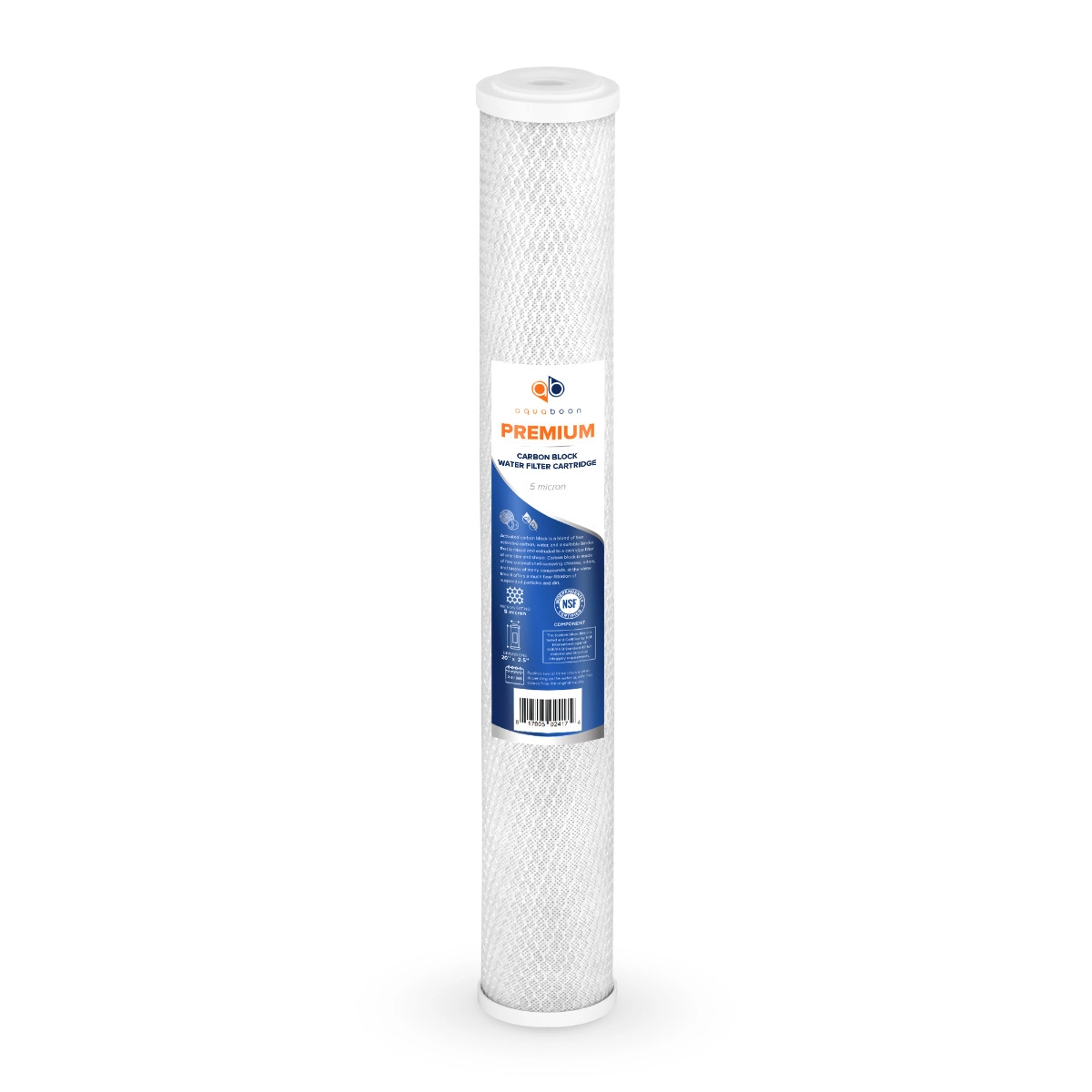
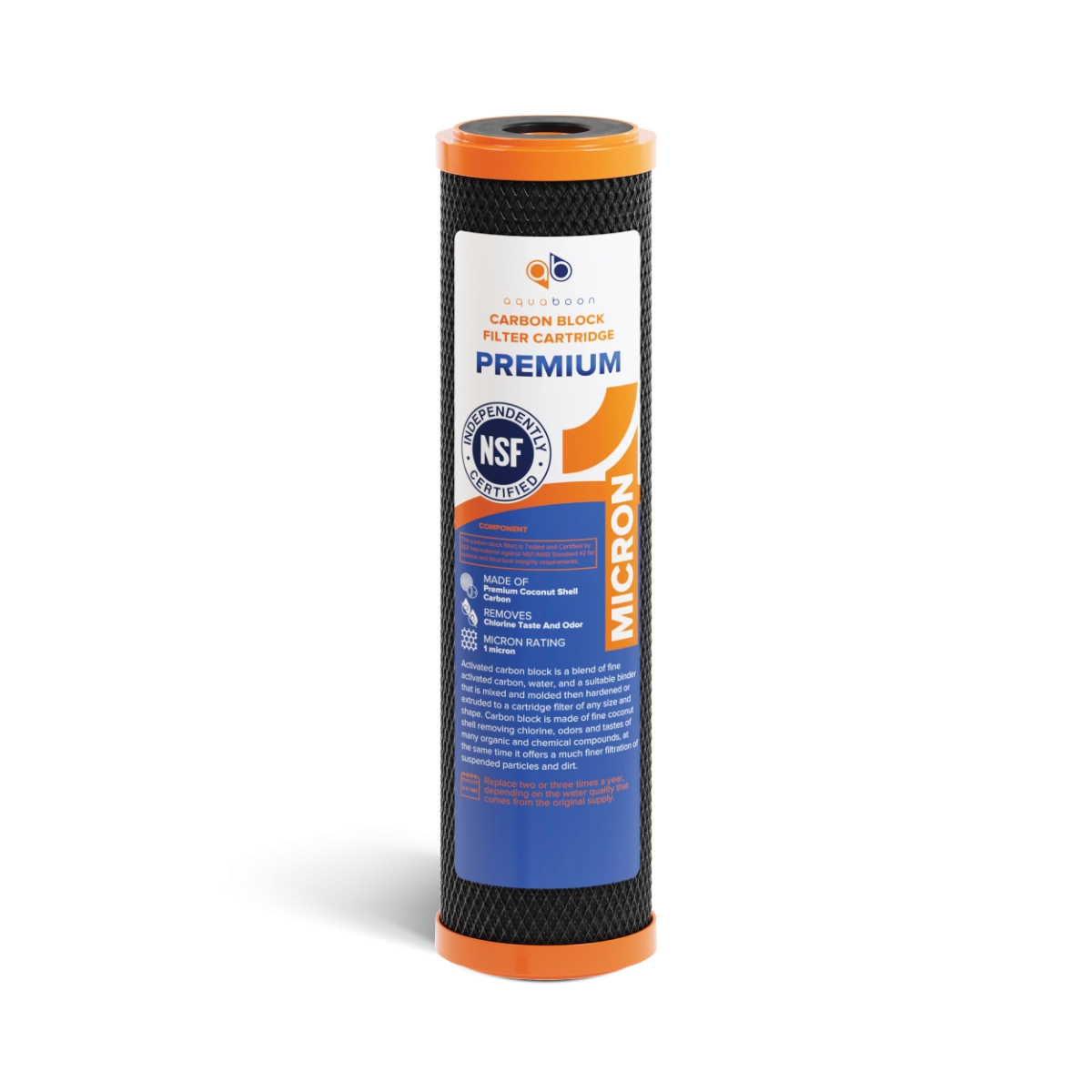
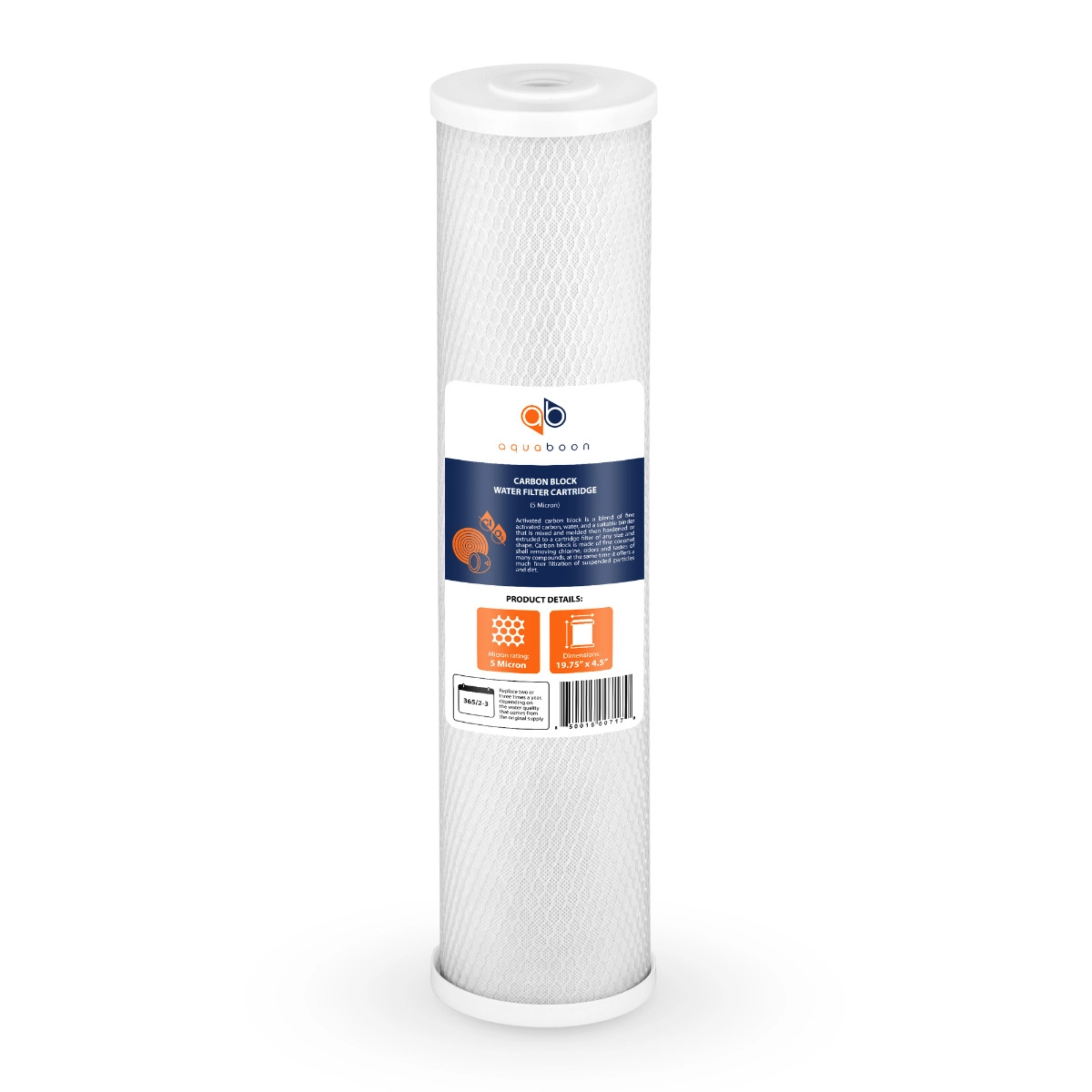
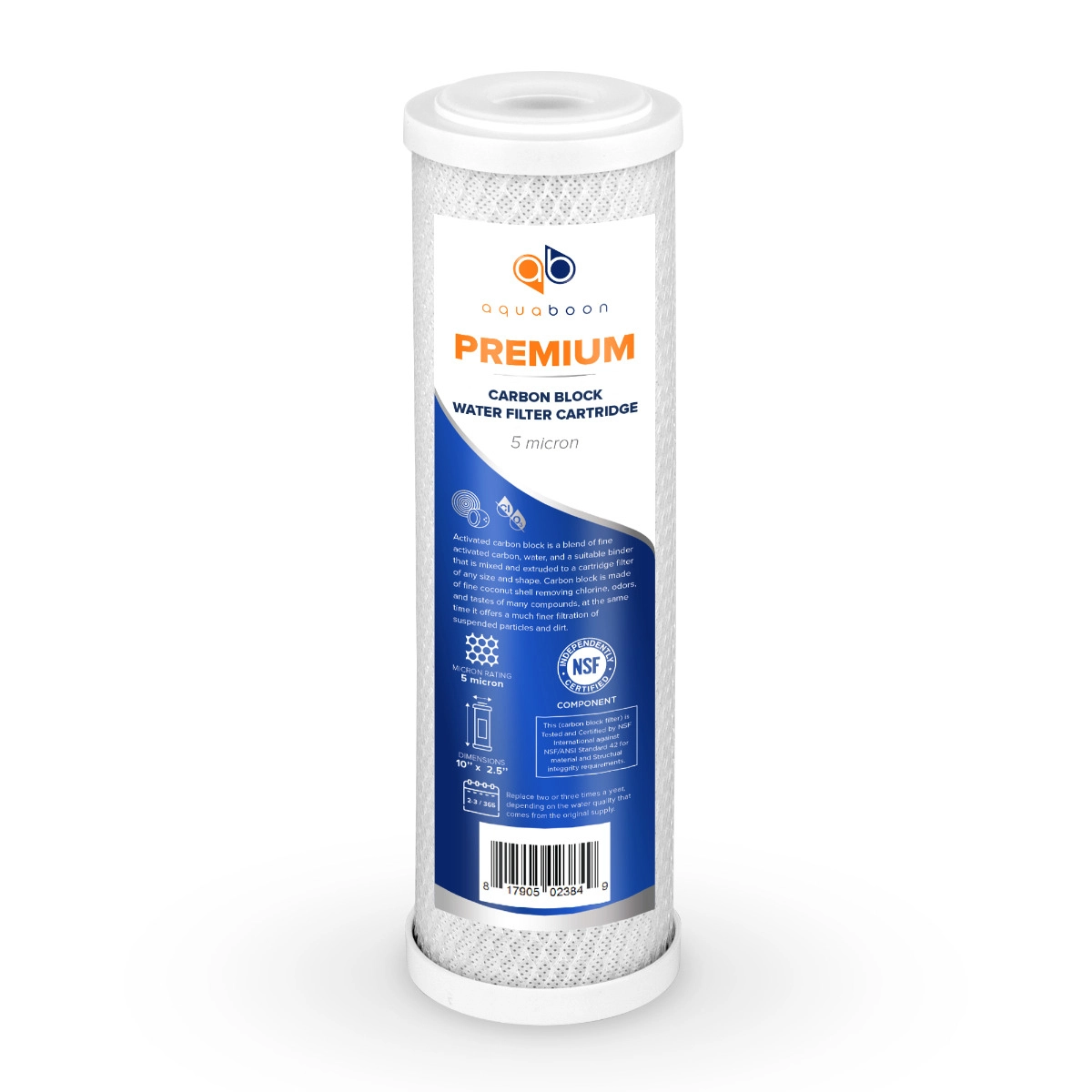
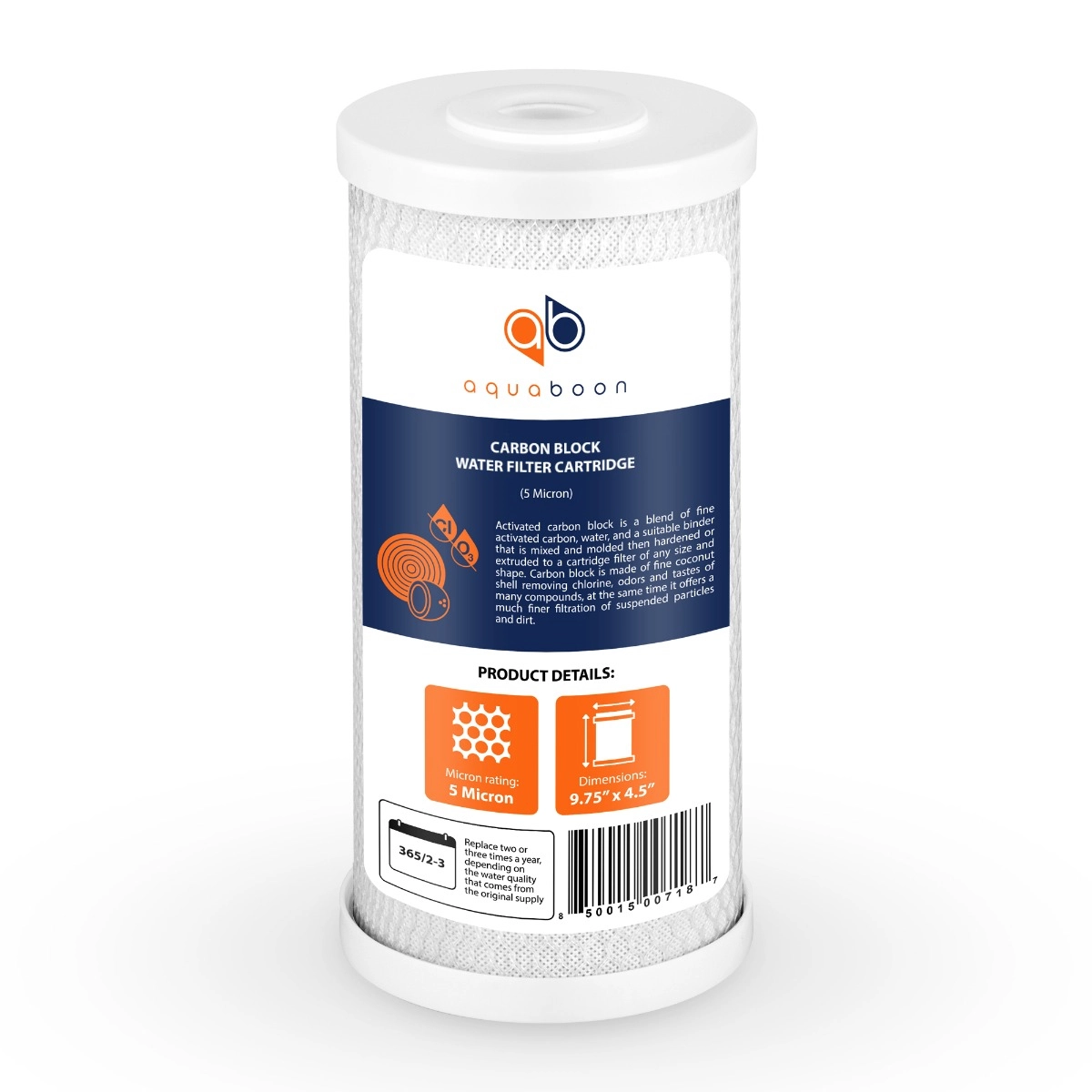
Shop carbon water filter cartridges at FilterWay for compatible drinking water and whole-house filtration systems. Choose Aquaboon carbon block replacements in 10-inch and 20-inch lengths, with standard 2.5-inch and Big Blue 4.5-inch diameters. Compare available 1- and 5-micron options, check your existing housing specifications, and order a cartridge that fits your filtration setup.
How to Choose the Right Carbon Water Filter Cartridge
The right carbon water filter cartridge must fit your housing and match the water conditions it is designed to treat. Start with the model number printed on your existing cartridge or filter housing. If you cannot find it, check the system manual before ordering.
Use these five checks to narrow your choice:
- Length: Identify whether your system accepts a 10-inch or 20-inch replacement.
- Diameter: Match a standard 2.5-inch cartridge or a wider 4.5-inch Big Blue housing.
- Cartridge design: Check the end caps, sealing surfaces, and whether the housing is designed for a drop-in carbon block.
- Micron rating: Compare 1- and 5-micron options based on particle filtration needs and acceptable water flow.
- Operating conditions: Review the manufacturer's limits for flow rate, pressure, water temperature, and cartridge service life.
Length alone does not establish compatibility: two 10-inch cartridges may have different diameters or sealing arrangements. If your system already uses a sediment prefilter, keep that treatment sequence in mind when choosing a replacement carbon stage. Compare the product specifications with your housing manual, or contact FilterWay for help checking the fit before buying.
Carbon Block vs. Granular Activated Carbon Filters
Carbon block and granular activated carbon (GAC) cartridges both use porous carbon to adsorb certain dissolved substances that affect water taste and odor. Their main difference is construction. A carbon block contains compressed carbon particles in a solid, porous structure; a GAC cartridge contains loose granules held inside a container.
For shoppers comparing carbon block water filter cartridges, the block design can be useful when a system needs a combined adsorption stage and finer physical particle retention. Depending on its micron rating and construction, a block may also create more resistance to flow. A GAC cartridge often offers a different flow profile, but actual performance varies by product, cartridge size, and operating conditions.
Neither design is universally superior. Check the housing requirements, flow rating, and any contaminant-reduction testing rather than choosing by carbon type alone. The Aquaboon options in this category are carbon blocks; if your system specifies loose-media cartridges, browse granular activated carbon filters instead.
|
Feature |
Carbon block |
Granular activated carbon (GAC) |
|
Carbon format |
Compressed porous block |
Loose carbon granules |
|
Particle retention |
Can provide finer retention, depending on micron rating |
Depends on cartridge construction and any built-in media screens |
|
Water flow |
May create greater flow resistance |
Flow characteristics vary with design and size |
|
Best selection criterion |
Compatible housing, micron and performance rating |
Compatible housing, flow and performance rating |
Carbon Water Filter Cartridge Sizes
FilterWay lists carbon water filter cartridges in four common nominal sizes. Measurements are stated as length × diameter in inches. The first number identifies cartridge length; the second identifies its approximate width. Always verify your housing's specified replacement dimensions, because a nominal size is not a guarantee that every manufacturer's end-cap or gasket arrangement will fit.
Standard-diameter 2.5-inch cartridges are commonly found in compact filter housings, including some under-sink drinking water systems. The wider 4.5-inch format is often called Big Blue and is used in compatible larger-capacity housings. A 20-inch cartridge requires a taller housing than a 10-inch version; it is not an interchangeable upgrade.
|
Cartridge size |
Typical compatible housing |
Common use case |
|
10″ × 2.5″ |
10-inch standard-diameter housing |
Compact under-sink or multi-stage systems |
|
10″ × 4.5″ |
10-inch Big Blue housing |
Larger-capacity point-of-use or point-of-entry systems |
|
20″ × 2.5″ |
20-inch standard-diameter housing |
Taller multi-stage filtration setups |
|
20″ × 4.5″ |
20-inch Big Blue housing |
Compatible whole-house filtration setups |
FilterWay offers carbon block water filter cartridges in different sizes and micron ratings for various filtration systems. When choosing a replacement, check the cartridge dimensions, housing compatibility, and filtration requirements. Compare product specifications, available pack quantities, and pricing to find the right option for your system.
What Micron Rating Should You Choose?
A micron rating describes the particle size a filter is designed to retain under its stated test conditions. FilterWay currently lists a 1-micron carbon block water filter cartridge in the 10″ × 2.5″ format, alongside 5-micron carbon block options in multiple sizes.
A 1-micron cartridge is designed for finer particle retention than a comparable 5-micron cartridge, but it may restrict flow more and may need replacement sooner in water with substantial suspended solids. A 5-micron cartridge may be a practical fit where flow demand is higher or upstream sediment filtration already handles much of the particulate load.
Micron ratings do not, by themselves, prove how well a cartridge reduces chlorine, lead, or other dissolved contaminants. Compare the manufacturer's performance data, flow requirements, and cartridge compatibility. Choose the finer rating only when your system and water conditions justify it.
What Do Carbon Water Filters Reduce?
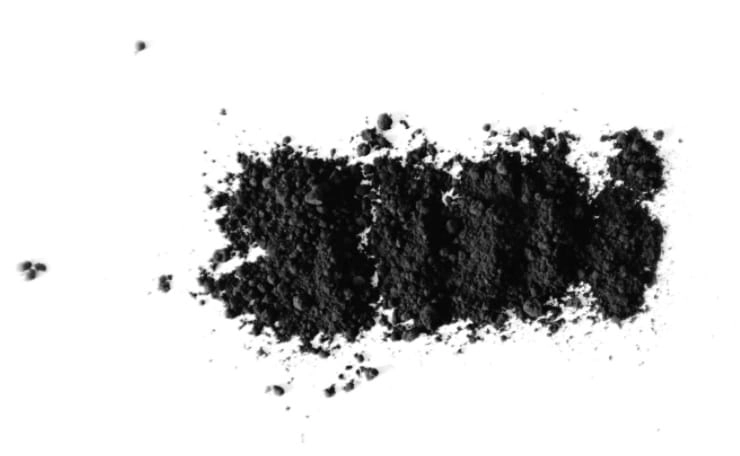
Carbon filters use adsorption: certain dissolved compounds adhere to the extensive internal surface of activated carbon as water passes through the cartridge. This is why activated carbon is commonly used to address chlorine-related taste and odor in treated water. Carbon blocks can also retain some suspended particles through their physical structure, depending on the micron rating.
However, the exact reduction claims depend on the cartridge, contact time, flow rate, and supporting test data. Do not assume every carbon replacement reduces lead, volatile organic compounds (VOCs), chloramine, or other specific substances. Check the individual product's verified claims and relevant certifications. NSF explains that NSF/ANSI 42 addresses aesthetic effects, while NSF/ANSI 53 covers specified health-related contaminant reductions. Check each certification’s scope.
Carbon cartridges are not a substitute for disinfection, water softening, or treatment specifically designed for dissolved minerals. If your water contains sediment, consider a compatible sediment prefilter ahead of the carbon stage.
Carbon Filters for Whole-House and Drinking Water Systems
Carbon cartridges can be used in point-of-use (POU) drinking water systems or point-of-entry (POE) whole-house systems when their housings and flow requirements support them. A POU cartridge typically serves a specific faucet or under-sink filtration line. A POE cartridge treats water entering the home and must accommodate the household's flow demand.
A 10″ × 2.5″ replacement may suit a compact housing, while a 10″ × 4.5″ or 20″ × 4.5″ cartridge may suit compatible larger housings. These are examples, not universal installation rules. Check the housing's size, connection design, pressure rating, and the cartridge's specified operating flow before purchasing.
If you need a complete installation rather than a replacement element, explore whole-house filtration systems and verify which cartridges they require.
When Should You Replace a Carbon Filter Cartridge?
Replace a carbon cartridge according to its manufacturer's stated service life or rated capacity, whichever limit is reached first. Actual life depends on how many gallons pass through the filter, incoming water quality, chlorine load, and sediment levels. A single six-month or twelve-month interval cannot be applied to every cartridge.
Changes in taste or odor, reduced water flow, or a pressure drop can indicate a cartridge needs attention, but they are not reliable measures of adsorption capacity. A filter may stop reducing a target chemical before the water tastes noticeably different.
Record the installation date and follow the product instructions for replacement and initial flushing. If you notice unusually rapid clogging, check the condition of any upstream sediment cartridge before fitting another carbon filter.
Buy Replacement Carbon Filters at FilterWay
Find Aquaboon carbon block cartridges at FilterWay in standard and Big Blue sizes, with product pages showing micron ratings, pack options, and current availability. Match your existing cartridge or housing model before placing an online order; if you are unsure about the fit, ask FilterWay for assistance.
FilterWay offers free shipping to the continental United States, with estimated delivery in 3–5 business days under its shipping policy. Browse the carbon cartridge listings, compare compatible replacements, and select the quantity that matches your maintenance schedule.
Carbon Water Filter Cartridges FAQ
What is a carbon water filter cartridge?
A carbon water filter cartridge is a replaceable filtration element containing activated carbon. Water flows through or around the carbon media, which adsorbs certain dissolved compounds associated with unwanted taste and odor. Carbon block models also provide particle retention according to their construction and micron rating. It must fit the housing and be replaced on schedule.
What is the difference between carbon block and GAC filters?
A carbon block is formed from compressed activated carbon, while a GAC filter contains loose granules. Carbon blocks can combine adsorption with finer particle retention; GAC designs have different flow characteristics. Choose according to the cartridge specified by your system and verified product performance, not a general claim that one format is always better.
What size carbon filter cartridge do I need?
Check the existing cartridge label or filter housing manual for length, diameter, and model number. Common options at FilterWay include 10″ × 2.5″, 10″ × 4.5″, 20″ × 2.5″, and 20″ × 4.5″. Confirm the sealing design and other compatibility details before placing an order.
What is the difference between 1 micron and 5 micron carbon filters?
A 1-micron rating indicates finer particle retention than a comparable 5-micron rating under the manufacturer's stated conditions. However, finer filtration can increase flow resistance or clogging in sediment-heavy water. Neither rating guarantees greater reduction of dissolved chemicals. Check your housing's flow requirements and the cartridge's published specifications.
How often should I replace a carbon water filter?
Follow the cartridge's rated gallon capacity or replacement interval, whichever comes first. Water use, contaminant load, and upstream filtration can change the actual service life. Do not rely only on a noticeable change in taste, since adsorption performance can decline without an obvious warning.
Can I use a carbon filter cartridge in a whole-house system?
Yes, provided the cartridge is approved for your whole-house housing and can handle the expected flow and pressure. Big Blue-format carbon blocks are commonly used in compatible point-of-entry setups. Match the exact housing dimensions and manufacturer requirements; a larger cartridge is not automatically interchangeable.
Do carbon water filters remove chlorine and improve taste?
Activated carbon is commonly used to reduce chlorine-related taste and odor, but results depend on cartridge design, water conditions, and flow. Look for model-specific performance claims and testing. An NSF/ANSI 42 reference alone does not establish every reduction claim; verify the certification's stated scope for the product you plan to buy.