



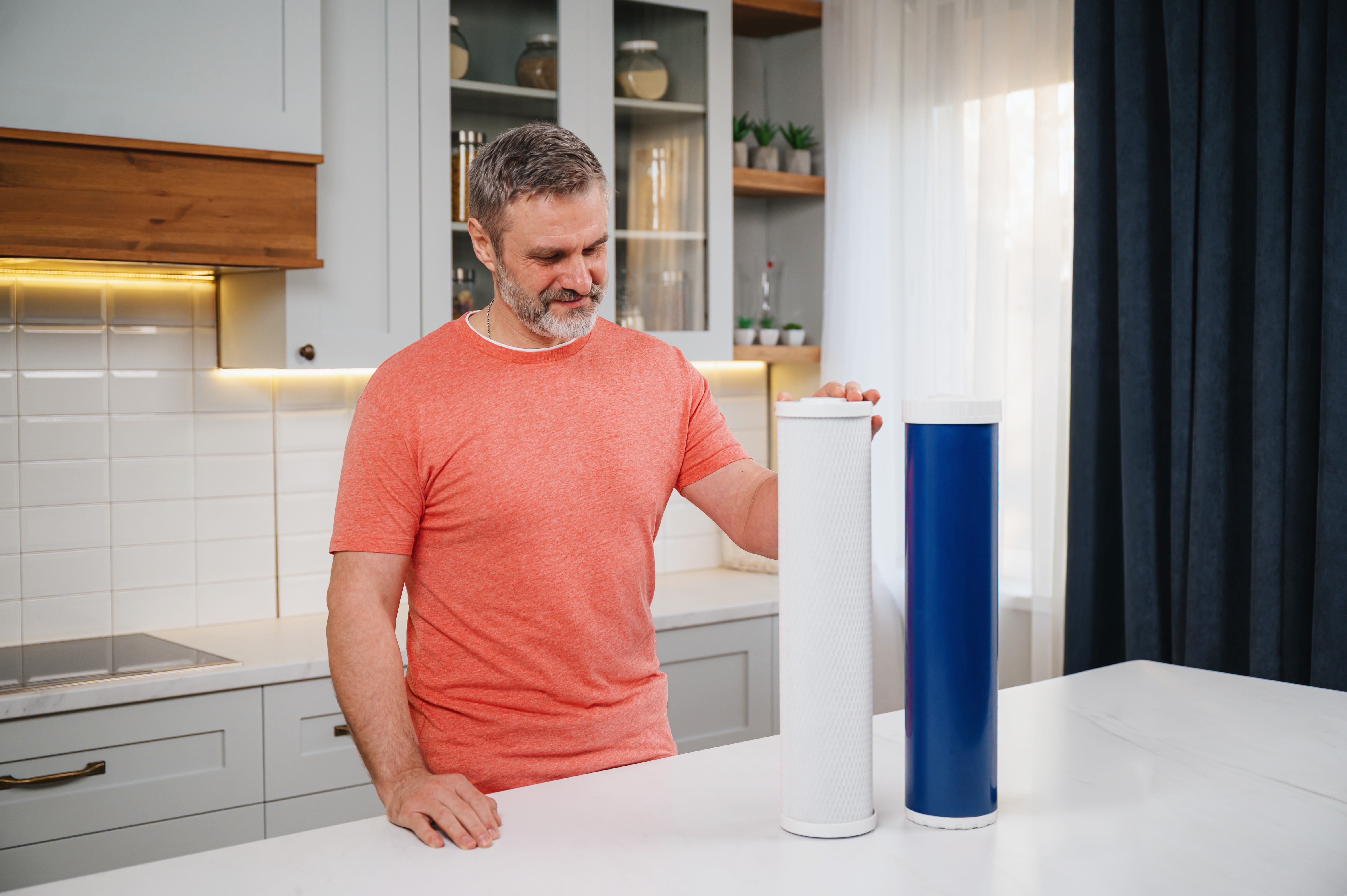
Carbon Block vs Granular Carbon Filters: Performance Comparison
Carbon filtration is widely used to improve water quality, particularly for removing chlorine, odors, and organic compounds. However, not all carbon filters perform equally. The two primary types—carbon block and granular activated carbon (GAC)—differ significantly in structure, efficiency, and application.
Structural Difference
The main distinction lies in how the carbon is formed.
- Carbon block: compressed into a dense structure
- Granular carbon: loose particles packed into a cartridge
This structural difference directly affects filtration performance.
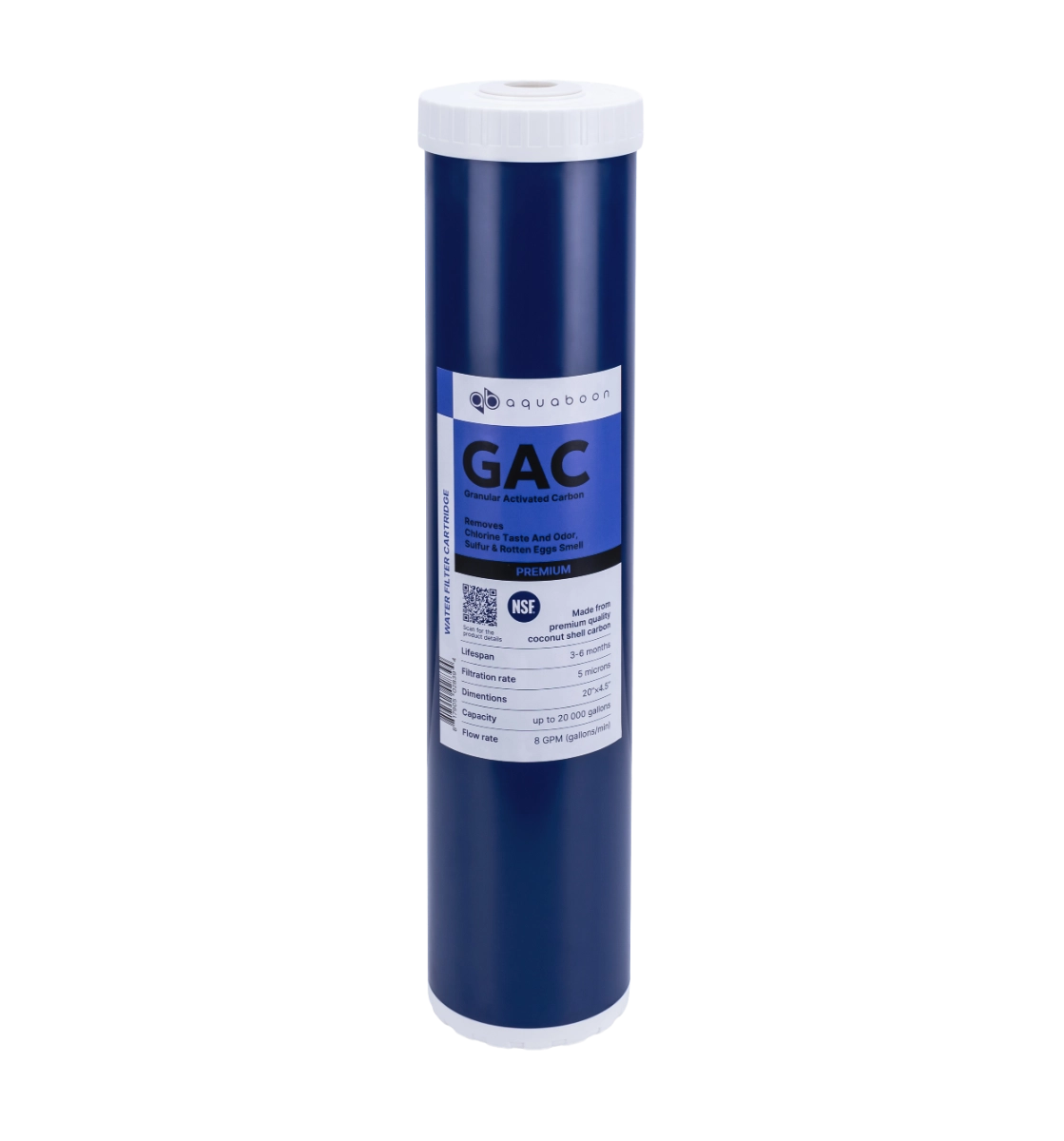
Granular Carbon (GAC): Flow Priority
Granular activated carbon (GAC) filters are designed for systems where maintaining water flow and pressure is a priority. Instead of a solid structure, they use loose carbon granules packed inside a cartridge, allowing water to pass freely through the spaces between particles. This design minimizes resistance and supports high flow rates, making GAC filters a practical choice for applications with large water volumes or variable consumption.
Advantages:
- Higher flow rate
- Lower pressure drop
- Suitable for basic filtration
Limitations:
- Less consistent contact with contaminants
- Lower filtration precision
GAC filters are an effective solution for primary or pre-filtration stages, where the goal is to maintain strong water flow while achieving basic water quality improvements.
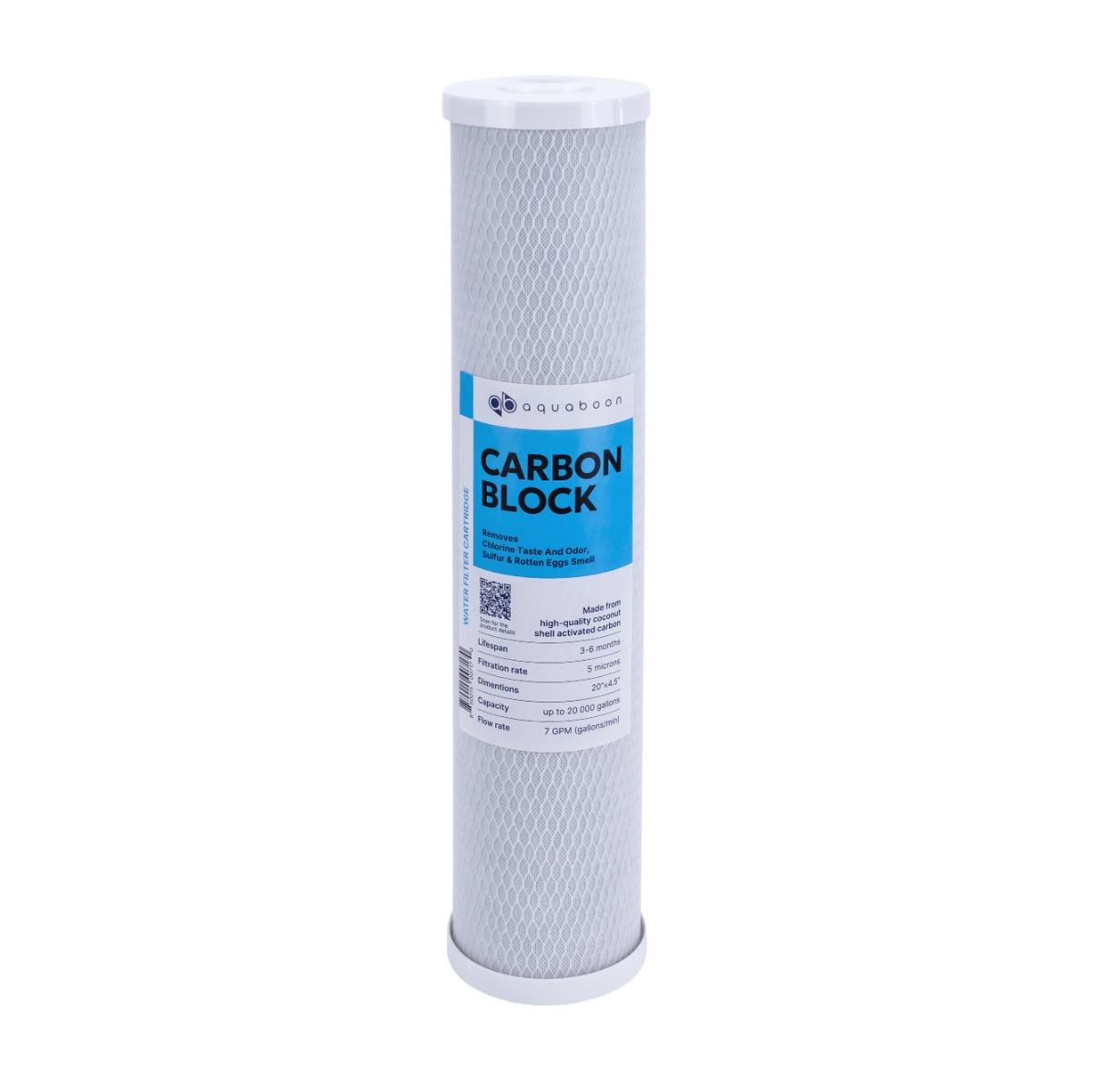
Carbon Block: Performance Priority
Carbon block filters are designed for applications where water quality and filtration precision are critical. Unlike granular systems, they use compressed activated carbon formed into a dense, uniform structure. This forces water to pass through tightly packed carbon pores rather than flowing around loose particles. As a result, the contact time between water and filtration media significantly increases, allowing the filter to capture even smaller contaminants more effectively.
Advantages:
- Higher contaminant removal efficiency
- Better chlorine and chemical reduction
- More consistent filtration
Limitations:
- Slightly lower flow rate
- Higher resistance if not properly sized
Contact Time and Efficiency
Filtration effectiveness largely depends on how long water remains in contact with the carbon media. This parameter, often referred to as “contact time,” directly influences how thoroughly contaminants are absorbed and removed from the water. The longer the interaction, the higher the probability that chlorine, organic compounds, and other impurities will be captured.
Carbon block filters are specifically designed to maximize this contact time by forcing water through a dense and uniform structure. In contrast, GAC filters allow water to pass more freely, which reduces interaction time and can limit filtration depth.
Application Differences
|
Filter Type |
Typical Application |
Key Function |
|
GAC |
Pre-filtration stage |
Improves taste and odor, removes chlorine, supports high flow |
|
Carbon Block |
Final filtration stage |
Provides precise contaminant removal, improves overall water quality |
In practice, many modern filtration systems combine both technologies. GAC is used at the initial stage to handle larger volumes and reduce the load on the system, while carbon block filters perform deeper purification at the final stage. This combination helps achieve an optimal balance between water flow, pressure stability, and filtration efficiency.
Typical Selection Mistakes
When choosing carbon filters, many users focus only on one parameter—either flow rate or filtration quality—without considering the overall system design. This often leads to suboptimal performance and reduced efficiency.
- Choosing GAC for applications requiring high precision
- Ignoring flow requirements when selecting carbon block
- Using a single carbon stage instead of a combination
Avoiding these mistakes helps ensure that the filtration system works efficiently, maintains stable water pressure, and delivers consistent water quality over time.
Why Filterway Carbon Filters Stand Out
Filterway systems integrate both carbon types where appropriate, ensuring optimal balance between flow rate and filtration efficiency. This avoids the trade-off between performance and usability.
Balanced Flow and Filtration
Instead of forcing a single solution, Filterway systems are designed to maintain strong water pressure while still achieving effective contaminant removal.
System-Based Design (Not Single Filter Focus)
Each filter is part of a sequence, preventing overload and extending lifespan. This is especially important in whole-house systems where water demand fluctuates.
Adaptability to Water Conditions
Сarbon filters can be configured for:
- Municipal water (chlorine-focused)
- Well water (combined with sediment and specialty media)
Practical Selection
- High flow needs → consider GAC in early stages
- High purity needs → use carbon block in final stage
Combining both often delivers the best results.
Choosing the Right Carbon Filtration Approach
Carbon block and granular carbon filters serve different purposes. GAC prioritizes flow and basic filtration, while carbon block focuses on precision and efficiency. The most effective systems use them together, creating a balanced solution that delivers both performance and reliability. Choosing a well-designed system and quality filters from Filterway ensures consistent results, long service life, and dependable water quality across your home.